Modern functioning without access to electricity is practically impossible. The vast majority of devices need this type of power supply. For this reason, the control and measurement of electrical voltage is no less important. Voltage meters are responsible for this. Let's get to know them better!
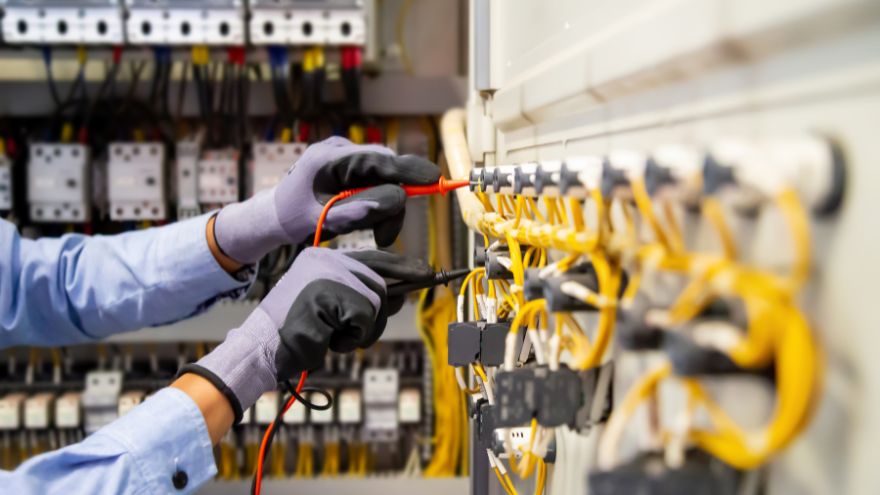
Check out the voltage testers at the Onninen wholesaler
What is reference voltage?
 Let's start with a very important issue, namely, let's find out what the reference voltage is. This is essential to understand the principle of operation of meters. Also referred to as nominal voltage or rated voltage, it means the value of the standard electrical voltage, thus indicating at what level the voltage should be supplied to electrical devices in a given installation. As is known, in most homes in Poland and Europe, the reference voltage is 230V with a frequency of 50Hz. However, in other parts of the world its value is different, for example 110V or 120V.
So, for the devices to work properly, the voltage must be in accordance with their specifications, because if it is not, it can damage the equipment. What is worse, there is a risk of danger - fire or electric shock. Therefore, the issue of controlling the electrical voltage cannot be underestimated in any way! A voltage meter will help us in this task.
How to check electrical voltage with a tester?
 A voltage tester is a basic tool used to check the voltage at a specific point in an electrical installation. It is invaluable for every specialist dealing with electrical installations, but it is also useful not only for professionals but also for amateurs. Thanks to it, we can quickly see what voltage is present. However, in order to assess it correctly, we should know how to use it correctly. It is important that the voltage indicator is of high quality, in good condition and has the appropriate safety certificates. Usually, testers have different voltage ranges.
To measure voltage, simply insert the tip of the tester into one of the points (it can be a socket, electrical wire, switch, installation element, etc.) that you want to test. If voltage is present, the meter will react by emitting a sound signal or the LED will light up. If there is no reaction, there may be two reasons - either no voltage or a device failure. An important note at the end of this paragraph - although the meter allows you to quickly check the voltage, it is not a device that will indicate its exact value. This is a task for more advanced meters.
How to check 3-phase voltage with an electrical tester?
Voltage meters can be used in all installations, but in some of them, especially in industry, there is a three-phase voltage, where three-phase voltage meters are needed. It is much more complicated than single-phase voltage. Its operation requires more skill, but now we will explain it.
First, let's make sure that the meter has been configured to measure three-phase voltage. Then, let's connect the indicator to the measurement points - to each of the three phases, i.e. L1, L2 and L3. After turning on the indicator, the measurement results will appear. They should be for each phase. If the results are similar, we are sure that the voltage is balanced, i.e. everything is in order. Otherwise - if they are different, it may be related to problems in the electrical installation.
Voltage meters at the Onninen wholesaler
Without a doubt, voltage meters are a very helpful tool that provides both convenience and precision when taking measurements. This is crucial during various works - installation, repair and maintenance. It is worth having it at hand, buying the right model in the plumbing and electrical wholesaler Onninen. Discover interesting offers!
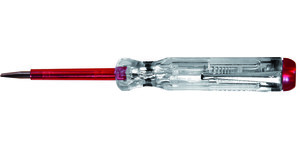
- If you are looking for a universal meter, it is worth taking an interest in the Modeco Expert 140 mm voltage tester . Equipped with a diode that signals the presence of voltage. It allows you to check it in the range of 100-250V.
-
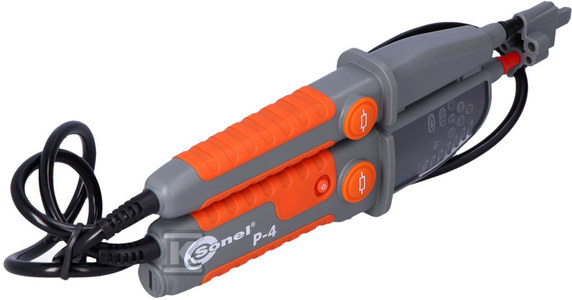
 If we want to buy more advanced equipment, let's go for the Sonel P-4 two-pole voltage indicator . It is a durable, reliable and safe device that not only checks voltage, but also circuit continuity. It also provides phase sequence testers. Designed for work in difficult conditions - industrial and commercial. It has great parameters, including automatic measurement of AC and DC voltage up to 1000 V or sound indications when dangerous voltages of 50 VAC and 120 VDC are exceeded.
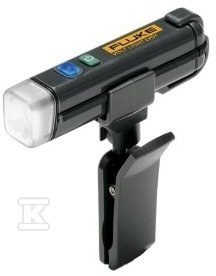
 - An excellent solution is also to buy a Fluke LVD1 voltage meter with an LED flashlight . It allows for quick recognition of voltage values - red color indicates high voltage above 90 V AC or DC, and green color indicates the presence of a lower voltage below 90 V AC or DC. This ensures safety during work. The device is very easy to use, because it is enough to bring it closer to the point (for example, an electrical outlet) that we want to check. The meter will automatically detect its presence.