The concealed shower is gaining popularity thanks to its minimalist design and functionality, which perfectly fit into modern trends in bathroom design. However, this type of fitting is associated with both numerous advantages and certain limitations that are worth considering. From the perspective of the installer, knowledge of the specifics of installing concealed faucets and their potential disadvantages is crucial to provide customers with durable and aesthetic solutions.
Check out Eaton Easy controllers at Onninen Wholesale
Is a concealed shower more prone to failure?
 One of the most common questions from customers is the issue of failure of concealed showers. The fact is that concealed fittings differ from traditional surface-mounted taps in terms of design and installation method, which can affect their operation.
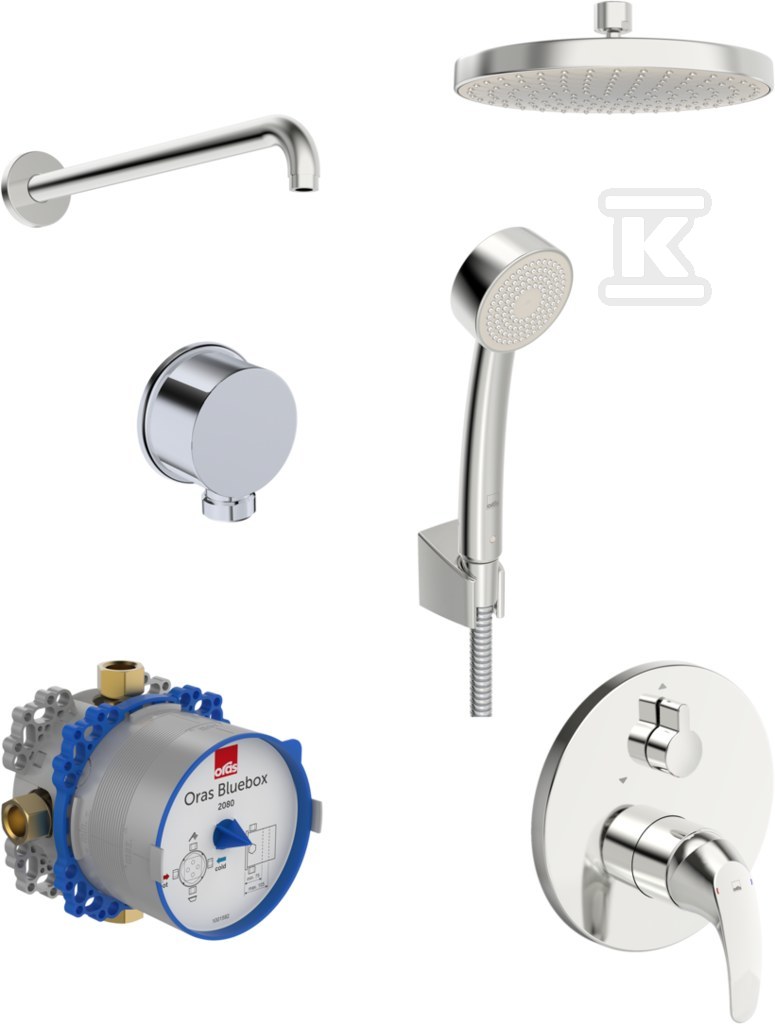
In the case of concealed faucets, most of the installation elements, such as hoses, valves or connections, are hidden in the wall. On the one hand, this provides an elegant appearance, but on the other hand, it makes access to the elements difficult in the event of a failure. Therefore, the quality of the materials used and the care taken during the installation of concealed faucets are crucial.
Modern concealed shower faucets (see: shower sets ) are designed to minimize the risk of leaks. However, it is worth remembering that any repair requires access to the installation in the wall, which involves the removal of the tile or panel. That is why it is so important to use products from renowned brands that offer high durability and a long warranty period.
What do you need to know before installing a concealed shower?
 Installing concealed faucets requires precise planning and consideration of the specifics of the plumbing system and bathroom finish. Before starting the installation, it is worth making sure that the wall in which the concealed fittings are to be mounted is thick enough to accommodate the installation elements.
Preparing the space for installing concealed batteries includes:
- Distribution of the water installation : It is crucial to precisely make the water connections that will be compatible with the selected model of concealed shower mixer.
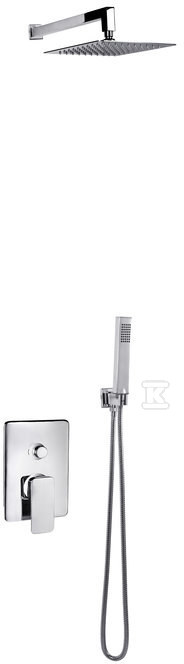
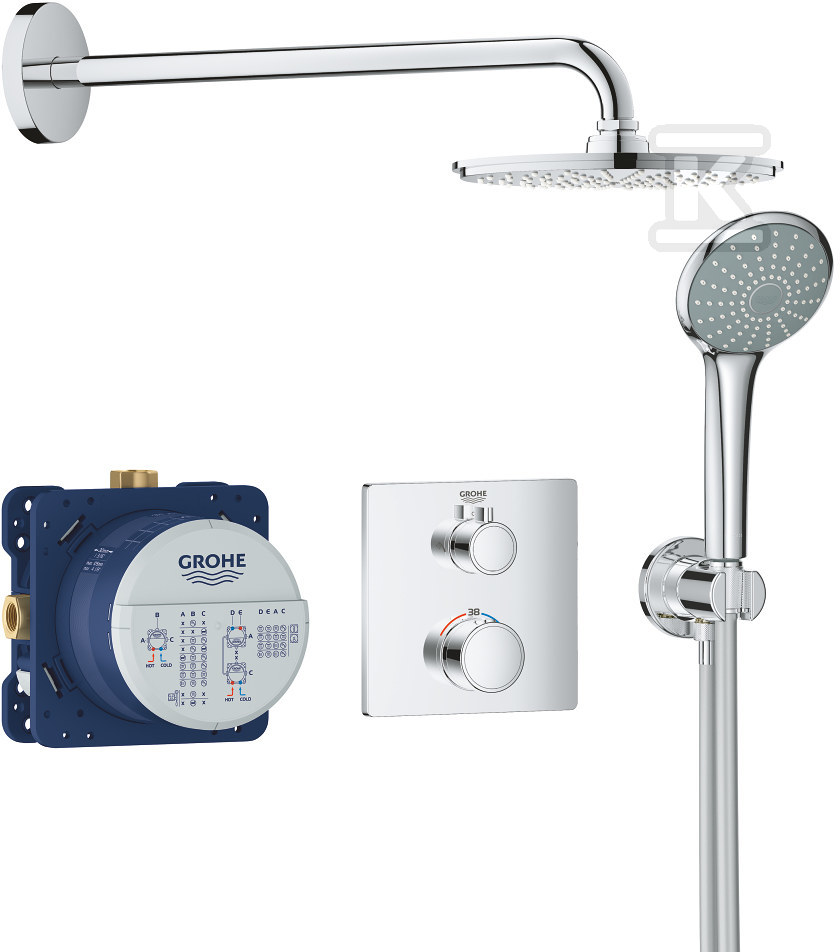
- Choosing the right concealed set : It is worth paying attention to the compatibility of all elements. It is best to choose a ready-made concealed shower set , which will ensure a perfect fit of the individual components.
- Waterproofing : To avoid the risk of the wall becoming damp in the event of a leak, it is essential to use appropriate insulating materials.
- Service access : When installing a concealed tap, it is worth providing space for an inspection panel that will allow access to the valves and installation components in the event of repairs being necessary.
A concealed shower faucet should be installed at the bathroom finishing stage, which allows for easier matching of the installation to the interior design.
When is it best to choose a concealed shower?
 A concealed shower is the perfect solution for people who value aesthetics, modern design and functionality. In small bathrooms, where every centimeter counts, concealed fittings save space and create a more spacious interior. It is worth choosing a concealed faucet if, for example, the bathroom design includes a minimalist finish. By hiding the installation elements, you can achieve an elegant look that perfectly matches modern tiles or panels.
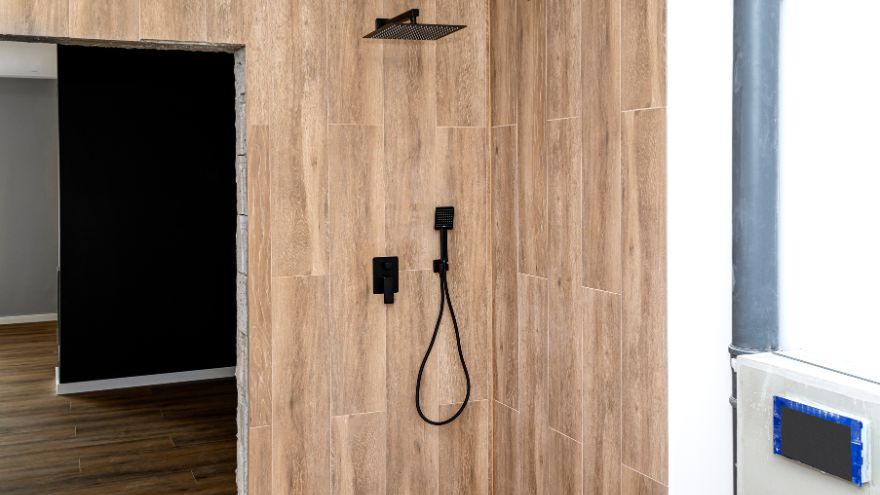
This is also a good solution for customers who place great emphasis on ease of keeping clean. In the case of concealed showers, only selected elements are visible, such as the rain shower, handle or spout, which makes cleaning much easier.
The disadvantages of concealed faucets should be considered in the context of the user's individual expectations. The main limitations are the need for precise assembly and difficult access to the installation in the event of a failure. Nevertheless, a properly executed installation using high-quality fittings guarantees reliability for years.
A concealed shower is an investment that requires care at the design and installation stage, but the aesthetic and functional effects compensate for the initial workload. For the installer, it is crucial to use professional tools and proven solutions. This allows you to provide the customer with a functional and aesthetic solution that will meet the expectations of even the most demanding users.