Power Infrastructure
(1 937 )

(8)
Shipping tomorrow

Delivery from
146,37 zł

(5)
Shipping tomorrow
Delivery from
11,07 zł

(5)
Shipping tomorrow
Delivery from
11,07 zł

(5)
Shipping tomorrow
Delivery from
146,37 zł

(3)
Shipping tomorrow
Delivery from
24,48 zł

(2)
Shipping tomorrow
Delivery from
11,07 zł
(3)
Shipping tomorrow
Delivery from
11,07 zł

(1)
Shipping tomorrow
Delivery from
24,48 zł
(2)
Shipping tomorrow
Delivery from
146,37 zł
Shipping tomorrow
Delivery from
11,07 zł

(1)
Shipping tomorrow
Delivery from
146,37 zł

Shipping tomorrow
Delivery from
11,07 zł
(3)
Shipping tomorrow
Delivery from
11,07 zł
Shipping tomorrow
Delivery from
146,37 zł
Shipping tomorrow
Delivery from
11,07 zł

Shipping tomorrow
Delivery from
146,37 zł
Shipping tomorrow
Delivery from
11,07 zł
(1)
Shipping tomorrow
Delivery from
11,07 zł

Shipping tomorrow
Delivery from
146,37 zł

Shipping tomorrow
Delivery from
11,07 zł

Shipping tomorrow
Delivery from
11,07 zł

Shipping tomorrow
Delivery from
146,37 zł

Shipping tomorrow
Delivery from
146,37 zł
(1)
Shipping tomorrow
Delivery from
11,07 zł

Shipping tomorrow
Delivery from
24,48 zł
Shipping tomorrow
Delivery from
11,07 zł

Shipping tomorrow
Delivery from
146,37 zł

Shipping tomorrow
Delivery from
11,07 zł
Shipping tomorrow
Delivery from
11,07 zł
Shipping tomorrow
Delivery from
11,07 zł

Shipping tomorrow
Delivery from
24,48 zł
Shipping tomorrow
Delivery from
146,37 zł

(1)
Shipping tomorrow
Delivery from
11,07 zł

Shipping tomorrow
Delivery from
11,07 zł

Shipping tomorrow
Delivery from
24,48 zł
Shipping tomorrow
Delivery from
11,07 zł

Shipping tomorrow
Delivery from
146,37 zł
Shipping tomorrow
Delivery from
11,07 zł

Shipping tomorrow
Delivery from
11,07 zł

(1)
Shipping tomorrow
Delivery from
24,48 zł

Shipping tomorrow
Delivery from
24,48 zł

Shipping tomorrow
Delivery from
11,07 zł

Shipping tomorrow
Delivery from
11,07 zł

Shipping tomorrow
Delivery from
11,07 zł

Shipping tomorrow
Delivery from
11,07 zł

Shipping tomorrow
Delivery from
11,07 zł

Shipping tomorrow
Delivery from
24,48 zł

Shipping tomorrow
Delivery from
146,37 zł

Shipping tomorrow
Delivery from
11,07 zł

(4)
Shipping tomorrow
Delivery from
24,48 zł
Power and lightning protection systems - offer of the Onninen installation wholesaler
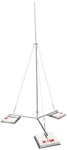
In the energy category you will find lightning protection installations such as lightning protection masts, lightning rods, lightning protection pipes, lightning protection wires, earthing rods, and spikes that protect buildings against atmospheric discharges.
From our range of products in the energy category we also offer: cable casing pipes, OPTO teletechnical pipes, micro-channel pipes, optical fibre pipes, cable accessories: low voltage (nN) and medium voltage (Sn) joints and heads, lighting and power poles with foundations, overhead line accessories with a full range of cable clamps and pole accessories, all types of cable connectors, energy meters and current transformers, cable grips and cable tools. A wide range of heat shrink products is also available, such as: breakers, caps, heat shrink pipes, and resin products such as: resins, resin masses.
- SRS casing pipe, SRS pipe, QRD casing pipe, QRD pipe, QRG casing pipe, QRG pipe, QRGP casing pipe, QRGP pipe, QRK casing pipe, QRK pipe, OPTO pipe, double-layer pipe, split pipe, directional drilling pipe
- steel pole, aluminum pole, conical pole, polygonal pole, cable pit, pole foundation, cable head
- Cellpack cable joint, Nexans cable joint, RAYCHEM cable joint, EUROMOLD cable joint, SMH cable joint, CHMP joint, CHMSV joint, TRAJ joint, POLJ joint, gel joint, CTS cable head, CHE-I, CHE-F, CWS connector head
- tape, galvanized tape, electronic ballast, izk, piercing clamp, hook screw, cable breakout boot, steel pipe, fireproof collar, micro sewage pipe, OPTO pipe, current transformer, voltage transformer,
Power and lightning protection systems
Energy is an industry that is constantly undergoing major changes. Not only in the world, but also in Poland. The development of the situation is related to the search for more environmentally friendly and more efficient methods of obtaining electricity. What does it look like in practice?
Ways of obtaining electricity
The basic task of the energy industry is the production and distribution of electrical and thermal energy. Depending on the source from which the energy is obtained, conventional and unconventional energy are distinguished.
In the case of the former, energy is produced by burning fossil fuels such as:
hard coal and brown coal;
- oil;
- gas;
- plant and animal biomass;
- peat;
- oil shale.
In non-conventional energy, heat and electricity are obtained from renewable and alternative sources, including:
- flowing and geothermal waters;
- wind;
- tides;
- solar radiation;
- ambient heat;
- nuclear reactions.
Renewable sources regenerate naturally. Non-conventional energy also includes renewable fuels, such as biofuels.
What is Poland's energy situation?
Poland is still dominated by conventional energy, which uses mainly hard coal and lignite and, to a lesser extent, crude oil and natural gas.
Main locations of power plants
About 70% of mined hard coal is used to produce electricity and heat. For this reason, power plants are often located near mines.
The locations of power plants are also designated near large rivers or artificial reservoirs. Thanks to this, the water from them can be used to cool power units. Another location of power plants is also areas near large cities, which consume the most produced energy.
Renewable energy in Poland
Contrary to stereotype, domestic energy also uses renewable sources to a large extent. A large share is the burning of biofuels. This includes wood, e.g. in the form of charcoal, waste from processing or fast-growing tree crops, as well as waste from agricultural production in the form of straw or animal excrement.
Liquid biofuels (bioethanol or biodiesel) and biogas, a product of fermentation of plant, animal and municipal waste, are also used. The combustion of gas produced in these processes is carried out by biogas plants. There are currently a dozen or so of them operating in the country.
The future of domestic energy
Domestic energy is a subject that requires significant effort. This is especially important in the face of the climate crisis and pressure from the European Union to reduce CO 2 emissions. Adopting a sensible plan for the future means, in particular, cooperation between experts in various fields.
However, there is a lot of potential here. Students are eager to take up jobs related to energy, especially its modern aspects. Photovoltaics is also developing better and better. Poland is in 4th place in the European Union due to the increase in installed PV capacity. This data concerns 2020. So it is a good advertisement and forecast for the coming years.