The choice of appropriate materials for finishing a bathroom is crucial for creating a functional, personalized space. In modern bathrooms, traditional ceramic tiles are often replaced by more designer alternatives. There are various solutions to choose from - striking and durable. In this guide, we take a closer look at several proven options.
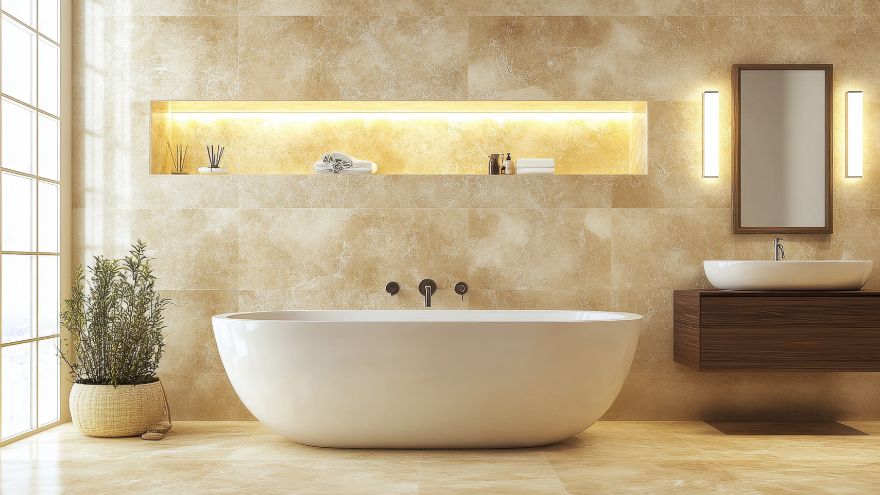
Check tiles at Onninen warehouse
Alternatives to tiles in the bathroom – proven solutions for modern interiors
1. Hydrophobic paints
One of the quickest and simplest methods of finishing walls in modern bathrooms is to use a special paint with hydrophobic and stain-resistant properties. High-quality products have a mild scent, are easy to apply, prevent the growth of fungi and mold, and come in many colors and variants. Thanks to their hydrophobic properties, bathroom paint effectively repels not only water but also liquid stains. Any greasy stains can be easily removed from the surface without the risk of damaging the coating.
2. Vinyl panels
Vinyl panels (also known as composite, LVT, Luxury Vinyl Tiles) are gaining popularity in modern bathroom interiors. They are characterized by water resistance, excellent durability, ease of installation, and exceptional aesthetics. They are a great alternative not only to classic ceramic tiles but also to materials such as wood or stone. Water does not penetrate the structure of the panels but remains on their surface, which increases their lifespan. A vinyl panel is made of several layers of polyvinyl chloride, protected by a transparent polyurethane coating. Innovative production technologies allow for the creation of a top layer with any pattern or color.
3. Bathroom wallpapers
Is wallpaper in the bathroom a sensible idea? Of course, but only if you choose a special, waterproof bathroom wallpaper, such as vinyl. It can successfully replace traditional ceramic tiles. Vinyl wallpapers are one of the hottest interior design trends![NORTHWOOD BEIGE floor tile 198x1198x8mm, structure, wood-inspired, matte, rectified, class I, abrasion resistance class: PEI4, slip resistance class: R10b, [pack=1.19m2=5pcs.] NT1053-002-1](https://onninen.pl/lib/images/25366446.jpg) of recent seasons. Modern variants are resistant to moisture and stains, so they can be safely used even in areas exposed to water. They are an excellent solution for those who want to introduce a bold pattern into the bathroom, for example, on one wall or within one zone.
of recent seasons. Modern variants are resistant to moisture and stains, so they can be safely used even in areas exposed to water. They are an excellent solution for those who want to introduce a bold pattern into the bathroom, for example, on one wall or within one zone.
4. Microcement
Another stylish and proven finishing material, ideal for a modern bathroom, is microcement. It is characterized by high durability and a raw aesthetic – similar to architectural concrete. However, it appears softer, more elegant, and luxurious. It is a great alternative to ceramic tiles in bathrooms designed in minimalist, loft, industrial, or modern glam styles. It can cover both walls and floors. A key practical advantage of microcement is its resistance to moisture, scratches, and mechanical damage, which means it is suitable for all areas in the bathroom, regardless of purpose and intensity of use. Moreover, microcement creates a uniform surface that does not require grouting. Therefore, there is no problem with grout that attracts dirt and bacteria. Various colors are available – not just standard grays.
5. Exotic wood boards
Wood brings warmth, coziness, class, and an exclusive character to the interior. For the bathroom, it is worth choosing boards made from exotic wood species, such as teak, iroko, wenge, or acacia. They have natural resistance to moisture. When choosing native species, it is necessary to ensure special, regular impregnation.
6. Stone and tempered glass
A good alternative to ceramic tiles, especially in bathrooms of those who appreciate natural finishing materials with a raw character and high durability, is stone, such as marble or granite. Combined with tempered glass, it allows for smooth, easy-to-clean surfaces, ideal for shower areas, among others.
7. Gres
In the list of bathroom solutions without traditional tiles, gres must be included - ceramics with a very dense and hard structure, exceptionally durable and resistant to mechanical damage and water. Gres tiles come in many color and finish variants, making them suitable for any bathroom, both modern and more classic.
We invite you to shop at the Onninen warehouse, where a complete bathroom equipment is available: from finishing materials, through fittings and sanitary ceramics, to accessories and spare parts. We offer products that meet high customer requirements in terms of durability, functionality, and design. Our advisors provide professional assistance.
FAQ
1. Can a bathroom without ceramic tiles be functional?
Of course! Today, there are many alternative – designer and practical finishing solutions available on the market, such as hydrophobic paints, vinyl panels, microcement, or gres.
2. What are the best alternatives to classic tiles?
The most popular solutions include hydrophobic paints, vinyl panels, waterproof wallpapers, microcement, and exotic wood boards.
3. Is wallpaper in the bathroom a good idea?
Yes, but only special wallpaper designed for humid rooms.
4. What is microcement and is it suitable for the bathroom?
Microcement is a thin-layer, durable, and waterproof finishing material with a unique, raw-luxurious aesthetic. It can be safely used in the bathroom.
5. What are the differences between gres tiles and ceramic tiles?
Gres tiles are characterized by excellent durability and low absorbency. They are resistant to abrasion, damage, and stains. They are ideal for wet areas and heavily used spaces. On the other hand, ceramic tiles are a good choice for those looking for a wide selection of patterns and colors, affordable prices, and easy installation.