At Onninen, as a leader in the installation market, we observe a growing awareness among installers regarding surge protection. The proper selection of surge protectors is a fundamental decision that affects the safety of the entire electrical installation. Modern electronic devices, increasingly sensitive to surges, require effective protection against both lightning strikes and switching surges.
Our many years of experience show that a properly selected and installed surge protector is an investment that pays off multiple times by protecting valuable equipment. In Onninen's range, we offer a complete range of solutions – from basic Type 2 surge protectors to advanced combined systems that provide multi-level protection for installations.
This guide, prepared by our team of technical experts, presents a practical approach to selecting surge protectors, taking into account the specifics of Polish installations and current regulatory requirements.
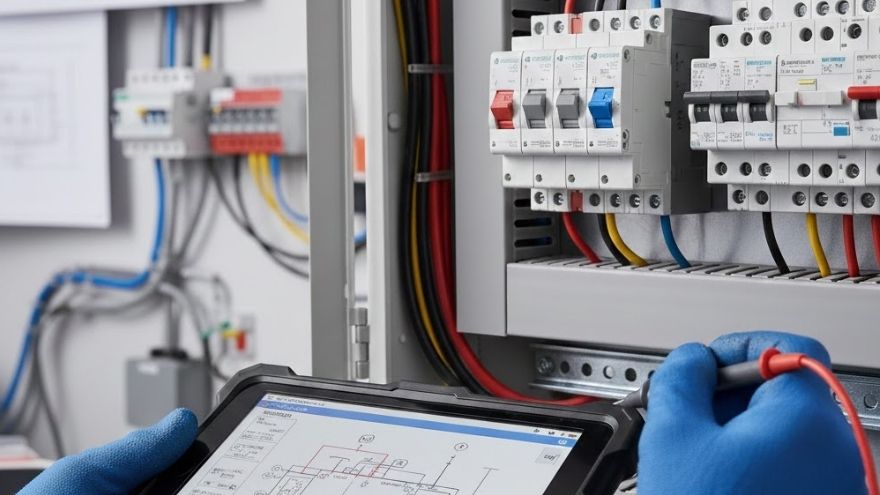
Check surge protectors at Onninen warehouse
Basics of selecting surge protectors according to the type of threat
The fundamental principle of selecting surge protectors is to analyze the type of potential threat in a given location. In Onninen's offer, you will find protectors tailored to every type of installation, from simple single-family homes to complex industrial facilities.
Type 1 Surge Protectors - first line of defense
Type 1 surge protectors are essential protection in the following cases:
- Buildings equipped with an external lightning protection system
- Facilities powered from overhead lines
- Buildings with metal elements on the roof (antennas, chimneys)
- Locations with high exposure to lightning strikes
Our experience shows that Type 1 protectors are characterized by resistance to impulse currents with a shape of 10/350 μs and can divert partial lightning currents of values up to several tens of kiloamperes. In main distribution boards, we recommend using models with an Iimp parameter of at least 12.5 kA for standard applications.
Type 2 Surge Protectors - standard in residential construction
Type 2 surge protectors are the most commonly used solution in our range. They provide effective protection against:
- Surges induced by nearby strikes
- Switching surges in the network
- Interference from industrial devices
Type 2 protectors are characterized by a fast response time (< 25 ns) and are optimized for impulse currents of 8/20 μs. In Onninen's offer, they are available in single, double, triple, and quadruple module versions, tailored to various power supply network configurations.
Type 3 Surge Protectors - local protection of devices
Type 3 surge protectors are installed directly next to sensitive devices. They are characterized by a very low limiting voltage (below 1.5 kV) and represent the last level of protection in a cascading system.
Key parameters when selecting a surge protector
As Onninen specialists, we recommend considering the following technical parameters when choosing a surge protector:
| Parameter | Description | Typical values |
|---|---|---|
| Uc | Continuous operating voltage | 230V AC, 400V AC |
| Up | Limiting level | 1.2-2.5 kV |
| Imax | Maximum impulse current | 15-65 kA (8/20 μs) |
| In | Nominal impulse current | 5-20 kA |
Selection of the number of modules according to the type of network
In our installation practice, we most often observe the following configurations:
- Single-phase TN-C network: 1-module protector (L-PEN)
- Single-phase TN-S network: 2-module protector (L-N-PE)
- Three-phase TN-C network: 3-module protector (L1-L2-L3-PEN)
- Three-phase TN-S network: 4-module protector (L1-L2-L3-N-PE)
Practical installation rules for surge protectors
Years of experience from the Onninen team show that the quality of installation is as important as the proper selection of the device. We present proven installation principles:
Location and order of installation
The surge protector should be installed in the main distribution board according to the following order of elements:
- Main switch (FR)
- Surge protector (SPD)
- Phase loss sensor
- Residual current devices (RCD)
- Overcurrent protection for outgoing circuits
This solution ensures safe access to the protector while simultaneously protecting the entire receiving installation. In Onninen's offer, you will find Type 1+2 surge protectors with a combined design that combines the advantages of both types of protection.
Requirements for connection wires
A key aspect of effective installation is the parameters of the connecting wires:
- Length of wires: maximum 0.5 m (recommended below 0.3 m)
- Cross-section of PE wire: minimum 6 mm² for Type 2, 16 mm² for Type 1
- Routing of wires: as straight as possible, without loops and unnecessary bends
- Material of wires: copper of appropriate flexibility class
Connection to the grounding system
The surge protector requires a reliable connection to the main potential equalization bus (GSU). In practical installation, we use a wire with a cross-section adapted to the type of protector and routed in the shortest possible way to the GSU.
Combined systems and cascading protection
In facilities with increased safety requirements, our team of experts recommends using cascading protection with surge protectors of different types. Such a system provides optimal protection parameters at every level of the installation.
Coordination principles for surge protectors
Proper coordination requires maintaining appropriate distances between individual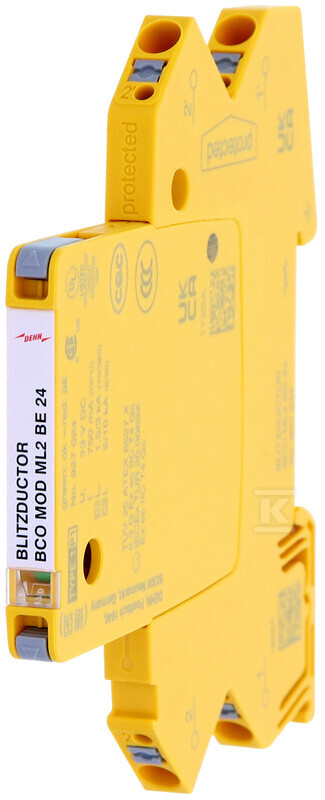 protection levels:
- Between Type 1 and Type 2: minimum 10 m of wire or coordination choke
- Between Type 2 and Type 3: minimum 5 m of wire
- In case of shorter distances: use of coordination chokes
In Onninen's offer, we provide ready-made combined solutions that eliminate the need for manual coordination between individual protection levels.
Protection of photovoltaic installations
PV installations require a specialized approach to surge protection. We use DC surge protectors on the direct current side and standard AC surge protectors on the inverter side. It is crucial to maintain the Ucpv parameter adapted to the operating voltage of the system (600V, 1000V, 1500V DC).
Common mistakes and how to avoid them
Based on service analyses and complaints, Onninen experts have identified the most common mistakes made during the installation of surge protectors:
Errors in device selection
- Using Type 2 in a facility with LPS: may result in damage upon the first lightning strike
- Inadequate number of modules: lack of full protection for all wires
- Underrated Imax parameters: premature damage to the protector
- Incorrect selection of voltage Uc: improper operation under normal conditions
Installation errors
- Too long connection wires: increased residual voltage
- Improper grounding: lack of effective surge diversion
- Installation behind the RCD switch: limiting the scope of protection
- Improper tightening of terminals: risk of wire detachment during surges
Frequently asked questions
1. When to use Type 1 and when to use Type 2?
Use Type 1 in buildings with a lightning protection system or powered from overhead lines. Type 2 is suitable for standard residential buildings powered by underground cables. In Onninen's offer, you will also find combined Type 1+2 surge protectors that combine the advantages of both solutions.
2. How many modules of the protector should be chosen for a three-phase installation?
In the TN-S network, use a 4-module protector (L1+L2+L3+N+PE). In older TN-C installations, a 3-module protector (L1+L2+L3+PEN) is sufficient. Modern installations require full protection for all wires, so we recommend 4-module solutions from our offer.
3. Does the surge protector require additional protection?
Additional protection depends on the design of the protector and its parameters. Most modern models in Onninen's offer have built-in thermal protection. Check the manufacturer's documentation – if additional protection is required, it will be clearly indicated along with the parameters of the required fuse.
4. How often should the surge protector be replaced?
Replacement depends on the status indicator on the device – a red flag indicates the need for replacement. Under normal conditions, protectors operate for 10-15 years. After strong storms with lightning strikes, we recommend checking the status of the indicators. Our products have clear markings that facilitate performance assessment.
5. Where to install the protector - before or after the main switch?
Install the protector after the main switch in the order FR-SPD-RCD. This solution ensures safe service access with the voltage turned off and protects the entire receiving installation. The main switch must be located before the protector to ensure safety during maintenance work.
6. What cross-section of the PE wire for the surge protector?
For Type 1 protectors, a minimum of 16 mm², for Type 2 a minimum of 6 mm². The PE wire must be routed in the shortest possible way to the main potential equalization bus. In practical installation, we use slightly larger cross-sections than the minimum to ensure connection reliability.
7. Can surge protectors from different manufacturers be combined in a cascading system?
Technically possible, but requires detailed analysis of coordination parameters. For certainty of system operation, we recommend components from one manufacturer from our offer, which are factory-coordinated. When combining different brands, an analysis of U-I characteristics is necessary, along with the use of appropriate coordination chokes.
Professional choice for demanding installations
At Onninen, we understand that every electrical installation has its unique requirements. Therefore, we offer not only a wide range of surge protectors from renowned manufacturers but also professional technical support from our specialists.
Our many years of experience in the installation industry shows that investing in high-quality surge protectors leads to long-term savings resulting from the protection of valuable electronic equipment. In Onninen's offer, you will find solutions tailored to every budget and type of installation – from basic residential protections to advanced industrial systems.
Remember that effective surge protection is not only about choosing the right protector but also about professional installation in accordance with the manufacturer's guidelines and current standards. Our technical team is ready to assist you in selecting optimal solutions for your projects – both in physical branches and through the Onninen online platform.