Pressure relays are key elements of industrial automation that serve as both sensors and switches simultaneously. In the Onninen assortment, we offer a wide range of these devices, which are used in pneumatic, hydraulic, and water installations. A pressure relay is a device that converts a pressure signal into an electrical signal, thus enabling the control of pumps, compressors, and other devices.
As experts in the field of technical installations, we see a growing demand for reliable automation solutions. Our many years of experience in the installation industry show that the correct selection of a pressure relay has a direct impact on the efficiency and safety of the entire system. In this article, we will present practical tips that will help installers choose the optimal solution.
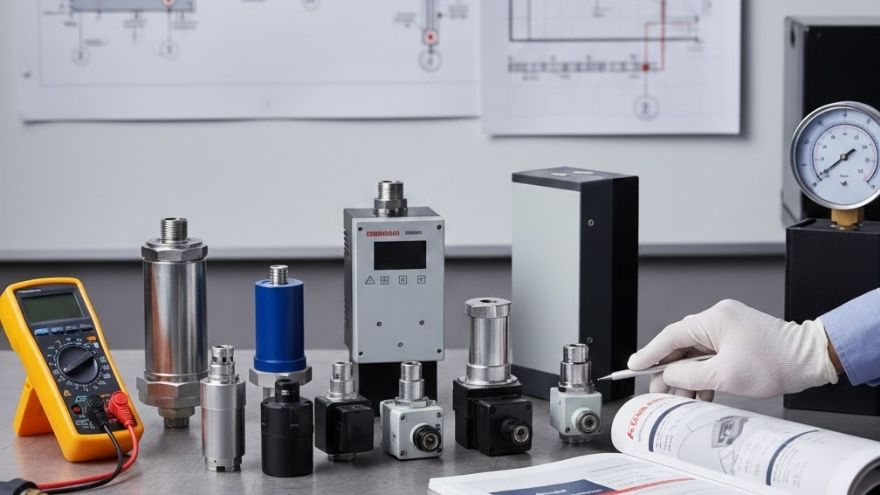
Check installation technology at Onninen warehouse
Basic types of pressure relays available in the offer
In our assortment, you will find various types of pressure relays tailored to specific applications. Each type is characterized by specific technical parameters and areas of application.
Mechanical pressure relays
Traditional mechanical solutions based on membrane or piston construction remain popular due to their simple design and reliability. In these types of devices, the pressure of the medium acts on the membrane, which activates the electrical contacts through a system of levers and springs. The advantages of mechanical relays include:
- No need for external power supply
- High resistance to industrial conditions
- Ability to operate over a wide temperature range
- Competitive price compared to electronic versions
Electronic pressure relays
Modern electronic solutions offer significantly greater functional capabilities. They utilize electronic pressure sensors connected to a microcontroller, providing precise control and additional diagnostic functions. In Onninen's offer, models with digital displays, programmable parameters, and communication with master systems are available.
| Relay type | Advantages | Typical applications |
|---|---|---|
| Mechanical | Simplicity, reliability, no power supply | Basic installations, water pumps |
| Electronic | Precision, additional functions, communication | Industrial automation, HVAC systems |
Key technical parameters when choosing a relay
The proper selection of a pressure relay requires consideration of a number of technical parameters. From our experience, the most common mistakes in selection arise from incomplete analysis of operating conditions.
Operating pressure range
The first and most important parameter is the operating pressure range of the relay. In Onninen's offer, models with various ranges are available - from devices for low pressures (0.05-0.8 bar) to high-pressure ones (up to 16 bar). We always recommend choosing a relay with an appropriate safety margin - the maximum operating pressure should be a maximum of 80% of the relay's maximum pressure.
Type of connections and installation
Standard pressure connections are G1/4" or G1/2" threads, but in our offer, you will also find models with M14x1.5 or NPT connections. A movable connection facilitates installation and subsequent maintenance work. Particularly practical are models with a rotating connection that can be adjusted to the configuration of the installation.
Electrical parameters
The parameters of the electrical contacts are crucial - rated voltage (230V/400V), maximum switching current, and type of contacts (normally closed/open). Our experience shows that selecting the appropriate contact load is essential for the long-term operation of the device.
Practical tips for selection for specific applications
Hydrophore installations
In hydrophore installations, the pressure relay controls the operation of the pump, ensuring a constant water pressure. We recommend models with a range of 1-4 bar for small domestic installations and 2-8 bar for larger systems. The pressure hysteresis function is important, as it prevents frequent switching on and off of the pump.
Pneumatic systems
In pneumatic installations, relays control the operation of compressors and pressure in tanks. For typical industrial applications, we recommend models with a range of 6-10 bar with adjustable switching pressure. In Onninen's assortment, there are also precision relays for demanding automation applications.
Hydraulic systems
Hydraulic applications require relays resistant to high pressures and aggressive media. We offer high-pressure models up to 16 bar with reinforced construction and corrosion-resistant materials.
Installation and configuration of the pressure relay
Proper installation of the pressure relay has a key impact on its functioning. From our many years of experience, we find that the appropriate placement in the installation determines the reliability of the entire system.
Choosing the installation location
The relay should be installed in a location representative of the controlled pressure, away from areas of turbulence and pressure spikes. In pneumatic installations, we recommend installation in air preparation blocks or using distribution blocks available in our offer.
Adjustment of operating parameters
Most mechanical relays have two adjustment screws - for setting the switching pressure and pressure difference (hysteresis). Electronic models offer much broader programming capabilities through the operating menu or dedicated software.
- Main screw adjusts the switching pressure
- Difference screw sets the hysteresis
- Digital models allow precise parameter programming
Maintenance and diagnostics of pressure relays
Regular maintenance of pressure relays ensures long-lasting and trouble-free operation. In our installation practice, we observe that preventive inspections significantly extend the lifespan of devices.
Typical faults and their causes
The most common problems with pressure relays are membrane damage, contamination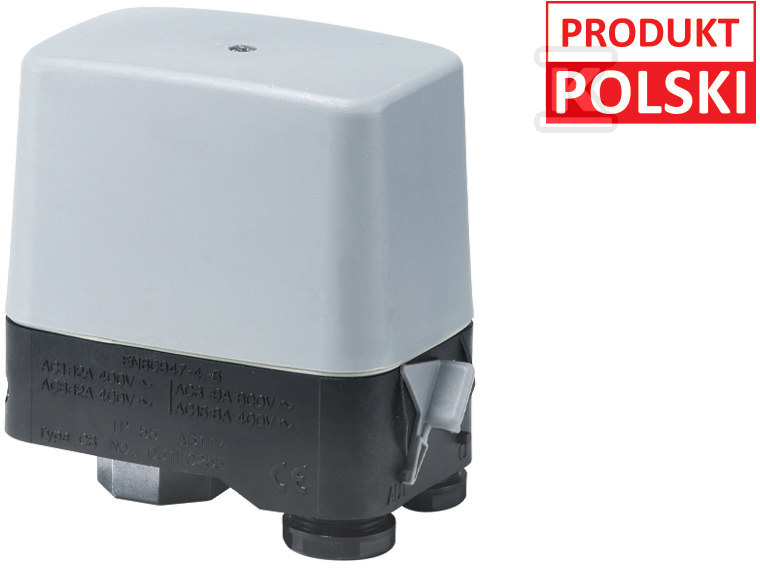 of pressure channels, and wear of electrical contacts. In the case of electronic relays, faults in sensors or electronic circuits may also occur.
Preventive actions
To prevent faults, we recommend regularly checking the tightness of the installation, cleaning air filters, and monitoring the electrical parameters of the contacts. In Onninen's offer, there are also safety limiters that protect relays from pressure spikes.
Frequently asked questions
1. What is the difference between a relay and a pressure transducer?
A pressure relay is a component that switches an electrical circuit upon reaching a set pressure value, while a transducer generates an analog signal proportional to the pressure (4-20mA, 0-10V). Relays are used to control devices, while transducers are used for measurements and visualization.
2. What parameters should be considered when choosing a relay for a compressor?
Key parameters include the operating pressure range, type of medium, and contact load. For typical industrial compressors, we recommend models with 6-10 bar with adjustable hysteresis. It is also important to match the supply voltage (230V/400V) to the parameters of the compressor motor.
3. Can a mechanical relay be replaced with an electronic one?
Yes, in most cases this is possible and recommended. Electronic relays offer greater precision, additional diagnostic functions, and communication with master systems. However, they require an external power supply and are more expensive than mechanical models.
4. How often should maintenance of the pressure relay be performed?
We recommend inspections every 6 months in industrial conditions and once a year in domestic installations. The inspection includes checking switching parameters, the condition of electrical contacts, and the tightness of pressure connections. In aggressive environments, the frequency of inspections should be increased.
5. What are the most common mistakes when installing pressure relays?
The most common mistakes are incorrect placement in the installation and incorrect selection of the pressure range. The relay should be installed in a location representative of the controlled pressure, away from sources of turbulence. It is also important to maintain a safety margin when selecting the operating range.
6. Do pressure relays require calibration?
Mechanical relays usually do not require calibration - it is sufficient to adjust the switching points with adjustment screws. Electronic models may require periodic calibration, especially in applications requiring high precision. In Onninen's offer, there are also models with calibration certificates.
Modern solutions in pressure automation
The development of technology translates into increasingly advanced solutions in the field of pressure automation. In Onninen's assortment, we continuously expand our offer with the latest technologies that provide installers with new possibilities.
Digital pressure relays with communication functions are the future of industrial automation. Models equipped with IO-Link interfaces allow remote monitoring of operating parameters, predictive diagnostics, and integration with Industry 4.0 systems. We also offer solutions with three-color displays that facilitate visual control of the system's status.
Particularly valuable are safety features such as dry run protection, phase supply control, and programmable time delays. These advanced capabilities make modern installation automation systems offer safety and efficiency at the highest level.
In our offer, you will find complete solutions - from basic mechanical relays to advanced digital systems. Our specialists provide professional technical advice, helping to select the optimal solution for each application. An example of such an approach is the Danfoss CS pressure switch with a range of 2-6 bar, which works perfectly in medium-sized hydrophore installations.
Investment in reliability and safety of installations
Choosing the right pressure relay is an investment in the long-term reliability of the entire installation system. At Onninen, we offer comprehensive solutions - from traditional mechanical relays to advanced digital systems with communication capabilities.
Our many years of experience in the installation industry show that the quality of the components used directly translates into operating costs. Therefore, in our assortment, you will find only products from trusted manufacturers that guarantee high reliability and long lifespan.
We invite you to take advantage of the knowledge and experience of our specialists. In Onninen branches across Poland, we provide professional technical advice that will help in selecting the optimal solution for each application. The comprehensive offer of installation technology combined with expert advice is a guarantee of success for every installation project.