You can never have too many electrical sockets! Even if you have planned a large number of them at the construction or renovation stage, there is still often a lack of contacts to connect the devices that appear in the house. Power supply shortages are effectively compensated by surge protectors and extension cords. A surge protector has the form of an elongated housing, which contains electrical sockets and various types of protection. It acts as a splitter and allows you to safely connect several devices to one socket. Thanks to its suitably long power cable, it also plays the role of an extension cord. It allows you to avoid modifying the electrical network when the socket is located far from the connected devices. The Onninen electrical wholesaler has no shortage of surge protectors and extension cords - for home use and special applications. Find out which extension cord to choose.
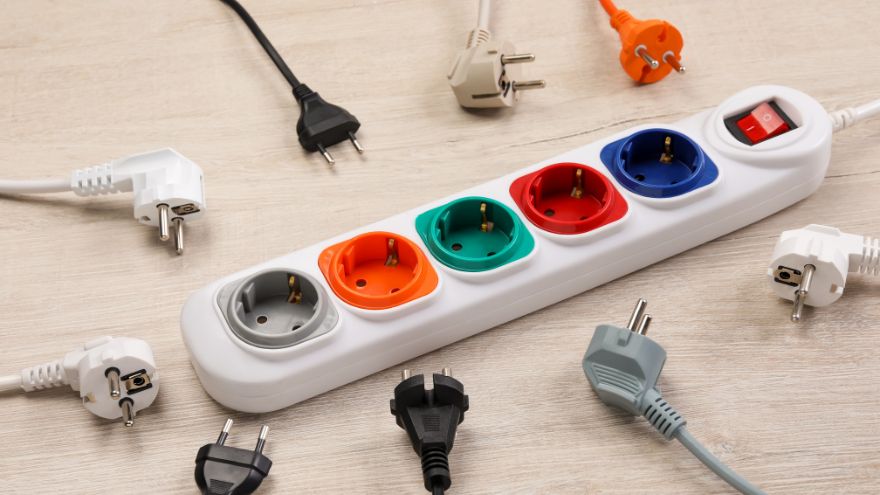
Check out the extension cords at the Onninen wholesaler
How powerful should a good extension cord be?
When choosing an extension cord, you should look at its type (you can distinguish, among others, construction extension cords, garden extension cords and home extension cords) and the most important parameters. The following are important:
- number and type of sockets,
- cable length,
- maximum load,
- number of switches,
- IP tightness class,
- wire insulation,
- wire cross-section.
The selection of an extension cord should take into account the requirements of the devices that are to be connected to it and used at the same time. The parameter that determines the power of the devices is the maximum load. Most extension cords available in our wholesale can be loaded with a current of 16A, which is sufficient for the operation of a wide range of devices. Standard home and garden extension cords allow for the transfer of current up to 10A. They will be suitable, for example, for connecting a lawn mower.
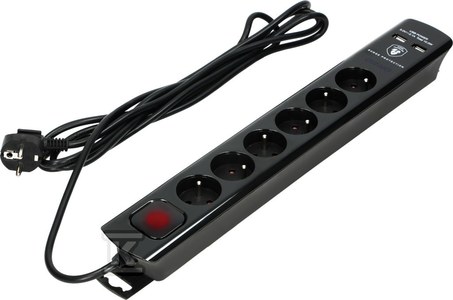 It is worth remembering that manufacturers recommend working with a fully unrolled extension cord. However, as the extension cord length increases, the voltage drops, so a receiver on a very long cable may simply work less well. If you are looking for an extension cord to power a lawnmower, for example, do not overdo it. Do not choose it "too much". Adjust the length of the cord to the real needs in terms of distance. To supply power to the lawnmower and comfortably mow the grass in the garden, will a 20 m cable be enough for you? Buy this length. A 50 m reel extension cord is unnecessary in such a case. In addition, a cable that is too long will get tangled and get in the way.
In addition to the rule that voltage drops with cable length, it is worth knowing another rule that affects work efficiency and safety - do not overdo it with the number of high-power devices connected! For example, a kettle, microwave and hotplate should not be connected to the same extension cord. In case of any doubts, consult an electrician - especially if you have no experience in counting watts. You will sleep more soundly.
When choosing an electrical extension cord for heavy loads, take a look at the dimensions of the cord. A large cross-section of the wires (min. 1.5 mm) means greater possibilities for the extension cord. The number of wires is also important. Special power extension cords (three-phase) are designed for work with high voltage. They provide power to devices of various capacities. They are mainly used by professionals. They are useful on construction sites, in workshops and manufacturing plants.
How many sockets should an extension cord have?
Pay attention to the sockets placed on the surge protector or extension cord, both their quantity and type. This feature determines the functionality of the product, or more precisely - the number and type of devices that you will be able to connect to the electrical network. You can choose from extension cords, power strips and surge protectors with a different number of sockets. There are usually from 2 to even 10 of them. Think about how many sockets you definitely need and add 1-2 sockets to this value just in case. In addition to traditional sockets, modern extension cords and strips often have USB inputs. You can read more about extension cords with USB sockets later in the article.
Is it better to choose an extension cord with or without grounding?
Extension cords with grounding are becoming the standard due to significantly greater safety of use and universality of use. You can connect both devices that do not require grounding, as well as devices equipped with a plug with a hole for a grounding pin. In our wholesaler, even simple and inexpensive extension cords have sockets with grounding. On the other hand, you can use an extension cord without grounding in the case of devices made in the 2nd insulation class, equipped with flat plugs - without an input for a grounding pin.
Extension cords with USB socket
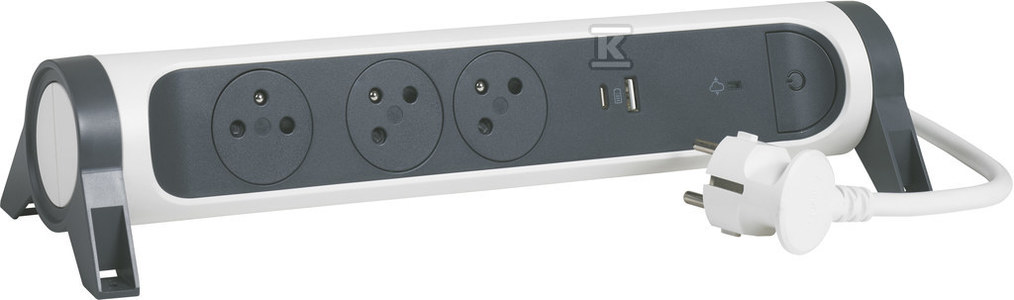 As mentioned earlier, extension cords can have both standard 230V sockets and USB ports. An additional USB socket or sockets are usually offered by modern home extension cords. They allow convenient charging of mobile devices. And of course not only. You do not have to connect the "whole" charger (mains adapter), you just plug in the USB cable with the appropriate type of tip. A USB extension cord supports the mobility of users at computer stations, both in homes and apartments, as well as in companies.
Check out the USB extension cords at the Onninen wholesaler
What types of USB splitters are there?
A USB splitter , also known as a USB hub or USB splitter, is an extremely useful device that allows you to connect more than one type of plug to a single USB port. The construction of a USB splitter is based on a cable with a USB plug, e.g. USB-A, micro USB or USB-C, and several identical or different USB inputs. A special controller works under the casing. The device may additionally have a main switch or independent switches for each input. USB splitters are divided into:
-
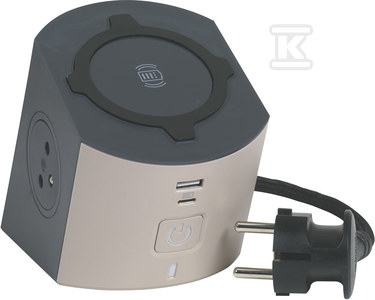 passive – without additional power supply system, they are compact and lightweight, they are used in devices with lower energy consumption;
 - active – with a separate power supply and multiple USB ports, they are larger and heavier than passive models, suitable for connecting devices with high energy requirements;
active-passive – an intermediate solution that allows disconnection of the power source.
Note! A USB splitter is also often referred to as a power strip or extension cord with traditional sockets and additional USB ports.
How to choose the right surge protector?
A surge protector is one of the most popular home extension cord options. It differs from a standard power strip in terms of functionality – it protects connected devices from the negative effects of mains surges. When an incorrect voltage is detected, the device (e.g. a computer monitor) is immediately disconnected from the power supply. In high-end power strips, the response time is about 1 nanosecond. The process of purchasing the right surge protector is similar to choosing an extension cord. It is based on similar criteria. You should consider the maximum load, number and type of sockets, cable length and type of protection. For home use, a power strip with traditional and USB sockets, a 3-core cable and a switch will be ideal.
Which extension cord for household appliances is best?
To connect valuable household appliances, it is worth using a good quality surge protector with the required parameters. However, in the case of large household appliances with a high demand for electricity, such as a refrigerator, dishwasher, washing machine or electric cooker, it will be safer to connect the device directly to the installation (socket). Connecting to an extension cord increases the risk of it overheating, and overheating is one of the causes of fires.
Which extension cord is suitable for a welding machine?
 The parameters of the supply current are crucial for the correct operation of the welder, and therefore for the quality, efficiency, safety and comfort of the welding work performed. Even small voltage drops can have a negative impact on the functionality of the device and increase the risk of failure. Therefore, it is really worth taking care when choosing an extension cord for the welder - especially if you are a professional welder and have advanced, expensive equipment.
- First, pay attention to the cross-section of the wires. It must be large enough. 2.5 mm2 is the minimum.
- Secondly, choose an extension cord that is the optimal length for you. Remember that when using an extension cord, the cord should be completely unwound to prevent overheating. Don't buy an overly long extension cord just because it can be used for other tasks.
- Third, look at the socket types. Make sure the model is compatible with your welder.
- Fourth, check the resistance of the equipment – an extension cord used in difficult environmental conditions should be resistant to mechanical damage and have an appropriately high IP tightness class. Be sure to verify the type of wire insulation.
Extension cords at the Onninen wholesaler
In the Onninen electrical wholesaler you will find extension cords, surge protectors and USB splitters, designed for various standard and non-standard applications. You can order an extension cord for construction, home, apartment and office, as well as for gardening. We have models with increased tightness class and resistance of cables to damage, adapted to work in extreme conditions. The offer includes drum extension cords up to 50 m long and many shorter models, whose cables are less than 3 m long. We cooperate with the most valued manufacturers and suppliers of home, office and RTV equipment on the market. You gain a guarantee that you are buying a product of reliable origin and proven parameters.