The heat demand of a building is the amount of energy needed to maintain the desired temperature indoors – regardless of external conditions. Correctly calculating this parameter is the basis for thermal comfort and the efficiency of the future installation, e.g., underfloor heating. We have prepared a guide explaining how to make such calculations and then select the appropriate underfloor heating system using KAN-therm Blue Floor pipes.
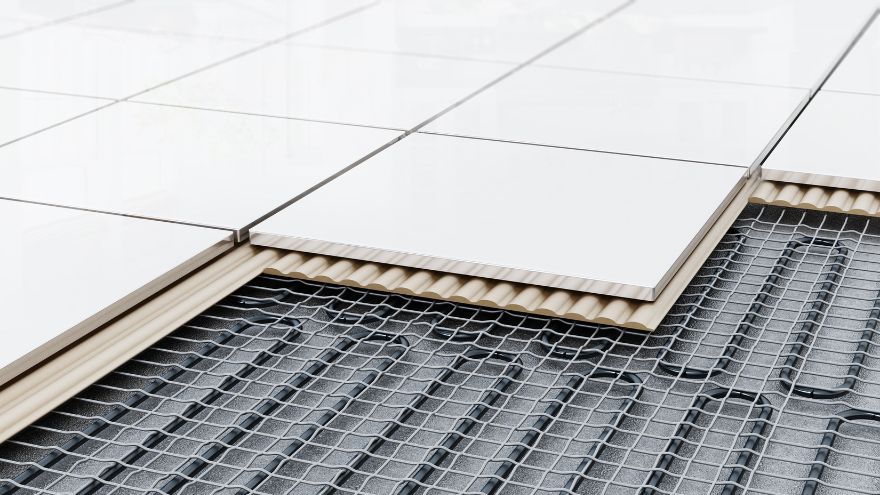
Check KAN-therm pipes at Onninen wholesaler
Why calculate heat demand?
Calculating heat demand allows you to design a heating system with optimal parameters – particularly power. Based on the calculations, the power of the heat pump or other heating device is selected. This is important because insufficient heating will cause difficulties in achieving thermal comfort, especially on cold days, while excessive heating may consume more energy or fuel. This parameter is expressed in watts (W) or kilowatts (kW).
How to calculate the heat demand of rooms?
To calculate the heat demand of rooms, you need to consider, among other things:
- the type of building (single-family/multi-family, insulated, with new joinery, energy-efficient, etc.),
- the area requiring heating,
- thermal insulation parameters,
- the size and arrangement of windows and doors,
- local climatic conditions,
- the way the rooms are used,
- preferred temperatures.
To calculate the heat demand, a universal formula can be used, utilizing approximate power values per square meter [W/m²]. However, one must be aware of the risk of errors, as the heat demand of a given room can oscillate between 60-200 W per m2 depending on, among other things, the number of windows and external walls, as well as the function of the room. The heat demand in a living room, kitchen, or hallway is usually 70-100 W per m2, while in bathrooms, it is 100-150 W per m2, as a few degrees higher temperature is often expected there.
For example, if you find that a room with an area of 20 m² has a heat demand of 80 W/m², the required power will be 1600 W (1.6 kW). Of course, professional installation designers do not perform such calculations manually or "by eye," but use specialized software.
Selection of underfloor heating system with KAN-therm bluePERT pipes
KAN-therm PE-RT Blue Floor pipes, such as bluePERT pipe - 16x2.0 coil 600 m from Onninen wholesaler, are high-quality, homogeneous, five-layer elements made of polyethylene with enhanced thermal resistance and flexibility, in accordance with the standard PN-EN ISO 21003-2:2009+A1:2011. They are used for 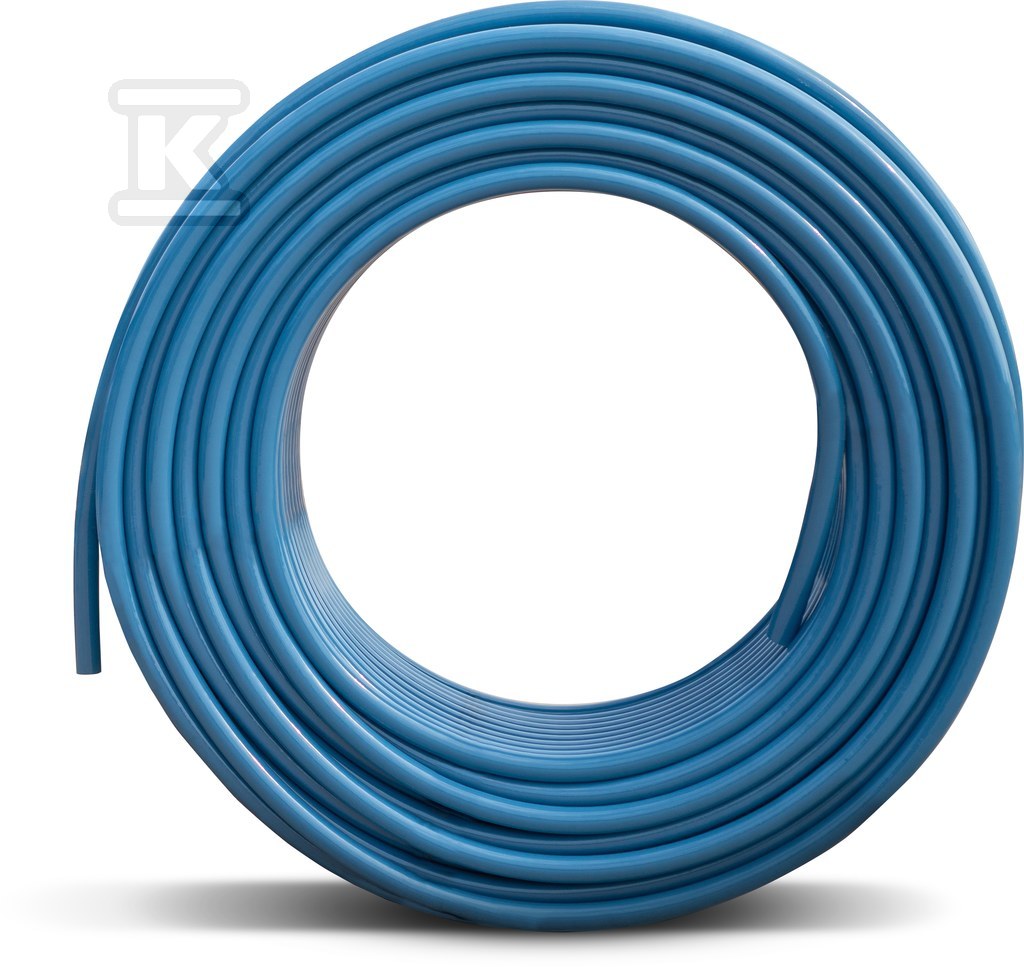 building modern surface heating and cooling installations. All layers of the pipes are permanently bonded during the manufacturing process. One of the layers is an EVOH (ethylene vinyl alcohol) anti-diffusion barrier, which prevents oxygen from penetrating from the environment through the walls into the pipe, thus preventing corrosion of installation components. KAN-therm bluePERT pipes perform excellently in underfloor heating systems, ensuring even heat distribution and long-lasting, trouble-free operation of the underfloor heating.
When planning underfloor heating using blue KAN-therm pipes, you should be guided by the calculated heat demand and the planned layout of the rooms. The available pipes differ in outer diameter and coil length. For standard and uncomplicated projects, you can use an online underfloor heating selection calculator. Such calculators (configurators) are often provided free of charge by stores and wholesalers offering KAN-therm bluePERT pipes. These tools help quickly and easily select the products needed to create an underfloor heating system. You only need to enter literally a few data:
- the total area in m2 that is to be heated by underfloor heating,
- the number of floors,
- the number and areas of rooms with underfloor heating.
Based on this, the calculator will display the recommended products in the necessary quantities to create the underfloor heating installation: from pipes, through foils, to distributors, cabinets, and clips. For example, one of the calculators showed that to lay underfloor heating in a 4-room apartment with a total area of 70 m2, the following are needed:
- 1 x KAN-therm PE-RT Blue Floor pipe with EVOH 5-layer cover - 16x2.0 coil 200 m,
- 1 x KAN-therm PE-RT Blue Floor pipe with EVOH 5-layer cover - 16x2.0 coil 600 m.
Before purchasing, we recommend consulting with an installer.
FAQ
1. Why calculate heat demand in rooms?
Correctly calculating heat demand allows you to select the optimal power of the heating system, which in turn is the basis for thermal comfort and efficient operation of the installation.
2. What factors should be considered when calculating heat demand?
During calculations, you should take into account the type of building, the area to be heated, thermal insulation, the size and arrangement of windows and doors, climatic conditions, and preferred temperatures in the rooms.
3. How to check how many pipes I need for the underfloor heating system?
The easiest way is to use an online underfloor heating selection calculator. Such calculators are often available on the websites of pipe sellers. After entering basic data (heated area, number of floors, number and areas of rooms with underfloor heating), the recommended products in the necessary quantities will be displayed.