Work footwear is undoubtedly one of the most important elements of an employee's equipment. It is important to remember that many hours are spent in work shoes. For this reason, they should be extremely comfortable, but they should also provide safety. Today we will tell you what work footwear to choose.
Check out the work shoes at the Onninen wholesaler
Work footwear for increased safety
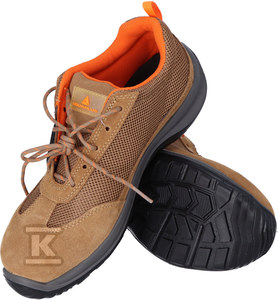 Work footwear should provide maximum protection against mechanical injuries or various substances. It should undoubtedly be adapted to the work environment. Therefore, in the case of low temperatures, insulation is necessary, while in high temperatures, footwear made of polyester and cotton should be chosen, as these materials allow the skin to breathe. Work footwear should generally provide protection, but also comfort. The heel must adhere to the shoe, while the insole should be half a centimeter longer than the foot, so the footwear cannot be too small or too large. Pressing the feet is also undesirable, as it can cause them to swell.
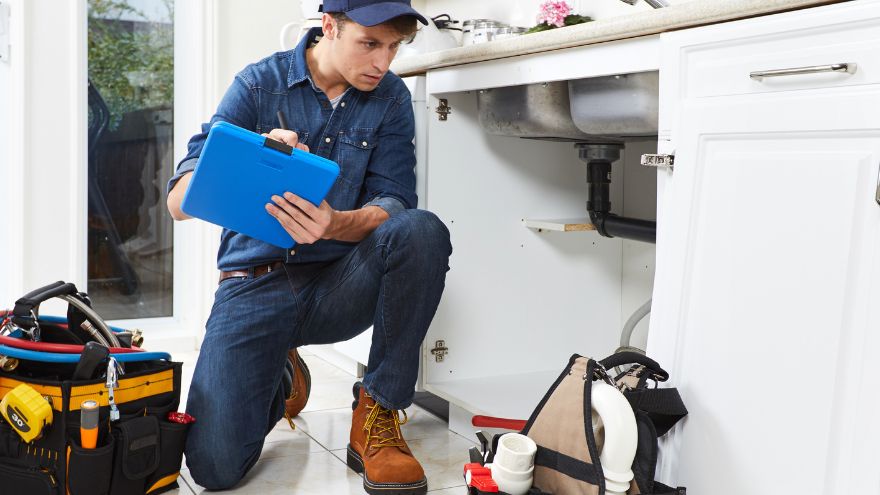
The work of a plumber or electrician often requires the use of heavy tools, and in addition, the work environment can be variable. In such a case, it is best to choose work shoes such as half-boots or ankle boots that have a toe cap that withstands impacts with a certain energy, e.g. 100 J or 200 J. Such work shoes should also provide protection against compression. It is important to remember how important the sole is. You can choose one made of single-density polyurethane. It is characterized by thermal resistance up to 100 degrees Celsius. An alternative is double-density polyurethane. Thanks to it, the footwear has even greater mechanical resistance. There are also soles available, where a combination of lightweight polyurethane and nitrile rubber is used. Thanks to this, even greater resistance to chemicals or high temperatures is achieved. Properly selected work shoes increase safety even during difficult or demanding work. Protection and health and safety are at the highest level.
Work footwear - which to choose for an electrician and which for a plumber
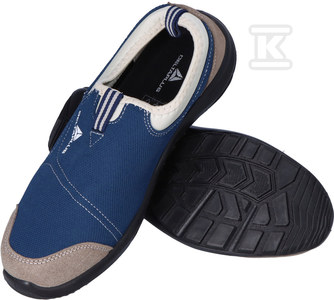 Installers often perform extremely complex work in a dangerous or high-risk environment, which is why it is essential to have the right work shoes. For example, velour and polyester models are extremely durable, but also comfortable. These are non-magnetic shoes, which means they do not contain metals and do not attract electrical energy. It is important that they also absorb energy in the heel.
Footwear should also have a lining with high vapor permeability. Work footwear with composite does not conduct heat or cold, so it does not cool the feet or overheat them. It therefore increases the comfort of work in unfavorable conditions. You can also choose footwear that has been equipped with a sole injected from polyurethane of uniform density.
For work in a dry environment 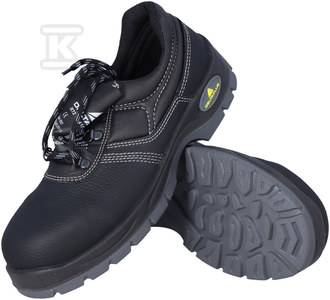 the best choice will be half-boots with suede or cotton finish. On the other hand, higher boots are better used in more difficult working conditions, and should meet the most restrictive standards such as S1P or S3. The first standard states that the footwear has toe caps and anti-puncture inserts.
It will therefore work well for an electrician, while the S3 standard means that the footwear is resistant to water, does not let it through or absorb it. This makes it the best choice for a plumber. It should not be forgotten that in difficult conditions or during earthworks, leather footwear, such as insulated boots, will work best.
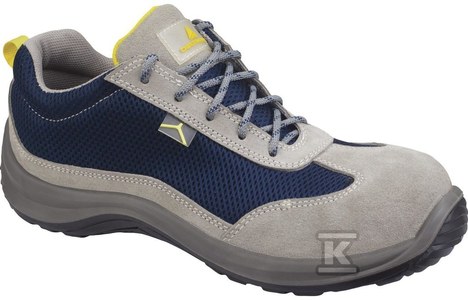 It is good if they are waterproof and the waterproofness is of the highest class, i.e. third. Such footwear should be made of two-layer polyurethane of different density, which overlaps the toe. In this way, even greater reliability is achieved. Leg protection often requires the use of an additional group of accessories such as knee pads, which are required by health and safety regulations when performing work on the knees.
Work footwear should be adapted to the type of work performed. Therefore, not only quality is important, but also the material, or additional levels of protection, such as an anti-puncture insert or a metal or composite toe. Footwear should not be glued, sewn work footwear will definitely work better. For even greater safety, it is worth using footwear with ankle stabilization.