Selecting the right relay for your application is a key step in the design of electrical and electronic systems. Relays, which are electrical switches controlled by current, play a major role in many systems, from simple household appliances to complex industrial systems. The right selection of a relay affects the reliability, durability and safety of the entire system. Below are the aspects that should be considered when selecting a relay in this process.
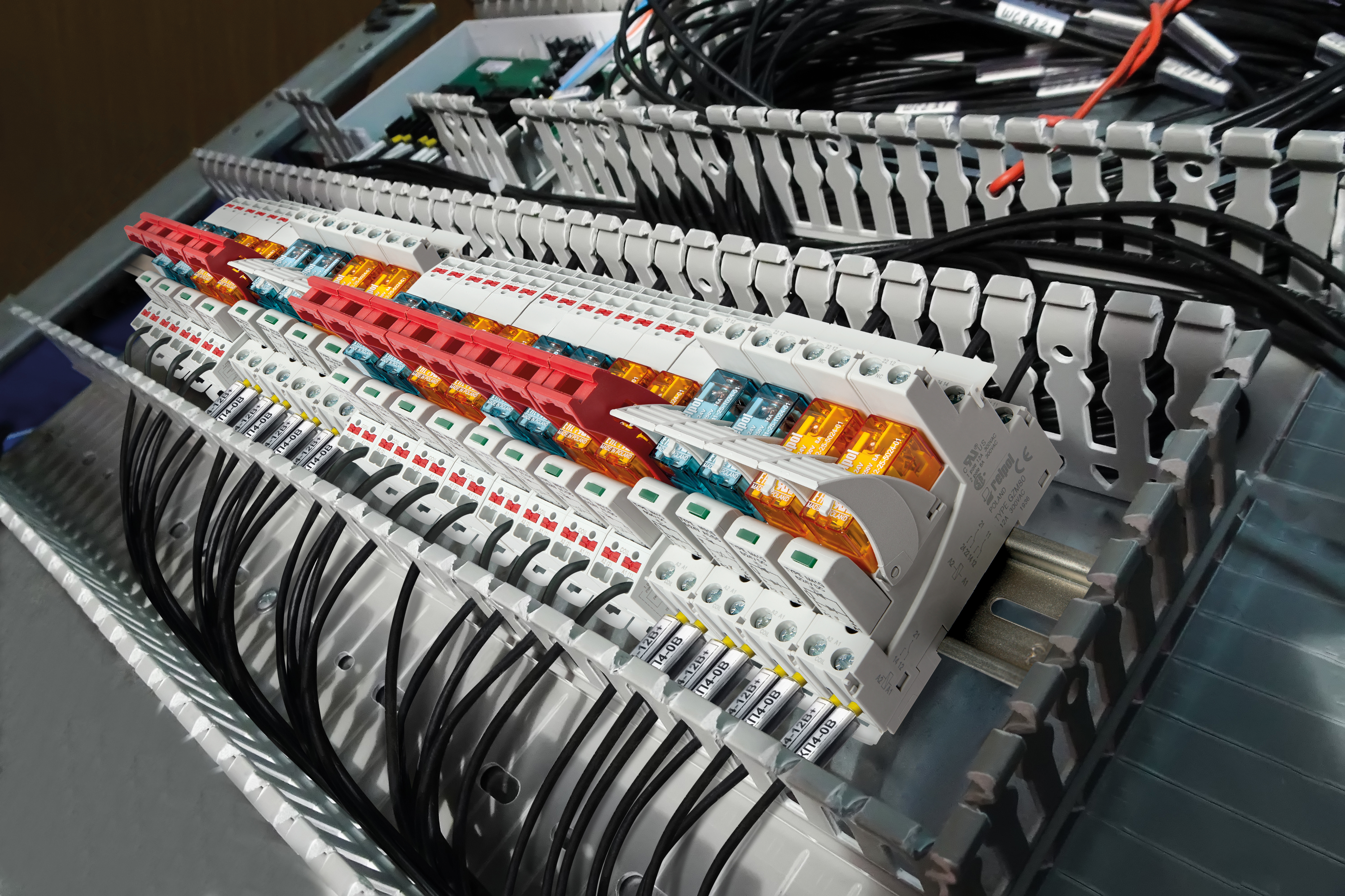
1. Load type
The first step in selecting a relay is to determine the type of load to be controlled (the controlled system). Depending on whether the load is resistive (e.g. heaters), inductive (e.g. motors), or capacitive (e.g. capacitors), you should select the appropriate type of relay that will be able to operate safely and effectively with that load. It is also worth considering the contact material used in the relay, because its proper selection affects conductivity and resistance. Relpol relays have these features thanks to having different versions - the offer includes models with AgSnO₂ (e.g. R15 ) and AgNi (e.g. R2N, R3N, R4N ), which are also available in gold-plated versions.
2. Voltage and loads
The next step is to determine the load voltage and current. The relay must be able to handle the maximum values of these parameters. Remember to include a certain safety margin so that the relay does not work at the limit of its capabilities, which could lead to its faster wear or failure. Another important aspect is to take into account surge currents that may occur when the load is switched on. A good example are the RPI series relays - RPI-1ZI-D12 and RPI-1ZI-U24A , which can withstand currents up to 120 A and are resistant to overloads.
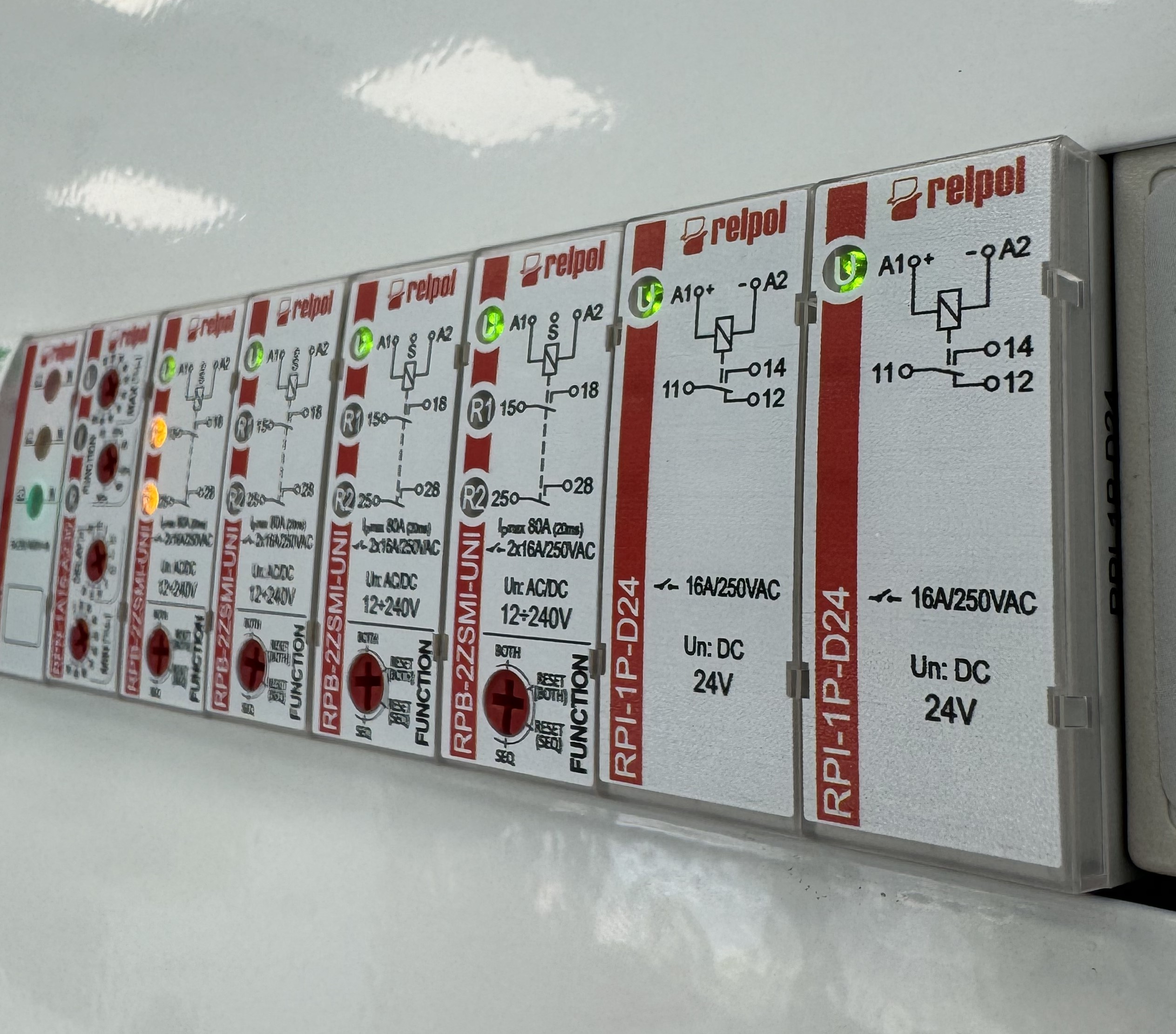
3. Control voltage
The relay requires a specific voltage to switch on the control coil. It is important that the relay's control voltage is consistent with the voltage in the control system. This can be direct current (DC) or alternating current (AC). Additionally, the coil's operating range for different supply voltages and the effect of temperature on its operation should be taken into account. Relpol's offer includes relays dedicated exclusively to work with direct current (DC) or alternating current (AC), but also universal models that support both types of voltage, such as the narrow-profile PIR and SIR interface relay series. This allows you to select the right relay for the specifics of a given control system.
4. Number and type of contacts
Depending on the application, relays may differ in the number of contacts and their configuration. Selecting the right type of contacts allows for the correct operation of the system or device in which it is used. Relays may have from one to several contacts, which allows for more complex switching operations. An example of a relay with a large number of contacts is the RPC-4ME-UNI from Relpol, equipped with four sets of changeover contacts. Another solution is the R15 4P relay, which also offers four contacts and is intended for industrial applications.
5. Working environment
The environmental conditions in which the relay will operate are also important. Temperature, humidity, and the presence of potential corrosive factors must be taken into account. Relays designed for operation in difficult conditions are specially sealed, which gives them an increased degree of protection. In very dusty conditions, it is therefore worth using relays with increased tightness (IP), for example the RM96 or RM84 relay, also used for high voltages.
6. Special application requirements
Some applications may require relays with special properties. For example, in applications with small signal currents, it is recommended to use relays with gold-plated contacts, which provide better conductivity. In applications with high surge currents, relays with contact materials such as AgSnO2 may be more suitable due to their higher resistance to wear. For applications requiring large contact gaps, the RUC-M relays are an excellent choice, which in the 1 NO version offer a contact gap of ≥ 6 mm, ensuring high arc extinguishing capacity. On the other hand, the RG25 relays are characterized by high switching power, high test voltage and a wide operating temperature range.
See Relpol relays at the Onninen wholesaler
Relpol switching power supplies as relay operation support
Choosing the right relay is one thing, but providing it with a stable power supply is equally important. Relpol power supplies offer high quality, reliability and a wide range of parameters, making them an ideal choice in the relay selection process. Relpol switching power supplies provide optimal operating conditions for relays, which increases the durability and reliability of systems. They are available in various versions, allowing for adjustment to specific application requirements.
Types of Relpol switching power supplies:
- Modular power supplies (RZI...MN): Designed for industrial automation, commercial equipment and building automation. Equipped with overvoltage, short circuit and overload protection.
- Power supplies with relay (RZI...MSN): They have a relay output that provides information about the power supply's operating status, which is useful in advanced automation systems. Protection includes short circuit, overvoltage and overload protection.
- Industrial power supplies (RZI...PN): Dedicated to industrial automation and power supply of packaging, construction and weaving machines. Equipped with temperature, short circuit, overload and overvoltage protection.
Sample models:
- RZI100-24-MN : Modular power supply with a power of 100 W, an output voltage of 24 V DC and a current of 3.83 A.
- RZI60-12-MN : Modular power supply with a power of 54 W, an output voltage of 12 V DC and a current of 4.5 A.
- RZI15-12-MN : Modular power supply with a power of 15 W, an output voltage of 12 V DC and a current of 1.25 A.
- RZI100-24-MSN : Power supply with relay, 100 W, output voltage 24 V DC, current 4 A.
- RZI120-24-PN : 120 W industrial power supply with an output voltage of 24 V DC and a current of 5 A.
Summary
Selecting the right relay for your application requires taking into account many factors, from the type and parameters of the load, through the control voltage, to the environmental conditions. Using high-quality power supplies, such as those offered by Relpol , provides additional support, ensuring stable and reliable operation of the relays. As a result, properly selected components contribute to the failure-free operation of the entire system, which is crucial in many areas of industry and electronics.
It is impossible to describe all the examples of applications that you can deal with, so it is worth consulting technical advisors who will help you choose the right solution. Relpol has gained vast experience in manufacturing products dedicated to customer requirements and is happy to share its knowledge to support designers and engineers in the implementation of their projects.