Geotextile is an innovative geosynthetic material made of polypropylene fibers (polypropylene geotextile) or polyester fibers (polyester geotextile). In the production process, the fibers are mechanically connected by needling or stitching or thermally by welding. The use of synthetic fibers determines the unique physicochemical properties of the material. The exact use of geotextile depends on its type. There are several main product groups, differing in parameters and properties. The selection of geotextile should take into account the requirements of a specific project.
Check out geotextiles at the Onninen wholesaler
In what places is it worth using geotextile?
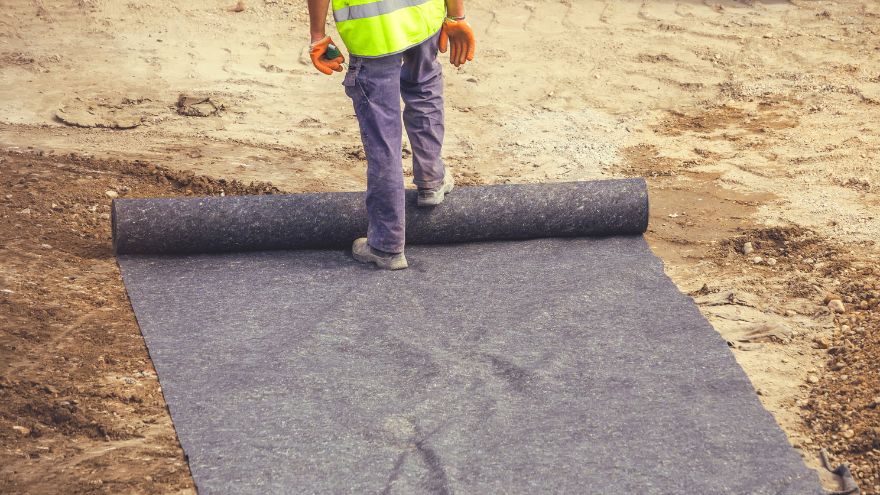
Geotextile is an incredibly versatile product. The fibers of the material make it suitable for filtration, separation, reinforcement, drainage and protection. Geotextiles provide soil stabilization and reinforcement. They allow to maintain the appropriate level of substrate moisture. They are used to separate aggregates of different thickness. They protect water embankments and river banks. They protect geomembranes from damage. They create a layer resistant to punctures by growing roots and plants. Geotextile can be found in many places today.
 The widest product group is filtration and separation geotextiles. They prevent the mixing of different layers of the substrate, which allows for reducing the thickness of the supporting layer in the substructure structure and extending its durability. The filtration properties of the material accelerate soil consolidation. Geotextiles of this type are resistant to puncture by roots and weeds. At the same time, they ensure water permeability. They are used in the construction of roads, airports, tracks, parking lots, sports fields, water tanks and sewage treatment plants.
Another variant is a filter geotextile. Its main task is filtration, i.e. retaining soil particles. At the same time, it guarantees the free flow of water between two layers of soil. Drainage pipes are wrapped in filter geotextile, which prevents erosion.
Another type is drainage geotextile (also known as drainage geotextile). It protects the drainage system from clogging and silting. It has very good filtration properties and is resistant to stretching. It strengthens weak substrates. It allows for effective water drainage. At the same time, it does not allow stones, gravel or sand to pass through. It is widely used not only in water construction, but also in gardening, where it is used, among other things, to separate layers of the substrate and stabilize it.
How to properly lay geotextile in drainage?
A properly selected and correctly laid drainage geotextile allows for a fully effective drainage system. The type of material and the method of installation should be adapted to a specific project, e.g. the implementation of French drainage, securing drainage pipes or improving the mechanical properties of the substrate.
If you are not sure which drainage geotextile will be best for your planned application, you can contact Onninen’s technical advisory team.
What is the difference between geotextile and agrotextile?
Gardening enthusiasts often have a dilemma about which material to choose – geotextile or agrotextile. Both products are modern materials that are great for gardening. Agrotextile is made of polypropylene. It is characterized by an irregular weave and low grammage. It is ideal for protecting plants and increasing the effectiveness of crops. On the other hand, geotextile is most often used in gardening to separate and stabilize bulk materials. It is also used in the construction of water bodies, where it protects the foil from damage. The choice of solution therefore depends on the work you plan to perform.
Geotextile in the Onninen wholesaler
 At the Onninen wholesaler, retail and wholesale customers can find a wide selection of geotextiles, adapted to various construction and gardening works. We offer the highest quality materials, coming only from renowned companies and brands, such as Kaczmarek , Aqt Water or Graf .
Need help choosing geotextile weight, roll length or fiber type? Contact us, we will be happy to advise!