LED lighting and bulbs are with us at every step, giving us more energy-efficient and ecological light. There are many different types of LED bulb threads that can be adapted to any application. Read the article and see which thread to choose for your lighting.
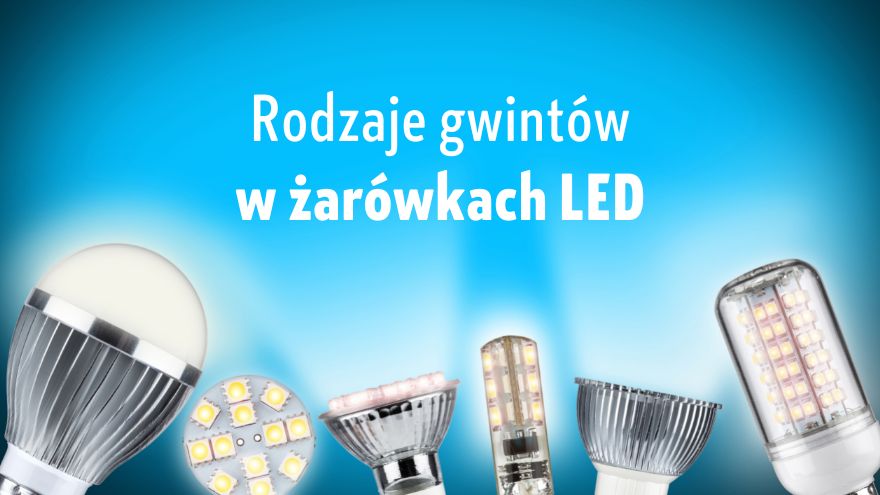
Who invented the LED light bulb?
One of the turning points in the lighting industry was the invention of the LED, which initially emitted blue light. The patent of Japanese scientists, which they worked on in the 1990s, was awarded the Nobel Prize in Physics in 2014. The winners of the award were: - Isamu Akasaki, Hiroshi Amanoi, Shuji Nakamura. These three people contributed to the dissemination of LED technology and the use of this light source in commercial and office lighting. The first model of an LED bulb hit the market in 2009 and was manufactured by Philips .
Check out the LED bulbs at the Onninen wholesaler
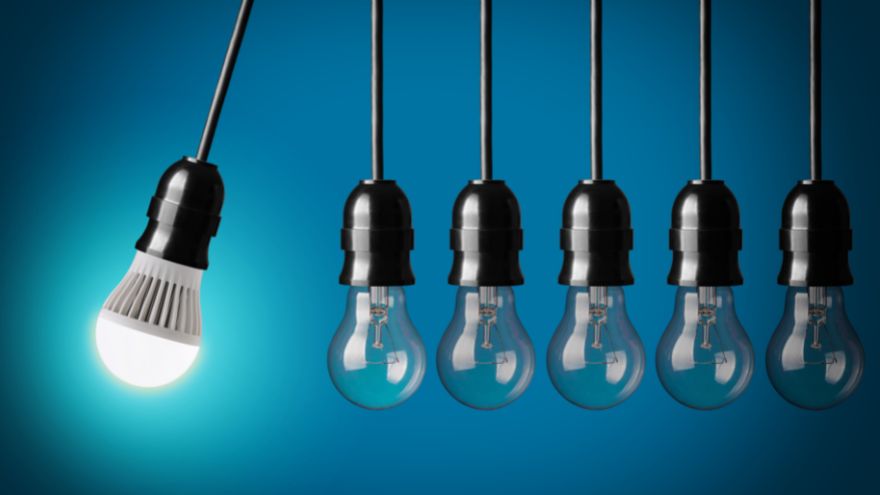
How much electricity does an LED bulb draw?
LED bulbs are much more energy efficient than traditional bulbs. On average, one LED bulb needs about 8 watts of energy, compared to 60 watts required by traditional bulbs. This means that you can use five times less energy and have the same or better lighting. This is a huge step forward for our economies and hopes for improving the ecological situation worldwide.
Calculating the real energy consumption of an LED bulb
For all lovers of calculations and specific data, we have compiled formulas that will allow you to accurately calculate the electricity consumption of an LED bulb.
The amount of power consumed (expressed in kWh) is the product of the bulb power and time (expressed in hours), divided by 1000:
P= Po*t/1000
For example , a 40 W LED bulb will consume 0.04 kWh per hour of operation .
P= 40*1/1000 = 0.04 kWh
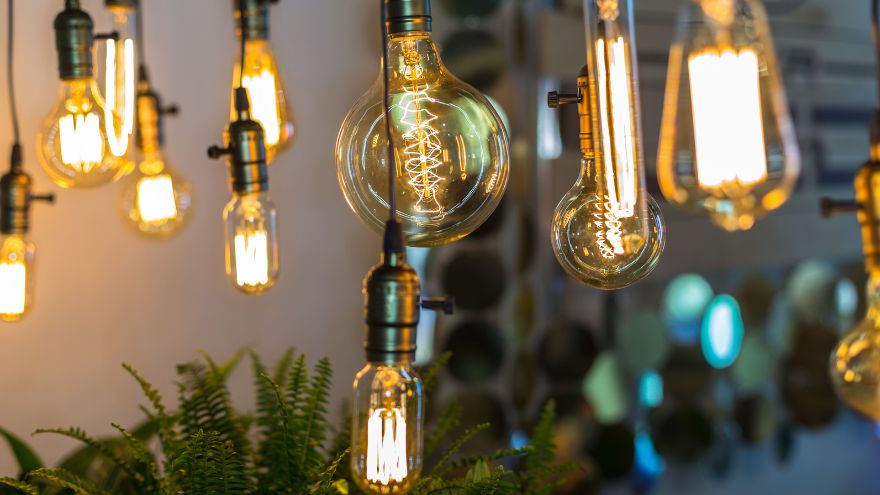
Types of threads and bases of the most popular LED bulbs
E27 LED bulb
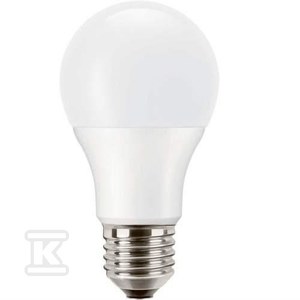 One of the most popular types of thread is the E27 or "standard" type. This type of thread has as many as 27 lines twisted around the base, which allows for a wide range of applications. The E27 type is often used in floor lamps, ceiling and wall lamps, and inside machines and devices. Do you know where this name comes from? E27 starts with the letter "E" after Edison - the scientist who patented the traditional light bulb. In turn, the number 27 is the diameter of the socket in millimeters.
LED bulb E14
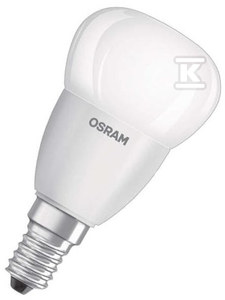 E14 bulbs are also often used, which have a smaller thread and are usually used in table, ceiling or wall lamps. The E14 base has 14 lines twisted around the base and is commonly used in French lighting fixtures.
LED bulb E12
Another type of thread is E12, which has 12 lines twisted around the base. Its base is often used for atmospheric lighting, such as shop windows or restaurants.
LED bulb GU10
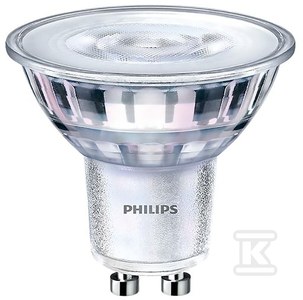 Another type is the GU10 thread, which is often used in halogen and spotlights. These types of bases have a distinctive metallic cone around the base that allows for easy attachment to lamps. These types of LED bulbs are ideal for high-traffic rooms or outdoors, as they have low heat levels and a wide angle of light.
LED bulb MR16
The MR16 bulb is characterized by a so-called "bayonet" structure. It is designed to provide a lot of light in a small format. It is an ideal solution for places where a strong and precise beam of light is needed. The wide angle of light provides a range of up to 20 degrees, which means it can be used both indoors and outdoors. The MR16 base is most often used in suspended ceilings, furniture and display case lighting.
G9 LED bulb
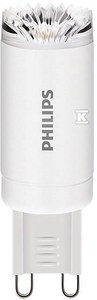 This is a type of halogen thread. As with other bulbs with the G marking, they are mounted by pressing into the socket, and not, as with Edison bulbs, by screwing in. G9 LED bulbs are also popular in furniture fittings and decorative lighting.
A wide selection of energy-saving LED bulbs can be found in the Onninen electrical wholesaler. We invite you to shop!