Thanks to wind turbines, we can have access to free energy. So let's find out everything that is important about it. In the following article, we will explain all the issues related to wind energy, which can be used in every household!
Check out the wind turbines at the Onninen wholesaler
What types of home wind turbines are there?
There is no doubt that renewable energy sources are becoming increasingly popular in our country. Photovoltaics are leading the way, but other types of zero-emission energy production are also gaining interest. We are talking about wind power, which is generated by wind turbines . There are different types of them available, which we will discuss in this paragraph.
Horizontal Axis Wind Turbines (HAWT) are very popular, and are characterized by the fact that they have a rotor placed at the top of the mast. It rotates horizontally relative to the wind. This power plant operates efficiently, generating significant amounts of energy. On the other hand, such power plants require appropriate conditions - both wind and spatial.
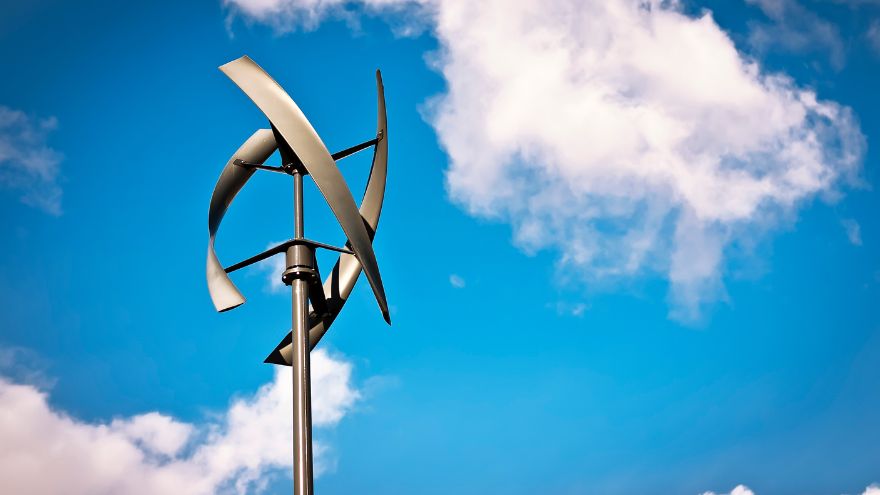
- Another type is wind turbines with a vertical axis of rotation (VAWT - Vertical Axis Wind Turbines), where the rotor rotates vertically, which allows for operation in various wind directions, as well as in a smaller space. This is how the VAWT home wind turbine works, which is why it is very popular, especially in urban areas. Vertical wind turbines are not only quieter, but also easier to maintain.
- Also interesting are home-based hybrid wind turbines that combine wind energy with other renewable sources, such as solar panels. Such an installation therefore ensures a stable energy supply regardless of weather conditions.
- Micro wind turbines are also a very innovative solution. Such a home wind turbine is compact in size, so it is ideal for use in single-family homes. What is more, it is a wind turbine that is easy to install, and can also power smaller devices, as well as support other energy sources. In
- It is worth knowing that bladeless turbines that use the aerodynamic resonance phenomenon are also appearing on the market. However, they are still in the development phase.
How much electricity can a wind turbine generate?
How much electricity a wind turbine can generate depends on several factors. These include the size of the wind turbine, wind speed, and installation location. A small home wind turbine with a capacity of 1 to 10 kW can generate from several to even a dozen thousand kilowatt-hours (kWh) per year.
Take for example a 5kW wind turbine that is installed in a location with an average wind speed (6 m/s). It can produce about 8,000 kWh per year. In the case of medium and large turbines, such as those used in wind farms, the electricity production is obviously greater.
They simply have a larger capacity, such as 2 MW, which allows them to generate around 5-6 million kWh per year (if the wind is suitable). Even more advanced - high-performance wind turbines with a capacity of 3-4 MW, achieve annual production of up to 10-12 million kWh.
Wind turbine power selection
To be satisfied with how the windmill works, whether it effectively produces electricity, you need to adjust the power of the turbine. This is a key issue regarding this investment. There are several factors that need to be taken into account. When planning a home wind farm, you need to assess the local wind conditions. The average wind speed, but also the directionality, largely determines the power of windmills. Remember that where these speeds are lower, the turbine may have lower power, because they are designed for such conditions.
The power of a home wind turbine also depends on the energy demand, which is why we need to carefully analyze how energy is used in the household. In smaller ones, where the energy demand is not particularly high, turbines with a power of 1-10 kW will be sufficient. Larger installations, where there are more energy sources and therefore the use of electricity is greater, may require a turbine with a power of 50 kW or even more.
Another extremely important factor is the roughness class of the terrain. There are as many as 9 such classes, which describe different types of terrain. The lower the better, because the turbine is able to produce more energy. For example, class 0 is the surface of the water surface, class 1 - open agricultural land with low individual buildings, where there is a slight undulation of the terrain, class 3 - small towns, villages, agricultural land with numerous hedges, and class 4 - very large cities with larger development, where there are tall buildings, including skyscrapers.
To calculate the amount of energy, we take into account the average wind speed and the number of hours the device is operating. If conditions are ideal, the power plant can produce about 25% of the product of the nominal power and its operating hours. The formula is as follows: nominal turbine power [kW] x number of operating hours [h] x 365 days x 0.25 = kWh/year.
Check out the wind turbines at the Onninen wholesaler
Costs of building and installing a home wind turbine
The cost of a home wind turbine is of the greatest interest to anyone for whom this investment is a priority. Of course, everything depends on the type of wind generator we want to invest in. In the case of small devices (from 1 to 10 kW), the cost of purchasing and installing this generator will range from a few to a dozen or so thousand złoty. For example, choosing a 5 kW turbine, you have to pay from PLN 20,000 to PLN 50,000. This is quite a large range, but a lot here determines which manufacturer and technology we choose.
A large part of the costs must be allocated to the construction of the entire structure of home wind turbines. One of the most important elements is the mast on which the turbine is mounted. It requires several or even a dozen thousand zlotys. In turn, the installation and assembly of the mast and turbine, as well as connecting the device to the electrical system, is an expense from 10,000 to 30,000 zlotys, so also quite a lot. If we want to store electricity for later, we must also think about a special energy storage system. Therefore, batteries will be necessary here. You should always add additional costs, for example for maintenance and servicing of the turbine. At the same time, remember that these large financial outlays that have to be incurred can be reduced somewhat, which can be helped by subsidies and tax reliefs.
Where in Poland is it worth building home wind turbines?
Before we decide to build a home wind turbine, we should first find out what the wind conditions are like in a given area, and specifically what the average annual wind speed is in the region. If it is low, below 2.5 m/s, such an investment may not be profitable. However, such conditions occur mainly in southern Poland. The situation is definitely better in north-eastern Poland, where there are large, open spaces. However, the best is - not surprisingly - on the Baltic Sea. Average wind speeds are higher here than in other parts of the country.
On the other hand, you can use the potential of a wind turbine anywhere, not just in the north. To do this, you need to know how to best use the possibilities of your plot. There are a few key rules here. One of them concerns installation above the roof of the building, which is usually the biggest obstacle to the wind flow. The same can be said about the distance from the house. The turbine should be quite close (up to about 10 m) to avoid wind reflection from the building surface. On the other hand, a much larger distance is also effective - over 40 meters. Some people also install this installation on the roof of the building. Under no circumstances should a wind turbine be installed close to skyscrapers, in dense development at a low height or in valleys.
An interesting piece of information in the context of installing a turbine is that 70% of winds in Poland blow from the west, so there should be no obstacles from that side. It is therefore better to place a wind turbine on the west side than on the east side. Taking this into account, we know that a tall forest less than 200 meters west of a wind farm is very unfavorable, practically ruling out the point of this investment. Let's not forget about legal issues, especially those concerning development conditions and the spatial development plan. A building permit is equally important, in accordance with the provisions of the building law.
Operation of a home wind farm with energy storage
A home wind turbine is an excellent solution, thanks to which we gain even more when we combine it with an energy storage. In this way, we will ensure a stable supply of electricity regardless of the variability of weather conditions. How does it work? How do these two systems cooperate?
Of course, it all starts with the generation of energy by a wind turbine. It converts the kinetic energy of the wind into electrical energy. The alternating current is converted to direct current (using an inverter, as in the case of photovoltaics), so it can be stored in lithium-ion batteries or other types of batteries. In a situation where the demand for energy increases or the production of wind energy is insufficient, the system automatically draws energy from the storage. With an energy storage, we can manage energy by monitoring its production and consumption in real time. This allows for the maximum optimization of the use of resources.
Wind energy in households is a huge potential that is worth using! A wind farm will allow us to enjoy free energy all year round!