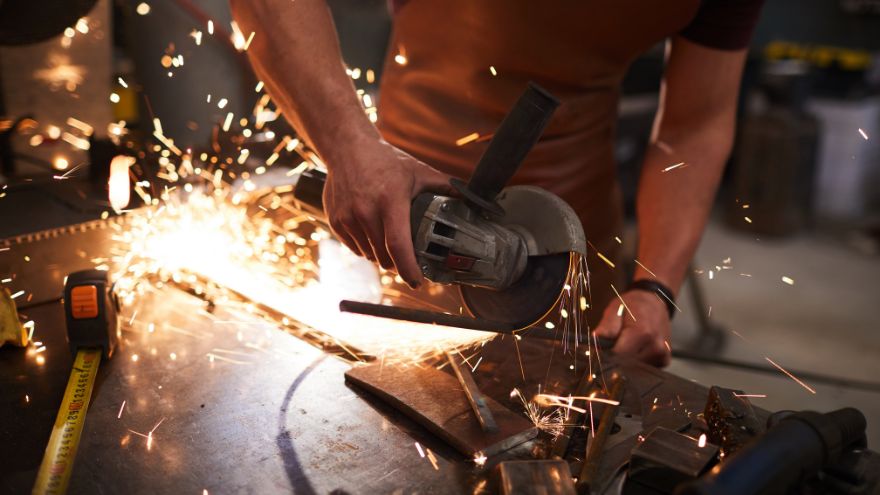
The range of metal cutting discs is large, and the choice of a specific solution depends on the individual needs of the task being performed. How do you choose a model with the right hardness and thickness? What types of discs work best in specific situations?
Check out the cutting discs at the Onninen wholesaler
How hard should a metal cutting disc be?
One of the parameters defining a cutting disc is its hardness. The durability and strength of the disc depend on it, but also the precision of the cut. If the hardness of the disc is not selected for the material to be processed, then it will wear out too quickly.
 The hardness of a disc is a term that describes the force needed to detach abrasive particles from its surface. When cutting a metal surface, the particles on the surface become dull and detach from the disc, exposing more elements. This makes cutting effective. This mechanism means that metal can be cut by applying the same pressure all the time, without the risk of overheating the metal surface. When choosing the right hardness, you should consider what material will be cut with it. It is assumed that the harder the material, the more flexible the disc should be and vice versa. It is about the rate of abrasion, which is faster in the case of hard material. Using a soft disc allows for faster removal of used abrasive.
The hardness marking of the disc can be found directly on the product. Currently, there are as many as 16 versions of discs with different hardness available for sale. The least common and used are very soft discs marked with the letters E, F, G. The next letters, i.e. H, I, J, K are markings used for soft discs. Medium-hard discs are marked with the letters L, M, N and O, while hard discs are P, Q and R. The hardest are the discs marked with the letters S and T.
Selecting the right thickness of the cutting disc
In addition to hardness, the thickness of the disc is also an important parameter. Thin models are more delicate and require appropriate handling and sensitivity during work. They cannot be pressed too hard, too rapid movements can also lead to damage. Discs with greater thickness are characterized by higher durability, so they can also be used in demanding and difficult tasks.
 When selecting the thickness of the disc, it should be borne in mind that the efficiency of work depends on the type of elements being processed, or more precisely — on their thickness. The thinner the metal, the thinner the disc. It is assumed that for cutting sheet metal from 0.1 to 2 mm thick, an 8 mm thick disc should be selected, for elements from 1.5-5 mm thick, a 1 mm disc is intended, for metals from 5 to 10 mm thick, 1.6 mm thick discs are intended, and for elements 10-20 mm, 2.5 mm discs.
Depending on the type of material being processed, it is recommended to use 1.6 or 2.5 mm thick discs for pipes, solid materials and metal L and U profiles. First, choose a thinner disc. It is recommended that 2.5 mm discs be used when the thickness of the solid material being cut exceeds 10 mm. Sheets and thin-walled profiles can be cut with 0.8 or 1 mm thick discs.
Check out the cutting discs at the Onninen wholesaler
What size should a cutting disc be?
Metal cutting discs should be selected quite individually, depending on the specifics of a given project. The first criterion to pay attention to is the type of device you have. It is important to match the diameter of the disc to the type of angle grinder. In the case where a circular saw is used, the discs can be much larger.
For metal, the best option is to choose a blade with a diameter between 115 and 230 mm. The size of the blade is not a random matter, because it affects the depth of cut. The relationship is proportional - the larger the diameter of the blade, the greater the depth of cut will be.
Is it better to choose a flat or convex metal cutting disc?
When analyzing the subject of metal cutting discs in the context of construction, two variants are distinguished - convex and flat discs. The shape is not accidental, because each of the variants is intended for performing specific tasks.
Flat discs are perfect for cutting that requires high precision. A characteristic feature is that the cut is thin, so they are a great solution if the cutting is done in thin sheets.
In situations where precise cutting is not required but time is of the essence, it is definitely better to choose convex discs. They are stiffer than flat discs.
The influence of the drive used on the choice of metal cutting blade
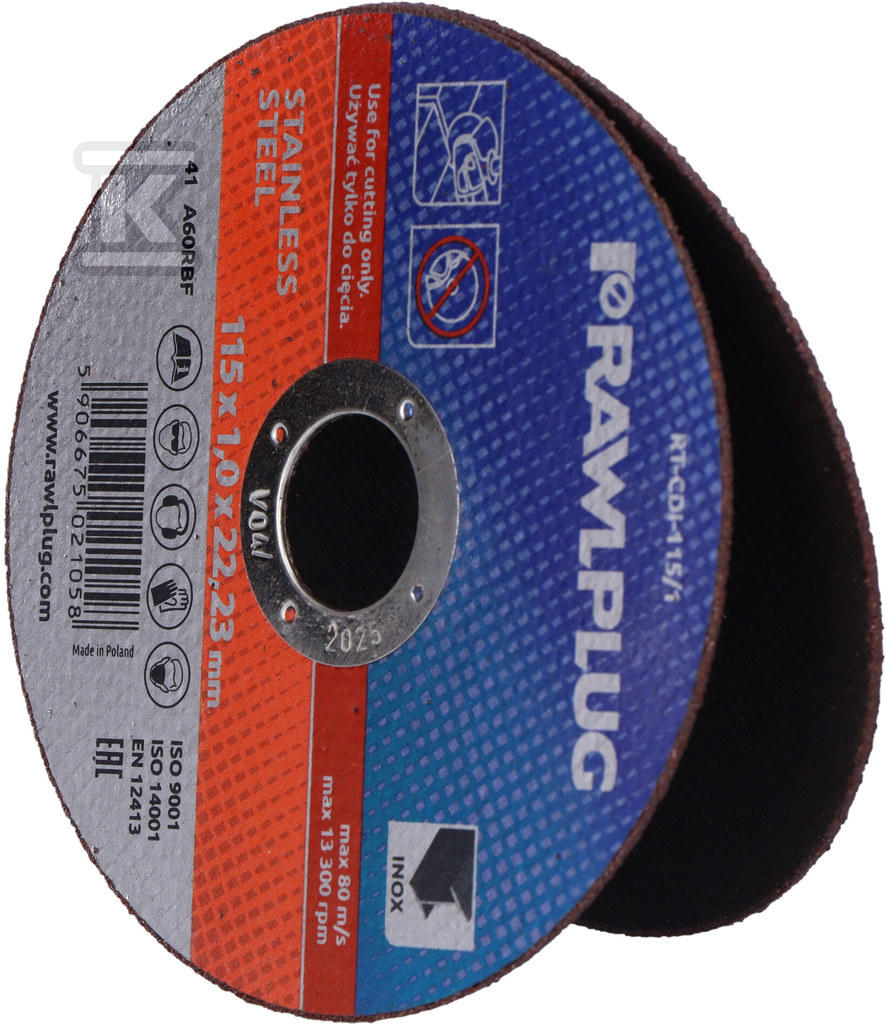
When choosing the right blade, you should also consider the type of drive used. An angle grinder, circular saw or table saw can be used to cut materials. A metal saw can be characterized by high or low power. For devices with higher power, you should choose solid and durable blades. You should also pay attention to the rotational speed of your device. This is not only about cutting efficiency, but also the safety of the person operating the device. Good quality blades have a special marking on their surface, which informs about the maximum, safe speed at which you can work using the selected blade model.
 Before buying a blade, you should pay attention to whether your equipment is designed for dry or wet cutting. In the first variant, you must choose durable solutions, because working without simultaneous cooling is a demanding process. Reinforced blades will work perfectly. In the second case, blades adapted to work with coolant are used. Reducing heat has an advantage, it ensures a longer life of the blade.
Safe work when cutting metal requires taking into account many factors. The selection of a disc always requires an individual approach. Models for cutting various materials, with varying degrees of precision, are available on the market, and the diameter of the disc and its thickness are also important. Proper adjustment translates into high cutting quality and durability. Discs should be used in accordance with the manufacturer's recommendations.
What abrasive grains are used in cutting discs?
The range of discs is very wide. Other solutions are used for longitudinal cutting, others for grinding, and still others for cutting wood, for working with soft material, aluminum, etc. For particularly demanding tasks, where accuracy is important, diamond discs can be used.
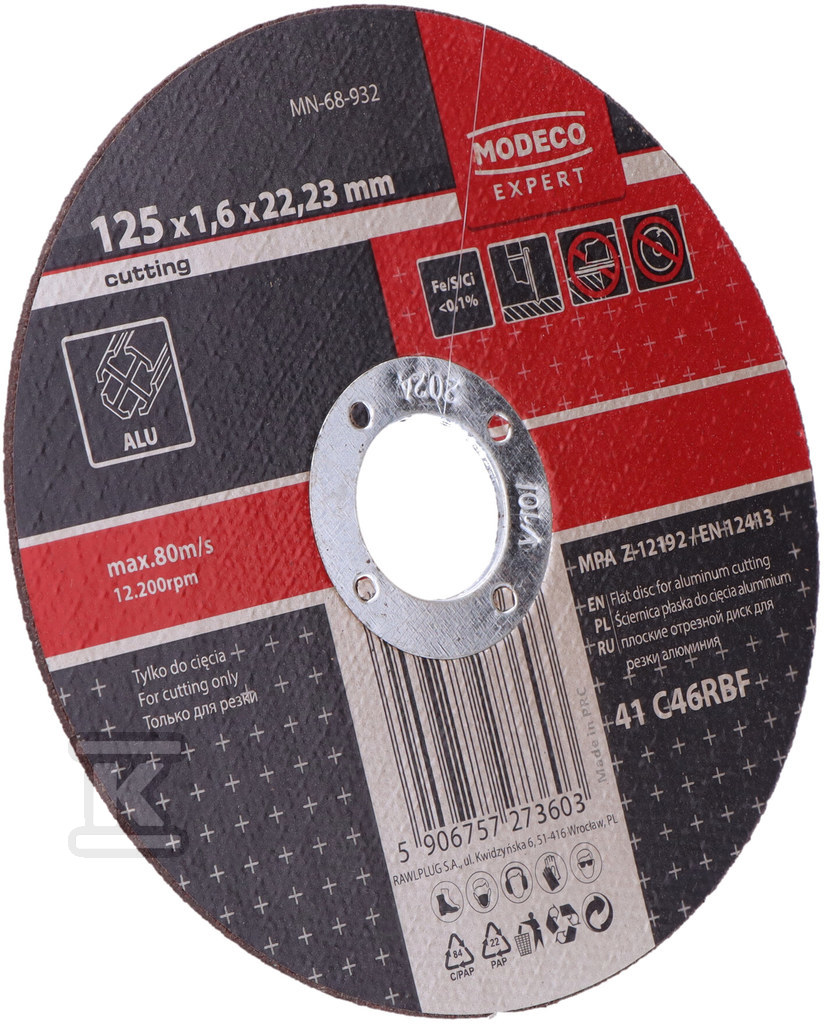
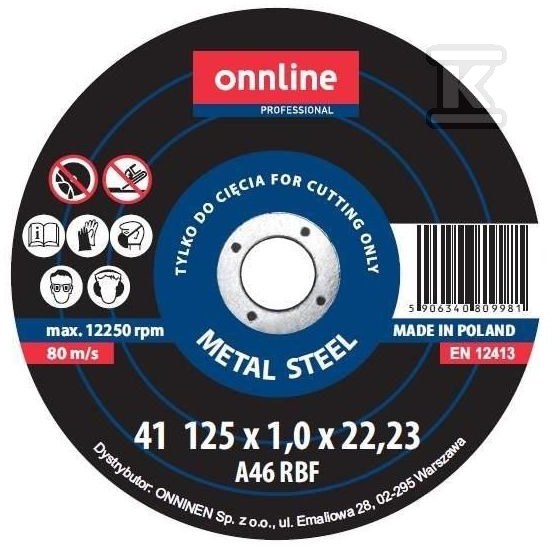
Onninen offers a wide selection of various cutting discs for metals and other materials. The type of discs for cutting concrete, aluminum, steel, are supplied by manufacturers valued in the industry. Thanks to this, you can be sure that they are resistant, highly durable and long-lasting. Depending on your needs, you can choose both flat and convex discs. An example is the Modeco Expert aluminum cutting disc or the Onnline steel cutting disc , with a diameter of 125 mm. Cutting discs should always be used in accordance with their intended use.