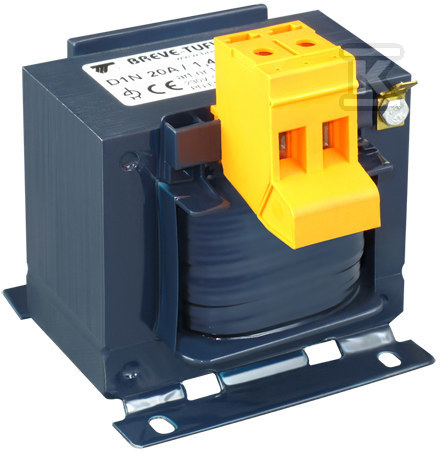
Network choke D1N 16A/1.83mH 4% 19290-9985

Suggested products
TECHNICAL DATA
Sales unit dimensions and weight: 1 pcs
Network choke D1N 16A/1.83mH 4% 19290-9985
Network choke – protection and interference reduction
The D1N network choke is a component designed to reduce interference in power networks. Its main task is to suppress harmonics and limit the flow of disturbing currents, which translates to more stable operation of connected devices and increased their lifespan. This is particularly important in power installations with sensitive electronics, where even minor disturbances can lead to malfunctions or damage.
This single-pole choke, with a rated current of 16A, is used in circuits with a voltage of up to 750V. Its inductance of 1.83mH, with a tolerance of 4%, ensures effective interference suppression without excessive impact on the circuit's operating parameters. The lack of housing (IP00) means that this choke is intended for mounting inside devices or switchboards.
Characteristics and application
Network chokes, such as the D1N model, function as anti-interference filters. This means they effectively suppress noise and disturbances generated by electrical devices, preventing their spread in the power network. This improves the quality of electrical energy and minimizes the risk of damage to sensitive components.
Mounting the choke in an electrical installation allows for:
- Reduction of electromagnetic interference (EMI).
- Improvement of power supply voltage stability.
- Increased resistance of devices to overvoltages and short circuits (indirectly).
- Meeting safety and electromagnetic compatibility standards.
Construction and parameters
The choke's construction is based on a ferrite core wound with copper wire. The choice of materials and precision of workmanship guarantee high operating efficiency and component durability. The inductance value has been selected to ensure optimal interference suppression while minimizing the impact on voltage drop in the circuit. This makes the D1N choke a compromise between filtration efficiency and energy efficiency of the installation.