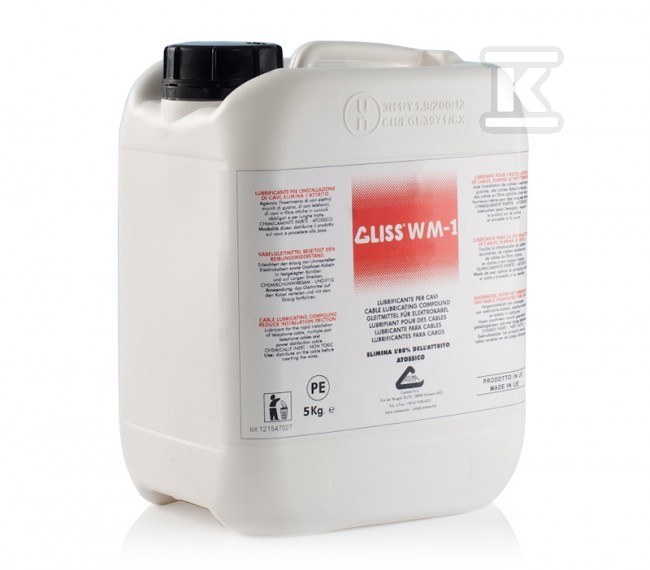
Slipping agent for blowing fiber optic cables GLISS WM-1 402000002000

- 2010000005408
Suggested products
TECHNICAL DATA
Sales unit dimensions and weight: 1 pcs
Slipping agent for blowing fiber optic cables GLISS WM-1 402000002000
Fiber Optic Cable Blowing Lubricant – Efficient Installation
This blowing lubricant, designated GLISS WM-1, is a specialized agent designed for the installation of fiber optic cables using the blowing method. It is particularly recommended for working with mini and micro cables, where precision and minimizing friction are key. Its water-based formula ensures not only ease of application but also safety for the installed cables and ducts.
How it works and why choose it?
GLISS WM-1 significantly reduces friction between the cable and the duct walls during blowing. This makes the installation process more efficient, requires less force, and reduces the risk of damage to delicate optical fibers. The lubricant creates a thin, lubricating layer that adheres to the surface while preventing the cable from sticking to the duct – which facilitates subsequent service and network maintenance work. This solution is appreciated by both professional installers and network operators.
- High efficiency: Reduces friction, making blowing easier even over long distances.
- Cable safety: Water-based formula does not damage the insulation or jacket of fiber optic cables.
- Easy application: Can be used with blowers with a dispenser or direct cable lubrication.
- Versatility: Suitable for various types of microducts and fiber optic cables.
- Available packaging: Available in practical 1 kg and 5 kg packages – you can adjust the amount of lubricant to your project needs.
How to use – step by step
To ensure optimal results, it is recommended to place a few-centimeter sponge roller inside the microduct before applying the lubricant. Before use, shake the bottle thoroughly and introduce the appropriate amount of GLISS WM-1 into the duct. Then, plug the end of the duct with a sponge and start blowing to evenly distribute the lubricant on the surface of the microduct. Remember that actual consumption may vary depending on the condition and length of the duct – it is worth adjusting the amount of lubricant to specific working conditions.
CERTIFICATES, APPROVALS, SAFETY, COMPLIANCE AND WARNINGS
cert_title_karta_charakterystyki
Attachments