Handwheel VDS.125+IR-SST-12 Z055216
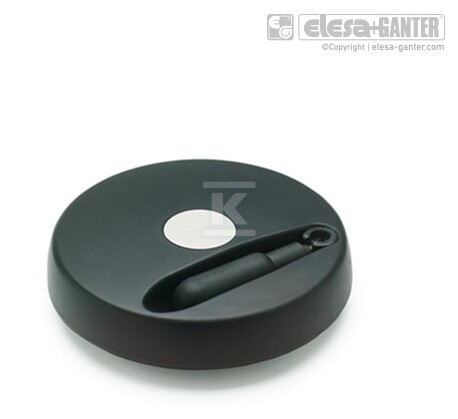

Catalog numbers:
- VDS.125+IR-SST-12
Suggested products
TECHNICAL DATA
Sales unit dimensions and weight: 1 pcs
Handwheel VDS.125+IR-SST-12 Z055216
Handwheels – precision and functionality in every detail
The VDS.125+IR-SST-12 handwheel is a standard machine part, designed for smooth and precise adjustment in various industrial applications. This product, offered by the renowned Elesa+Ganter company, combines a solid construction with a functional design, making it an ideal solution for both professional installers and end-users.
Construction and application
Handwheels from the VDS series are widely used in machines and devices requiring manual adjustment of position. Their main task is to enable precise control of linear or rotary motion, which finds application in machine tools, measuring devices, production lines and many other applications. The VDS.125+IR-SST-12 model stands out with its careful workmanship and high-quality materials, which guarantees reliability and durability even in demanding working conditions. The wheel design has been carefully thought out in terms of user ergonomics – providing a secure grip and comfortable operation.
Advantages and benefits
- Versatility: The handwheel finds application in a wide range of machines and devices, offering a universal solution for manual adjustment needs.
- Durability: The use of high-quality materials ensures long-term operation without the need for frequent replacement.
- Precision: The wheel design allows for precise motion control, which is crucial in applications requiring accuracy.
- Ergonomics: Provides comfortable operation even during prolonged use.
- Easy installation: The product is easy to install and integrate with existing mechanical systems.
- Elesa+Ganter standard: Belongs to the rich offer of standard machine elements from Elesa+Ganter, which guarantees the availability of spare parts and compatibility with other components of this brand.
Material and characteristics
The handwheel is made of a material designated as "Other" (according to technical parameters). Although the exact composition of the material is not specified, it can be assumed that it was selected due to its mechanical properties, such as resistance to loads, abrasion resistance and dimensional stability. This product is an accessory – i.e. an element complementing other machine components – and not a replacement or spare part. This means that its role is to extend the functionality of the device or improve its ergonomics.