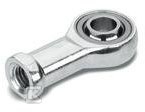
Ball joint GN 648.1-5-M4-N Z026902

Catalog numbers:
- GN 648.1-5-M4-N
Suggested products
TECHNICAL DATA
Sales unit dimensions and weight: 1 pcs
Ball joint GN 648.1-5-M4-N Z026902
Ball joint – precision and versatility in your projects
The GN 648.1-5-M4-N ball joint is a connecting element made of galvanized and blue passivated steel, ensuring durability and corrosion resistance. Hardened, ground and polished steel guarantees high surface quality and dimensional accuracy. This ball joint with an internal M4 thread is ideal for applications requiring angle adjustment or connection of elements at a variable angle.
Design and materials – the key to reliability
Two versions are available: N (brass) and W (self-lubricating with PTFE insert). The N version, with a brass element, allows for lubrication, which is particularly important in applications with high requirements for durability and minimization of friction. The W version, thanks to the PTFE insert, eliminates the need for additional lubrication, simplifying maintenance and reducing operating costs. The choice of the appropriate version depends on the specifics of the application and operating conditions.
Applications and benefits
The GN 648.1-5-M4-N ball joint is widely used in many industries, including:
- Industrial equipment: adjustable holders, positioning mechanisms, machine and equipment elements.
- Furniture: adjustable table and chair legs, swivel mechanisms.
- Lighting: adjustable lamps, spotlights.
- Medical equipment: regulatory elements in diagnostic and therapeutic equipment.
- Automation: elements of motion control systems.
Using the GN 648.1-5-M4-N ball joint translates to:
- Precise connections: the ability to accurately adjust the angle ensures optimal positioning of elements.
- Durability: high-quality materials and careful workmanship guarantee a long service life of the joint.
- Versatility: a wide range of applications makes the joint ideal for many different projects.
- Easy installation: the internal M4 thread allows for quick and easy installation of the joint in the structure.
- Cost reduction: the self-lubricating version (W) eliminates the need for regular lubrication, reducing operating costs.