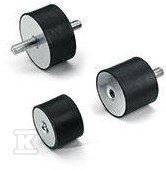
Vibration isolator DVA.1-100-60-SST-M16-41-55 Z038163

Catalog numbers:
- DVA.1-100-60-SST-M16-41-55
Suggested products
TECHNICAL DATA
Sales unit dimensions and weight: 1 pcs
Vibration isolator DVA.1-100-60-SST-M16-41-55 Z038163
Vibration isolators – reduction of vibrations and noise in machines and equipment
This vibration isolator, with dimensions of 100 mm diameter and 60 mm height, is designed to dampen vibrations and reduce noise generated by operating machines and equipment. Its construction, based on a combination of natural rubber with a hardness of 55 degrees on the Shore A scale and a threaded pin made of AISI 304 stainless steel, ensures durability and corrosion resistance. The use of stainless steel makes it suitable for use in demanding environments where resistance to moisture and aggressive substances is important.
The vibration isolator with M16 thread allows for stable and secure mounting of components such as motors, pumps or fans. Thanks to the damping properties of the rubber, it isolates vibrations from the structure of the device or foundation, which translates into increased work comfort, extended machine life and reduced potential damage. This is particularly important in precision applications where even small vibrations can affect the accuracy of operation.
Construction and application
The DVA.1-100-60-SST-M16-41-55 vibration isolator is characterized by a cylindrical structure with threaded ends. This arrangement allows for easy assembly and disassembly, as well as adjustment of the position of the mounted element. The stainless steel construction guarantees high corrosion resistance and the possibility of use in harsh industrial conditions. Rubber hardness of 55 Shore A provides optimal damping properties for a wide range of loads and vibration frequencies.
In practice, vibration isolators of this type are used in many industries: from agricultural machinery, through construction equipment, to laboratory and medical equipment. They are ideal wherever it is necessary to reduce noise and vibrations to ensure safe and comfortable working conditions and reliable operation of devices. In addition, reducing vibrations translates into lower wear of mechanical components, which reduces operating and maintenance costs.