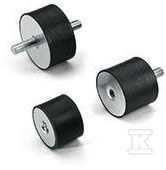
Vibration isolator DVA.1-20-25-SST-M6-18-55 Z038173

Catalog numbers:
- DVA.1-20-25-SST-M6-18-55
Suggested products
TECHNICAL DATA
Sales unit dimensions and weight: 1 pcs
Vibration isolator DVA.1-20-25-SST-M6-18-55 Z038173
Vibration isolators – reduction of vibrations and noise in machines and equipment
Vibration isolator DVA.1-20-25-SST-M6-18-55 is an element designed to dampen vibrations and reduce noise generated by operating machines and equipment. Its use translates to improved work comfort, increased safety, and extended component life. The construction based on a combination of natural rubber and AISI 304 stainless steel ensures durability and corrosion resistance, which is particularly important in demanding industrial environments.
This specific model is characterized by a cylindrical structure, threaded external connections (M6), and dimensions of 20 mm in diameter and 25 mm in height. Rubber hardness at 55 Shore A provides optimal damping properties for a wide range of applications. This vibration isolator is used to mount various components, such as motors, fans, or pumps, minimizing the transfer of vibrations to the device structure or foundation.
Construction and materials – a guarantee of reliability
The use of AISI 304 stainless steel in combination with natural rubber NR makes the vibration isolator resistant to external factors and ensures long-lasting, trouble-free operation. The rubber part absorbs vibration energy, reducing its amplitude and frequency, and the threaded steel pin allows for stable and secure mounting to the device structure. The rubber hardness has been selected to provide optimal damping properties while maintaining adequate load capacity.
Applications and benefits
These types of vibration isolators are widely used in many industries:
- Mechanical engineering: reduction of noise and vibrations generated by production machines.
- Ventilation industry: damping of vibrations of fan motors and other elements of the ventilation system.
- Pump industry: minimizing the transfer of vibrations from pumps to pipelines and building structure.
- Electrical equipment: isolating electrical cabinets from environmental vibrations, which protects delicate electronics from damage.
- Precision mounting: stabilization of devices requiring high precision, e.g. laboratory or optical equipment.
The use of vibration isolators translates into a number of benefits:
- Reduced noise generated by machines and equipment – improved working conditions for operators.
- Reduction of vibrations – extended component life and reduced risk of failure.
- Improved user comfort – elimination of unpleasant sensations associated with vibrations.
- Increased work safety – reduction of the risk of accidents caused by vibrations.
- Protection of delicate structural elements from damage caused by vibrations.
The selection of the appropriate vibration isolator should take into account the vibration frequency, load, and required degree of damping. If in doubt, it is worth consulting a specialist or using the data contained in the manufacturer's catalogs (Elesa+Ganter).