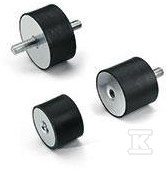
Vibration isolator DVA.1-25-25-M6-18-40 Z050363

Catalog numbers:
- DVA.1-25-25-M6-18-40
Suggested products
TECHNICAL DATA
Sales unit dimensions and weight: 1 pcs
Vibration isolator DVA.1-25-25-M6-18-40 Z050363
Vibration Isolators – Reduction of vibrations and noise in machines and equipment
Vibration isolators from the DVA.1 series are elements designed to dampen vibrations and reduce noise generated by machines and equipment. Their use translates to improved work comfort, increased safety, and extended equipment life. The construction based on a combination of steel and natural rubber effectively absorbs vibrations, minimizing their transfer to the environment or other structural elements.
Construction and application
Vibration isolator DVA.1-25-25-M6-18-40 is characterized by a cylindrical construction with a threaded steel pin (galvanized) and a damping body made of natural rubber. The external M6 thread at both ends allows for easy mounting in various applications. This particular model, with dimensions of 25 mm in height and diameter, and a rubber hardness of 40 Shore A, is particularly useful in situations where flexibility and good vibration absorption with moderate load are required. It finds application when mounting components such as motors, fans or pumps.
Key features and benefits
- Effective vibration reduction: Natural rubber with a hardness of 40 Shore A provides good vibration damping ability, minimizing their transfer to the device structure or substrate.
- Versatile mounting: The external M6 thread facilitates integration with various structural elements.
- Strength and durability: Galvanized steel provides corrosion resistance, and natural rubber is characterized by high fatigue strength.
- Improved work comfort: Reduction of noise and vibrations translates to better working conditions for the device operator.
- Component protection: Vibration damping reduces the load on mechanical elements, which can extend their lifespan.
- Wide temperature range: The ability to use in a temperature range from -40°C to +80°C makes the vibration isolator suitable for operation in various environmental conditions.
It is important to select the correct rubber hardness for a specific application – the higher the hardness (Shore A), the greater the stiffness of the isolator and the lower the ability to dampen low-frequency vibrations. The selection of the appropriate vibration isolator should take into account the vibration frequency, load and the required degree of damping.