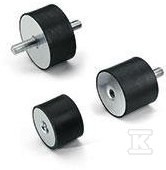
Vibration isolator DVA.1-60-40-M10-28-55 Z030891

Catalog numbers:
- DVA.1-60-40-M10-28-55
Suggested products
TECHNICAL DATA
Sales unit dimensions and weight: 1 pcs
Vibration isolator DVA.1-60-40-M10-28-55 Z030891
Vibration Isolators – Reduction of Vibrations and Noise in Machines and Equipment
The DVA.1-60-40-M10-28-55 vibration isolator is an element designed to dampen vibrations and reduce noise generated by operating machines and equipment. Its construction, based on a combination of rubber and galvanized steel, allows for effective vibration isolation, which translates to increased work comfort, improved safety, and extended equipment life. This is particularly important in applications where vibrations can negatively affect the precision of operation or cause damage to components.
Construction and Application
This particular model features a cylindrical design with an M10 threaded pin. The diameter of the vibration isolator is 60 mm, and the height is 40 mm. It is made of galvanized carbon steel, which ensures corrosion resistance. The rubber damping element has a hardness of 55 on the Shore A scale – this is a compromise between damping efficiency and durability. These types of vibration isolators are widely used in mounting components of devices such as motors, fans, or pumps. They can also be used to isolate electrical cabinets or other elements sensitive to vibration.
Key Features and Benefits
- Effective vibration reduction: The rubber damping element absorbs vibration energy, minimizing its transfer to the device structure or foundation.
- Noise protection: Damping vibrations translates to a reduction in noise generated by operating machines.
- Extended service life: Reducing dynamic loads on structural elements leads to extending their service life.
- Corrosion resistance: Galvanized steel provides protection against environmental factors.
- Easy installation: The M10 threaded pin allows for quick and convenient installation in prepared holes.
- Versatility: Suitable for a wide range of industrial and commercial applications.
- Availability of different rubber hardnesses: The ability to select the appropriate rubber hardness (in this case, 55 Shore A) allows you to optimize the damping properties for a specific application – the softer the rubber, the better the damping, but the lower the load capacity.
Choosing the right vibration isolator depends on many factors, such as vibration frequency, load, and the required degree of damping. Thanks to the rich offer of Elesa+Ganter, you can choose the optimal solution for each application.