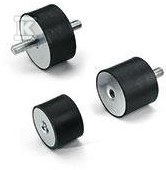
Vibration isolator DVA.2-30-30-M8-20-40 Z049790

Catalog numbers:
- DVA.2-30-30-M8-20-40
Suggested products
TECHNICAL DATA
Sales unit dimensions and weight: 1 pcs
Vibration isolator DVA.2-30-30-M8-20-40 Z049790
Vibration Isolators – Reduction of vibrations and noise in machines and equipment
Vibration isolator DVA.2-30-30-M8-20-40 is an element dedicated to damping vibrations and reducing noise generated by operating machines and equipment. Its construction, based on a combination of galvanized steel and natural rubber, provides effective isolation from vibrations, which translates to increased work comfort, extended equipment life and improved safety. It is a universal solution, finding application both in industrial installations and in everyday devices.
Construction and application
The vibration isolator consists of a threaded pin and a molded insert with a threaded hole, made of galvanized steel. The damping element is a body made of natural rubber (NR) with a hardness of 40 Shore A ±5. This combination of materials provides optimal damping properties while maintaining mechanical strength. External and internal threads allow for easy mounting in various structures. These types of vibration isolators are particularly useful for mounting components such as motors, fans or pumps.
- Noise reduction: Vibration isolation translates to a reduction in the noise level generated by operating machines.
- Protection against damage: Damping vibrations reduces the risk of damage to structural elements caused by material fatigue.
- Work comfort: Reducing vibrations translates to improved operator comfort.
- Versatility: Possibility of use in a wide range of devices and machines.
- Durable construction: The use of galvanized steel ensures corrosion resistance, and natural rubber – high flexibility and durability.
Technical characteristics and selection
This specific model (DVA.2-30-30-M8-20-40) is characterized by the following dimensions: height 30 mm, diameter 30 mm and metric thread size M8. Rubber hardness at 40 Shore A provides good flexibility while maintaining adequate stiffness. The selection of the appropriate vibration isolator should take into account the static load, vibration frequency and the required degree of damping – let's remember this when planning the installation or modernization of existing machines. It is also worth paying attention to the possibility of using vibration isolators made of stainless steel (AISI 304) for applications requiring resistance to aggressive environments.