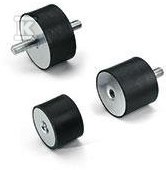
Vibration isolator DVA.3-20-20-M6-40 Z050152

Catalog numbers:
- DVA.3-20-20-M6-40
Suggested products
TECHNICAL DATA
Sales unit dimensions and weight: 1 pcs
Vibration isolator DVA.3-20-20-M6-40 Z050152
Vibration Isolators – Reduction of vibrations and noise in machines and equipment
The DVA.3-20-20-M6-40 vibration isolator is an element dedicated to damping vibrations and reducing noise generated by operating machines and equipment. Its use translates to improved work comfort, increased safety, and extended equipment life. The construction based on a flexible material – rubber with a hardness of 40 Shore A – effectively absorbs vibrations, minimizing their transfer to the environment or the equipment structure.
Construction and application
This model of vibration isolator is characterized by a cylindrical construction and an internal M6 thread on both sides. This allows for easy and stable mounting to structural elements. Steel inserts, galvanized, ensure mechanical strength and corrosion resistance. The DVA.3-20-20-M6-40 vibration isolator is primarily used for mounting components such as motors, fans, or pumps, but it will also be useful in isolating vibrations generated by other machine and equipment elements.
Key features and benefits
- Effective vibration reduction: Rubber with a hardness of 40 Shore A provides optimal vibration damping over a wide frequency range.
- Durable construction: Galvanized steel guarantees corrosion resistance and long-term reliability, even in harsh working conditions.
- Easy installation: The internal M6 thread on both sides facilitates integration with existing structures.
- Versatile application: Ideal for mounting motors, pumps, fans and other elements requiring vibration isolation.
- Improved work comfort: Reduction of noise and vibration translates to better working conditions for the equipment operator.
- Extended service life: Vibration damping reduces mechanical loads on structural elements, contributing to their longer use.
Choosing the right vibration isolator is crucial for effective vibration damping. Parameters such as vibration frequency, element load and required damping level should be considered. If in doubt, it is worth consulting a specialist or using the manufacturer's catalog data – ELESA+GANTER.