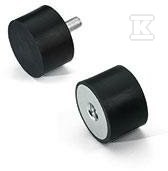
Vibration isolator DVA.4-30-17-M8-20-70 Z050573

Catalog numbers:
- DVA.4-30-17-M8-20-70
Suggested products
TECHNICAL DATA
Sales unit dimensions and weight: 1 pcs
Vibration isolator DVA.4-30-17-M8-20-70 Z050573
Vibration Isolators – Reduction of vibrations and noise in machines and equipment
Vibration isolator DVA.4-30-17-M8-20-70 is an element dedicated to damping vibrations and reducing noise generated by machines and equipment. Its construction based on rubber with a hardness of 70 Shore’a, combined with a solid threaded pin, ensures effective isolation and improved working comfort. The installation of this type of isolators translates not only to a reduction in noise levels, but also to an extension of machine life by reducing dynamic loads.
Construction and application
This vibration isolator, made of galvanized steel, is characterized by a cylindrical shape and an external M8 thread. A diameter of 30 mm and a height of 17 mm make it a universal solution for many applications. It is mainly used for damping impacts and positioning of devices with lower mass. Thanks to its construction, this vibration isolator effectively absorbs vibrations, protecting the surroundings from their negative impact. This is particularly important in industrial environments, where long-term exposure to vibrations can lead to damage to structural elements and deterioration of working conditions.
Key features and benefits
- Effective isolation: Rubber with a hardness of 70 Shore’a provides optimal vibration damping over a wide frequency range. This hardness allows for good absorption of vibration energy, minimizing its transfer to the machine or foundation structure.
- Durable construction: Galvanized steel guarantees corrosion resistance and long-term reliability even in harsh environmental conditions.
- Easy installation: M8 thread enables quick and secure mounting in standard threaded holes.
- Versatility: Suitable for a wide range of applications – from impact damping to positioning of devices with lower mass.
- Noise reduction: By damping vibrations, it contributes to lowering the noise level generated by operating machines and equipment.
- Protection against damage: By reducing dynamic loads, it helps protect structural elements from damage caused by vibrations.
- Improved working comfort: Reduction of vibrations translates to improved working comfort for machine and equipment operators.