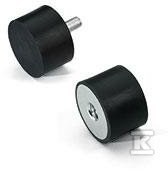
Vibration isolator DVA.5-25-20-M6-70 Z050594

Catalog numbers:
- DVA.5-25-20-M6-70
Suggested products
TECHNICAL DATA
Sales unit dimensions and weight: 1 pcs
Vibration isolator DVA.5-25-20-M6-70 Z050594
Vibration Isolators – Reduction of vibrations and noise in machines and equipment
Vibration isolators from the DVA.5 series are resilient-damping elements designed to reduce vibrations and noise generated by machines and equipment. Their task is to isolate the vibrating mass from the environment, which translates to improved work comfort, increased safety, and extended equipment life. They are particularly useful in situations where it is necessary to minimize the negative impact of vibrations on precise equipment or structures.
Construction and application
Vibroisolator DVA.5-25-20-M6-70 is a steel insert, galvanized, with a non-through threaded hole. The construction is based on a combination of a metal part (galvanized carbon steel) with an elastomer – natural rubber with a specific hardness. This selection of materials ensures effective vibration damping and kinetic energy absorption. This model is used in mounting device components, such as motors, fans or pumps, as well as in isolating vibrations generated by external sources, e.g. when mounting electrical cabinets.
Characteristics and benefits
This particular model is distinguished by several key features:
- Diameter 25 mm – provides stability and adequate contact surface.
- Height 20 mm – compact dimensions make it easy to install in a limited space.
- Internal thread M6 – enables easy and secure connection with structural elements.
- Rubber hardness 70 Shore A – is responsible for the effectiveness of vibration damping under moderate load. Higher hardness means greater resistance to static and dynamic loads, but less ability to absorb vibration energy.
- Cylindrical shape - facilitates installation and ensures even distribution of loads.
Using DVA.5 vibration isolators translates into a number of benefits:
- Reduction of noise generated by machines and equipment.
- Protection of structural elements against damage caused by vibrations.
- Improved work comfort for equipment operators.
- Increased precision of machine operation (especially those sensitive to vibrations).
- Extended equipment life by reducing dynamic stresses.
- Possibility of leveling the device during installation (depending on the application).
It is worth remembering that the selection of the appropriate vibration isolator should take into account the vibration frequency, load and required degree of damping – detailed information on selection can be found in the catalogs of the manufacturer Elesa+Ganter Polska Sp. z o.o.