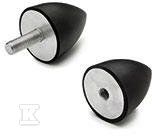
Vibration isolator DVA.7-30-36-SST-M8-55 Z038327

Catalog numbers:
- DVA.7-30-36-SST-M8-55
Suggested products
TECHNICAL DATA
Sales unit dimensions and weight: 1 pcs
Vibration isolator DVA.7-30-36-SST-M8-55 Z038327
Vibration Isolators – Reduction of vibrations and noise in machines and equipment
The DVA.7-30-36-SST-M8-55 vibration isolator is an element dedicated to damping vibrations and reducing noise generated by operating machines and equipment. Its use translates to improved work comfort, increased safety, and extended equipment life. The construction based on 55 Shore’a hardness rubber provides effective insulation, absorbing vibration energy and minimizing its transfer to the surroundings.
Construction and application
This vibration isolator is characterized by a conical shape, which allows for universal use in various mounting configurations. It is made of durable AISI 304 stainless steel, which guarantees corrosion resistance and long-term reliability, even in harsh environmental conditions. It has an M8 internal thread, allowing for easy and secure mounting. These types of vibration isolators are widely used in mounting components of devices such as motors, fans or pumps, as well as elements damping impacts and vibrations in machine structures.
Key features and benefits
- Effective vibration isolation: 55 Shore’a hardness rubber provides optimal vibration damping over a wide frequency range.
- Durability and resistance: Construction of AISI 304 stainless steel guarantees long life and corrosion resistance.
- Easy installation: M8 internal thread facilitates quick and secure mounting in various applications.
- Versatility: Conical design allows for adaptation to different mounting configurations.
- Noise reduction: By damping vibrations, it contributes to lowering the noise level generated by machines and equipment.
- Element protection: Reduces dynamic loads on structural elements, extending their lifespan.
Choosing the right vibration isolator is crucial for the effectiveness of vibration damping. Parameters such as vibration frequency, load and required damping level should be considered. If in doubt, it is worth consulting a specialist or using the manufacturer's technical documentation – ELESA+GANTER Polska Sp. z o.o.