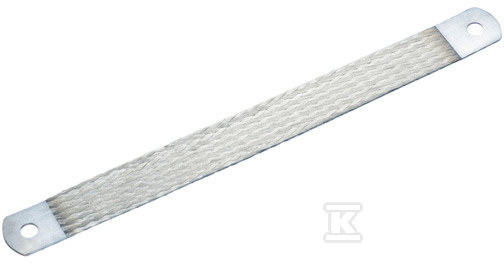
Braided cable mBJ 50-200-16 563360
Suggested products
TECHNICAL DATA
Sales unit dimensions and weight: 1 pcs
Braided cable mBJ 50-200-16 563360
Copper braid for grounding and equalization of potentials
MBJ 50-200-16 braid is a reliable solution for grounding and equalization of potentials, designed for durability and ease of installation. Made of high-quality copper, it provides effective current discharge and minimizes the risk of electromagnetic interference. It is a key element in ensuring the safety of electrical installations and protecting devices from damage.
Construction and application
The braid is characterized by a flat construction, which makes it easier to route in tight spaces and minimizes the occupied area. The braid made of single copper wires with a diameter of 0.15 mm guarantees high flexibility and resistance to vibrations. Thanks to the tinned finish, the braid exhibits high corrosion resistance, which is particularly important in harsh environmental conditions. Integrated terminations eliminate the need for soldering or crimping eyelets, which translates to faster and easier installation and increased connection reliability.
- Cross-section 50 mm² provides adequate current capacity for many applications.
- Dimensions 200 x 28 mm allow adaptation to various installation configurations.
- Thickness 2.5 mm affects the stiffness and stability of the braid.
- Meets the recommendations of the EMC/EMI directive, which confirms its effectiveness in reducing electromagnetic interference.
- Rated current up to 250 A (typical IEC value) allows use in circuits with high load.
Advantages for installers and users
MBJ 50-200-16 braid is not only a protective element, but also a practical solution for professionals. Quick installation, no need for additional finishing work and high quality of workmanship translate into saving time and costs. For end users, this means long-lasting and trouble-free operation of the electrical installation and a sense of security. In addition, the low weight of the flat braid makes it easier to handle during installation, and its flexibility allows it to be adapted to complex systems.