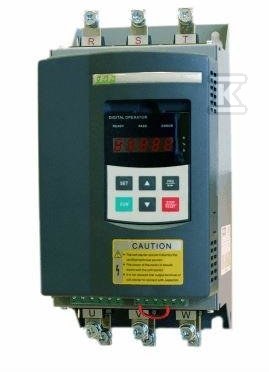
Softstarter Uwe=3x400V AC, Iwy=60A, Pmax=30kW SF-300

Suggested products
TECHNICAL DATA
Sales unit dimensions and weight: 1 pcs
Softstarter Uwe=3x400V AC, Iwy=60A, Pmax=30kW SF-300
Intelligent control of three-phase motors – soft starter SF-300
The SF-300 soft starter is an advanced device designed for smooth starting of three-phase asynchronous motors. It eliminates the need for traditional star-delta starters, while simultaneously reducing inrush currents during startup, which is particularly important for loaded drives such as mills or crushers. The device provides comprehensive control over the motor starting, operation and braking processes, protecting it from damage and extending its service life.
Versatile application and advanced functions
SF-300 offers full three-phase control with six different starting characteristics, allowing precise adaptation to the specifics of the application. Control of torque, current and power allows for optimization of motor operation both during startup and during normal operation. Built-in protections protect the motor against overload, underload and voltage fluctuations.
Comfort of use and diagnostics
The device is equipped with a control panel with a keyboard and LED display, which facilitates configuration and monitoring of operating parameters. In addition, the soft starter has an analog output for current control, programmable relay outputs and an error memory, which facilitates diagnostics and servicing. The ability to automatically restart the motor increases system reliability.
Technical specifications and operating parameters
SF-300 operates at an input voltage of 3x400V and a maximum power of 30kW. The rated operating current of the device is 60A. It has a built-in motor overload protection and operates in an ambient temperature of up to 40°C. The device accepts control voltage AC in the range of 0-400V (50Hz). The lack of a built-in bypass contactor means that it must be used in some applications requiring continuous motor operation after startup. Four digital inputs allow integration with external control systems and three relay outputs allow for the implementation of additional logic functions.