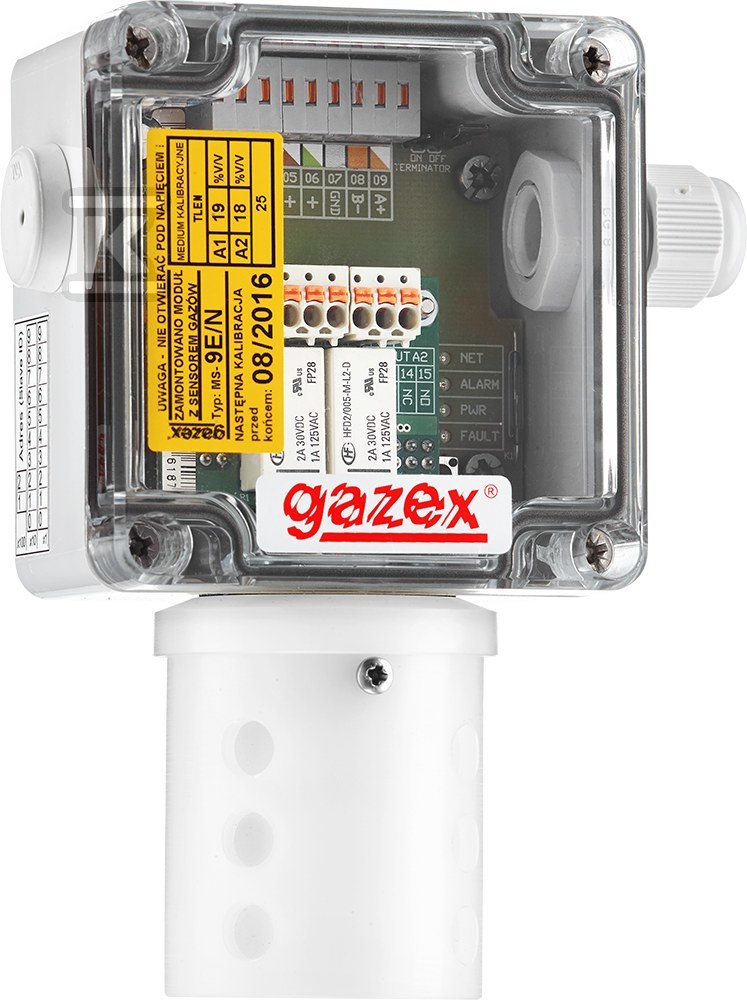
Gas detector DG-4E/MR-Nstd ammonia, calibration on request <1000ppm, electrochemical sensor DG-4E/MR-NSTD

Suggested products
TECHNICAL DATA
Sales unit dimensions and weight: 1 pcs
Gas detector DG-4E/MR-Nstd ammonia, calibration on request <1000ppm, electrochemical sensor DG-4E/MR-NSTD
Ammonia gas detector – reliable protection and precise measurement
The DG-4E/MR-Nstd gas detector is an advanced device designed for continuous monitoring of ammonia concentration in various environments. It utilizes an electrochemical sensor, ensuring high accuracy and sensitivity of measurements. The detector is ideal for both industrial applications and public utility facilities, where ammonia level control is crucial for safety and health protection.
Functionality and application
The DG-4E/MR-Nstd device is a component of the Digital Gas Detection System, which enables comprehensive monitoring of gas hazards. In the event of exceeding defined alarm thresholds, the detector activates optical signaling and transmits information to the central supervisory module via the RS-485 network with the MODBUS RTU protocol. This system ensures a quick response to potential hazards and minimizes the risk of dangerous situations. The replaceable sensor module facilitates maintenance, calibration and reduces operating costs.
The detector finds application in:
- industrial plants (e.g. cooling plants, chemical plants)
- logistics centers (fertilizer warehouses)
- public utility facilities (wastewater treatment plants, waste landfills)
- large rooms threatened by ammonia emissions.
Construction and user features
The DG-4E/MR-Nstd detector is characterized by a solid construction and easy installation. It has two relays with NO/NC contacts on a removable board, allowing for flexible configuration of alarm outputs. Screwless terminals facilitate connection of FTP cables, and two cable glands allow for easy connection of subsequent detectors in the system. The device is powered by 24V DC. The built-in microprocessor ensures stable and reliable operation, and the thermal compensation circuit minimizes the impact of temperature changes on measurement accuracy. Additionally, the detector has a history of alarm states, which facilitates event analysis. Calibration is performed on request for a range below 1000 ppm, guaranteeing measurement accuracy in specific working conditions.