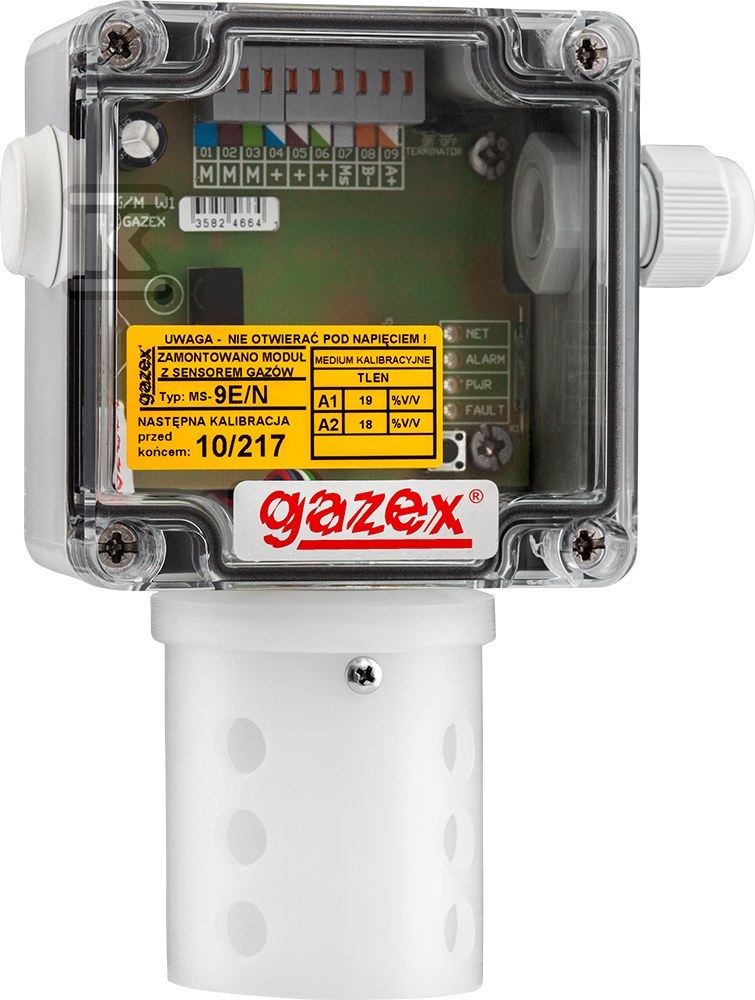
Gas detector DG-P4E1/M-Nstd ammonia, measurement range on request, from -40°C, electrochemical sensor DG-P4E1/M-NSTD

Suggested products
TECHNICAL DATA
Sales unit dimensions and weight: 1 pcs
Gas detector DG-P4E1/M-Nstd ammonia, measurement range on request, from -40°C, electrochemical sensor DG-P4E1/M-NSTD
Ammonia gas detector – reliable protection and precise measurement
This gas detector is designed for continuous monitoring of ammonia concentration in various industrial and public utility environments. The device, based on an electrochemical sensor, provides fast and reliable detection, warning of exceeding permissible norms. This allows for immediate action to ensure safety and protect health.
Design and application
Detectors from the DG-P/M series, such as this model, are an integral part of the GAZEX Digital Gas Detection System. Communication is via the RS-485 standard with the MODBUS RTU protocol, enabling easy integration with existing monitoring and control systems. The replaceable sensor module simplifies maintenance and calibration, reducing operating costs. The housing with IP44 protection degree protects the device against splashing, allowing it to be used in harsh industrial conditions.
The detector finds application in:
- industrial plants where ammonia may be used or formed as a byproduct;
- logistics centers and warehouses where substances containing ammonia are stored;
- public utility facilities such as sewage treatment plants or ice rinks;
- large rooms requiring continuous monitoring of toxic gas concentrations.
Key features and benefits
- Electrochemical sensor: ensures high precision in measuring ammonia concentration.
- Wide measurement range: allows monitoring of gas concentration under various conditions.
- RS-485 communication: easy integration with monitoring and control systems.
- Replaceable sensor module: simplified maintenance and calibration, reducing operating costs.
- Splash-proof housing (IP44): allows use in harsh industrial conditions.
- Built-in microprocessor: ensures stable operation and reliable measurements.
- Alarm history: helpful in analyzing the causes of alarms and optimizing the detection system.
- Two cable glands: facilitate connecting subsequent detectors to the network.
The device is designed to operate at temperatures as low as -40°C, making it an ideal solution for outdoor or unheated applications. It should be remembered that these detectors cannot be used in areas at risk of explosion of gases or dusts – these are devices of conventional construction.