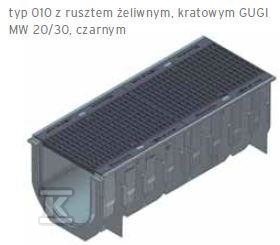
RECYFIX STANDARD 300 channel, type 01, with cast iron grate, grid GUGI MW 15/25, class C 250 40870

Suggested products
TECHNICAL DATA
Sales unit dimensions and weight: 1 pcs
RECYFIX STANDARD 300 channel, type 01, with cast iron grate, grid GUGI MW 15/25, class C 250 40870
Drainage channel with cast iron grating
The RECYFIX STANDARD 300 type 01 channel is a linear drainage system designed to handle intensive vehicle traffic and C 250 load class. The body, made of high-quality plastic, features a ribbed structure that prevents deformation under load—even during cyclic passage of trucks or vans. The material is frost-resistant, resistant to road salt and UV radiation, ensuring long-term functionality in outdoor conditions.
The gratings are made of cast iron—not only for their strength, but also because they can be replaced without dismantling the entire channel. This model uses the GUGI MW 15/25 grating, which allows for effective water drainage while minimizing the entry of debris and stones into the sewer system. The gaps between the bars are well-matched to the size of the drains, and their shape minimizes the risk of clogging.
The channel dimensions (1000 mm length, 300 mm clear width of the channel, 292 mm height) make it ideal for installation in locations requiring higher flow capacity—such as parking lots, local roads, entrances to commercial buildings, or industrial areas. The use of the standard type 01 means a simple, symmetrical construction without additional sockets—easy to integrate with existing sewer networks.
Installation is straightforward: the channel is placed on a stable sub-base, and the grating is secured with clamps—no welding or special couplings required. A weight of 29.1 kg indicates a solid construction, yet it does not hinder transportation or installation. The system operates without maintenance for years—it does not corrode, crack due to temperature changes, or lose its shape.
Important note: this model does not include a DN100 socket or other inlets—it is a pure drainage channel. Connection to the network is made via side or end sumps (available separately). For the installer, this means fewer complications during design and faster installation.