Compensation cable type K KCAWSLWS 2x0.75 mm² 18050468

Suggested products
TECHNICAL DATA
Sales unit dimensions and weight: 1 m
Compensation cable type K KCAWSLWS 2x0.75 mm² 18050468
Type K Compensating Lead – Reliable Temperature Measurement
The KCAWSLWS 2x0.75 compensating lead is a key element in temperature measurement systems, ensuring precise and stable readings. Made from high-quality materials, this lead is designed to connect type K thermocouples to measuring devices, minimizing errors resulting from thermoelectric potential differences. Its construction with fiberglass provides durability and resistance to harsh working conditions.
Construction and properties – for installers and users
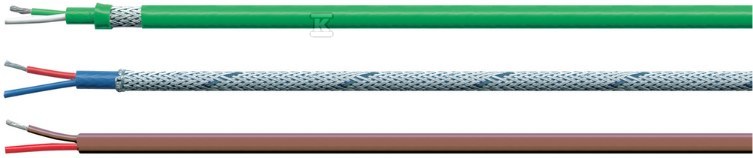
The lead consists of two conductors made of NiCr-NiAl alloy, insulated with fiberglass. A braid of galvanized steel wires protects the lead from mechanical damage, and a coating also made of fiberglass provides resistance to high temperatures. It is worth noting the constant operating temperature range – up to +400°C for fiberglass insulation. This makes the lead ideal for use in industry, laboratories, and anywhere precise temperature control is required in extreme conditions.
Both compensating and thermoelectric leads consist of at least one pair of "+" and "-" wires. They are made of different materials, which ensures the appropriate thermoelectric characteristics for a given type of lead. Compensating leads (C) use substitute materials compared to thermoelectric leads (X), which are made of the same materials as the thermocouple.
The lead cross-section is 0.75 mm². The insulation of the wire and the coating are made of fiberglass. The minimum stationary operating temperature is -50°C, while the maximum stationary operating temperature is 400°C.
Applications and additional possibilities
The KCAWSLWS 2x0.75 lead is widely used in:
- Metallurgical industry: Temperature measurement in metal processing.
- Food industry: Temperature control in food production and storage processes.
- Laboratories: Precise temperature measurements in scientific research.
- HVAC systems: Monitoring temperature in heating, ventilation and air conditioning installations.
- Energy industry: Temperature control of energy equipment and installations.