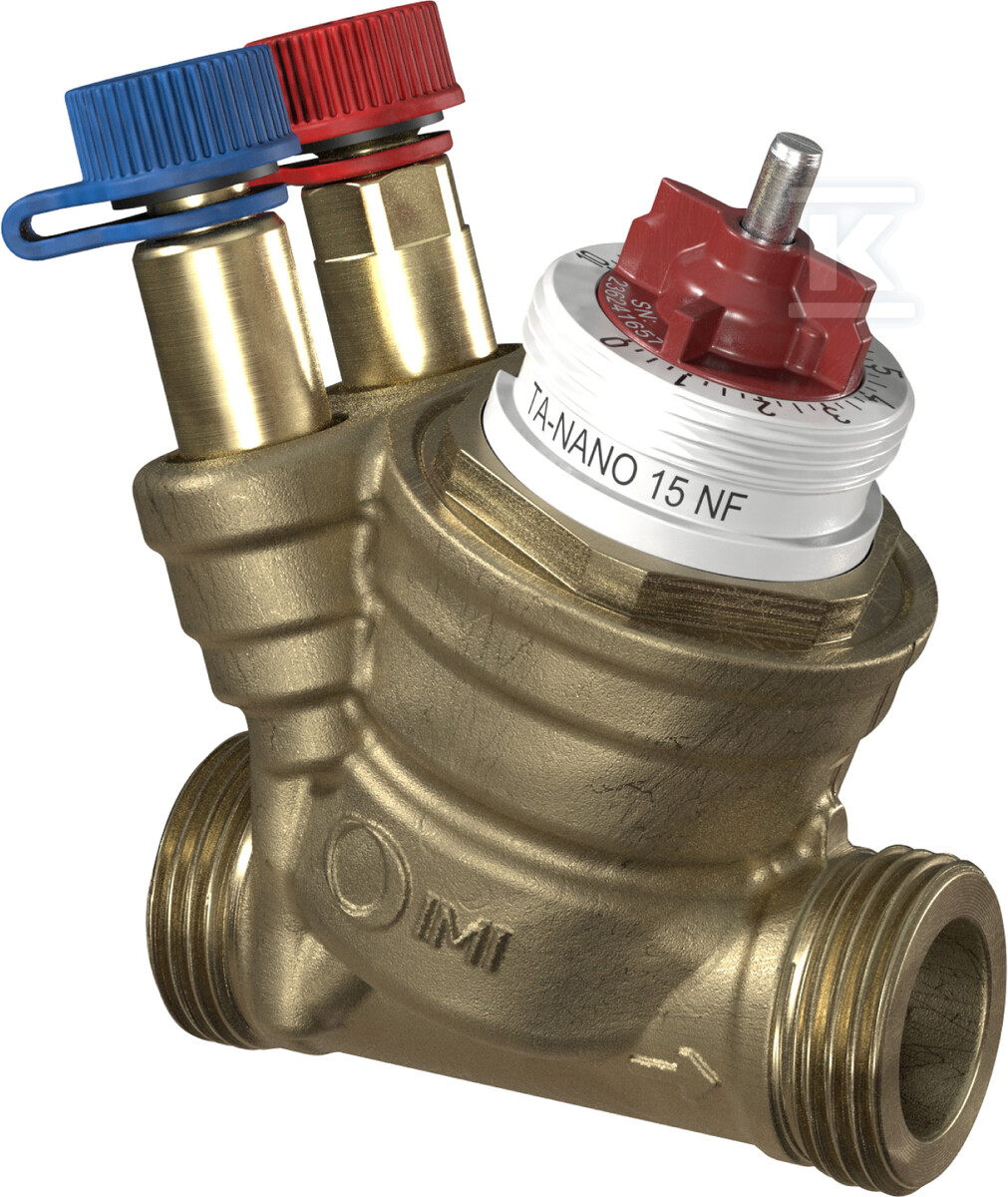
Pressure-independent balancing and regulating valve (PIBCV) TA-Nano Plus, DN10 GZ 32221310110

Suggested products
TECHNICAL DATA
Sales unit dimensions and weight: 1 pcs
Pressure-independent balancing and regulating valve (PIBCV) TA-Nano Plus, DN10 GZ 32221310110
Compact valve that works even when space is at its limit
The TA-Nano Plus valve is designed for spaces where every millimeter counts—narrower than most competing models, yet no less functional. Its compact shape allows installation in locations where other valves simply won’t fit: behind walls, in tight enclosures, or in restricted technical spaces. No need to break structures or move other components—only enough space for the thread is required.
Operates independently, without additional systems
No power, software, or NFC communication required. You set it manually—directly on the device—and it works immediately. The linear characteristic and membrane-based pressure compensation ensure stable flow regardless of network pressure fluctuations. Effective regulation begins at a minimum pressure differential of 15 kPa, with a maximum differential of 600 kPa providing ample margin for emergency or dynamic load conditions. Flow can be set between 0.019 and 0.19 m³/h—ideal for small heat emitters: radiators, heat exchangers, and underfloor heating loops.
Measurement and diagnostics without additional instruments
The valve features integrated measurement ports—simply connect a manometer or flow meter to check actual flow without disassembly. This not only simplifies system commissioning but also enables rapid detection of blockages, contamination, or incorrect settings. No guessing required—you see the results directly on the measuring device’s display.
The AMETAL® housing material is not just a brand—it’s a guarantee of resistance to corrosion and contaminants in boiler water or glycol-containing fluids. The valve operates at temperatures from -10 to 120 °C, making it suitable for both low- and high-temperature systems. Standard BSPP threads and M30x1.5 connections eliminate the need for adapters.
There are no “magic” features here—only what works: precise regulation, resilience to real-world conditions, and the ability to verify performance without disassembly.