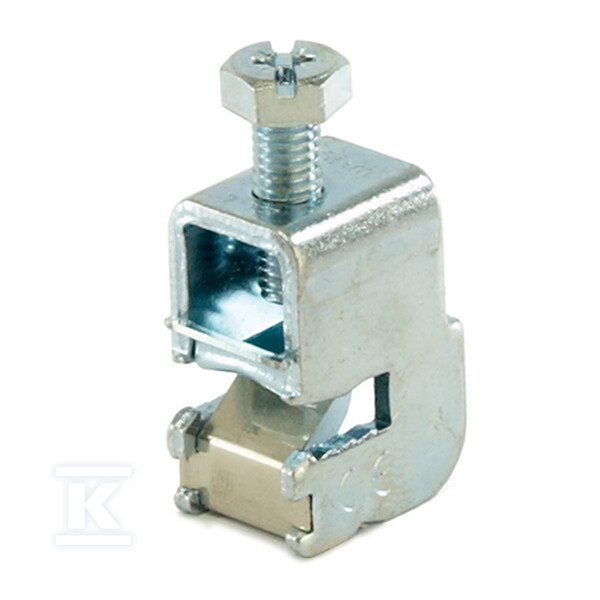
Busbar clamp 1.5–70mm2, 1000V AC/DC, 400A, for 5mm CU busbar MAE0705E15
Suggested products
TECHNICAL DATA
Sales unit dimensions and weight: 1 pcs
Busbar clamp 1.5–70mm2, 1000V AC/DC, 400A, for 5mm CU busbar MAE0705E15
Busbar Clamp MAE0705E15
The MAE0705E15 busbar clamp is a high-quality component designed for professional mounting on copper busbars with a thickness of 5 mm. The product ensures a reliable electrical connection for conductors with cross-sections ranging from 1,5 mm² to a maximum of 70 mm², supporting loads up to 400A at a voltage of 1000V AC/DC.
Construction and materials
The clamp body is made of steel, which guarantees high mechanical strength and durability during use. The pressure element consists of a zinc-galvanized screw, providing corrosion resistance and long-term functionality. The stainless steel pressure spring maintains constant conductor pressure, resulting in a stable electrical connection without the risk of loosening during operation.
The clamp width is 20,5 mm, allowing for compact mounting in switchgear and distribution boards. The hexagonal screw head facilitates precise tightening using standard tools, ensuring torque control during installation.
Application and compatibility
The MAE0705E15 clamp is specifically designed for connecting round conductors with cross-sections from 1,5 mm² to 70 mm². The product is compatible with flat copper busbars with a thickness of exactly 5 mm. The design allows for quick installation without the need for complicated tools or additional mounting elements.
Operating parameters and safety
The maximum operating current is 400A at a voltage of up to 1000V in both AC and DC systems. These parameters allow for safe operation in most standard low-voltage electrical installations. The clamp ensures excellent electrical contact thanks to the optimal contact force maintained by the stainless steel spring.
The visible tightening torque allows for precise adjustment of the pressure force during assembly. This gives the installer confidence that the connection is properly tightened—neither too loose (risk of overheating) nor too tight (risk of conductor damage).