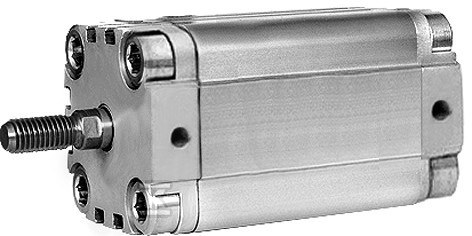
Compact actuator UNITOP D100x185 external thread QF100.0185M

Suggested products
TECHNICAL DATA
Sales unit dimensions and weight: 1 pcs
Compact actuator UNITOP D100x185 external thread QF100.0185M
Compact pneumatic actuator for various applications
This UNITOP pneumatic actuator, with a diameter of 100 mm and a stroke of 185 mm, is a reliable solution for industrial automation. It features a compact design and an external thread, making it easy to integrate with existing systems. It is a component from the QF series, widely used in applications requiring precision and efficiency.
Construction and materials
The actuator is made of high-quality materials, ensuring durability and corrosion resistance. The piston is made of chrome-plated CK45 carbon steel, guaranteeing wear resistance and long life. The anodized aluminum housing provides lightness and resistance to mechanical damage. Polyurethane seals effectively prevent air leaks, maintaining stable working pressure.
Operating parameters and application
The actuator operates in a pressure range of 1 to 10 bar, using filtered and lubricated compressed air. It can be used in ambient temperatures from -20°C to +80°C and medium temperatures from 0°C to +40°C. Mechanical cushioning reduces shocks at the end of the stroke, extending the life of the device and increasing comfort. Thanks to the UNITOP standard, the actuator is compatible with a wide range of accessories and pneumatic components.
The actuator is characterized by a diameter of 100 mm and a stroke of 185 mm. It operates in a pressure range of 1 to 10 bar, and the medium temperature should be between 0°C and +40°C. The ambient temperature can range from -20°C to +80°C. The piston is made of chrome-plated CK45 carbon steel, and the housing is made of anodized aluminum. The seals are made of polyurethane, and the actuator meets the UNITOP standard.
Actuators of this series are used in many industries, including:
- Industrial automation – operation of machines and production equipment.
- Robotics – drives for robot arms and manipulators.
- Food industry – automation of packaging and labeling processes.
- Automotive industry – assembly of car components.
- Transport systems – control of conveyor belts and sorters.