Recuperation is also known as mechanical ventilation with heat recovery. First and foremost, it is a way to save money on home heating. In addition, it is a way to increase the comfort of household members and take care of their health. What other advantages does recuperation have?

What are the benefits of recuperation?
An important function recuperation is air purification. In this way, you can get rid of pollutants and allergens. The filters used in the installation will keep outside air polluted as a result of burning coal in nearby buildings.
In addition, the benefits of recuperation include:
- energy saving
- air purification from mites, viruses, bacteria, pollen harmful to allergy sufferers and fumes from cars and chimneys
- controlling the amount of exhaust and supply air
- the ability to quickly "ventilate" rooms
- removing moisture from rooms
- clean air without having to open a window (this also reduces noise if you live on a busy road).
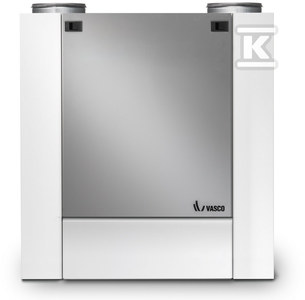 It is also worth noting that in rooms where mechanical ventilation is used, laundry and floors dry faster after washing. The ease of using heat recovery will be enhanced by connecting the system to the smart building installation. You can also choose, for example, heat recovery units with WiFi control (purchased, for example, from the Onninen plumbing wholesaler , where you will also find, among other things, ventilation units, EasyFlow channels, angle or straight distributor, pipes, distribution and expansion boxes, insulated and ventilation channel, mounting and connection plate).
Check out the recuperation at the Onninen wholesaler
How does mechanical ventilation work?
The operation of mechanical ventilation is based on the movement of air, which is generated by a special device - a recuperator. It allows you to control the movement of exhaust and supply air and to recover heat from used "dirty" air, which is humid and saturated with carbon dioxide. Simply put, recuperation is a system of air exchange in a house, consisting of removing exhaust air and introducing clean air, while recovering some of the heat already stored.
The heart of the entire installation is the recuperator - it is the recuperation center with an exchanger that is used for heat recovery. The extracted air flows simultaneously in two directions:
- clean and cold air is drawn in from outside the building
- Waste and warm air is extracted outside through air valves.
Anemostats are round grilles placed as part of the operation of this installation on the walls or ceiling, through which air is transported. Both of these directions and streams meet in the recuperator, i.e. the heat exchanger, but each of them flows through a separate channel. Dirty air leaves its heat here, and cold air takes it and goes to the ventilation channel. Then the air reaches all the rooms and is distributed around the house, and the used air goes outside.
The mentioned recuperator has four connection stubs to which the ventilation ducts are connected:
- air intake - brings in cold air from outside
- exhaust vent - discharges air outside
- air supply to rooms - supplies warm and filtered air to rooms
- extractor from rooms - transports air from rooms to the recuperator.
Channel 1 draws in cold air and introduces it to the exchanger in the recuperator. At the same time, channel 4 draws in warm used air and also introduces it to the exchanger. This is where energy is transferred (heat exchange) - the air from channel 4 heats the one in channel 1. After that, warm and fresh air is blown into the room through channel 3, and at the same time channel 2 throws out polluted and deprived of temperature air.
Vertical and horizontal channels in heat recovery
Ventilation is most often associated with the use of vertical air supply and exhaust ducts. And in reality, this is most often the case. However, it is also possible to run the ducts horizontally. However, you should be aware that this may mean poorer efficiency of the ventilation system, but it does not have to be. It is worth consulting this issue with experienced specialists in this field. All the necessary ventilation elements can be purchased at the Onninen wholesaler, where you will find, among others, fans, air curtains, heaters, or ventilation ducts and fittings.