The modern HVAC industry is undergoing a revolutionary transformation towards sustainability and a circular economy. At Onninen, we are observing a growing demand for ecological installation solutions that combine high energy efficiency with a responsible approach to the environment. Our customers are increasingly seeking technologies that not only provide thermal comfort but also minimize the impact on the ecosystem through effective waste management and ventilation based on renewable energy sources.
The future of HVAC installations lies in intelligent systems that utilize advanced materials from recycling, innovative refrigerants with low global warming potential, and heat recovery technologies. Our offering includes a wide selection of products from renowned brands that meet the latest ecological standards. From modern heating systems to advanced heat recovery units – in our assortment, you will find solutions supporting the green transformation of the installation industry.
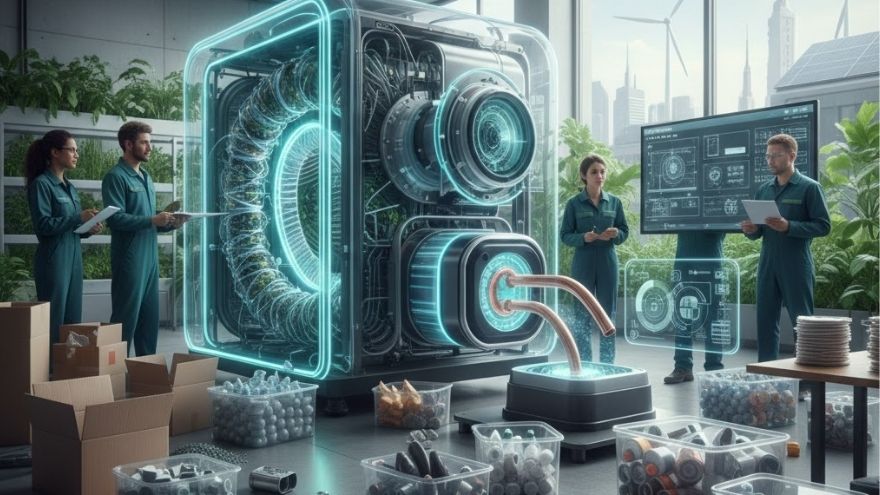
Check ventilation at Onninen warehouse
New refrigerants with low GWP – a revolution in refrigeration
Traditional refrigeration systems relied on HFC refrigerants characterized by high global warming potential. For example, the commonly used R410A refrigerant has a GWP exceeding 2000, which means a strong negative impact on the climate. In our offering, we recommend modern environmentally friendly refrigerants such as R32 or innovative HFO blends with a GWP of around 4, which have virtually no impact on the greenhouse effect.
Practical applications of new refrigeration technologies
Air conditioning systems with R32 refrigerant – 68% lower carbon footprint
Heat pumps using natural refrigerants like propane or ammonia
Cooling storage systems utilizing renewable energy
Absorption systems powered by waste heat
From our experience, investors appreciate inverter technologies that smoothly adjust the power of devices, adapting to the current demand for cooling. In Onninen's assortment, you will find modern ventilation systems equipped with these solutions, which provide up to 37% higher seasonal efficiency compared to traditional systems.
Recycled materials in HVAC installations
The circular economy in the HVAC industry is not only about the disposal of used devices but primarily about designing systems with the intention of reusing materials. In our offering, we promote products made from secondary raw materials that have identical functionality with a significantly lower carbon footprint.
Innovative recycled materials in Onninen's offering
| Material | Source | Application in HVAC | Ecological benefits |
|---|---|---|---|
| Recycled steel | Industrial waste | Filter frames, central housings | 90% less energy in production |
| Secondary aluminum | Cans, window profiles | Heat exchangers, ducts | 95% reduction in CO2 emissions |
| Recycled plastics | Plastic waste | Insulation elements, housings | 75% reduction in waste |
| Cellulose | Waste paper | Thermal insulation | Ecological fire-resistant properties |
We pay special attention to silicate blocks, which due to their durability can be reused multiple times in various installation projects. These materials, produced from sand, lime, and water, require significantly less energy than concrete or ceramics, which further reduces CO2 emissions throughout the building's life cycle.
Recovery and regeneration technologies in HVAC systems
Modern heating systems increasingly utilize heat recovery technologies that allow for maximum energy utilization. In our offering, you will find heat recovery units with efficiencies reaching up to 90%, which recover heat from the ventilation air and use it to heat the fresh air supplied to the building.
Advanced energy recovery systems
- Enthalpic recuperators – recover both sensible and latent heat
- Ground source heat pumps – utilize the stable ground temperature
- Heat storage systems such as PTES and BTES
- Hybrid PVT collectors – production of electrical and thermal energy
As a market leader in the installation sector, we also offer professional technologies for refrigerant recovery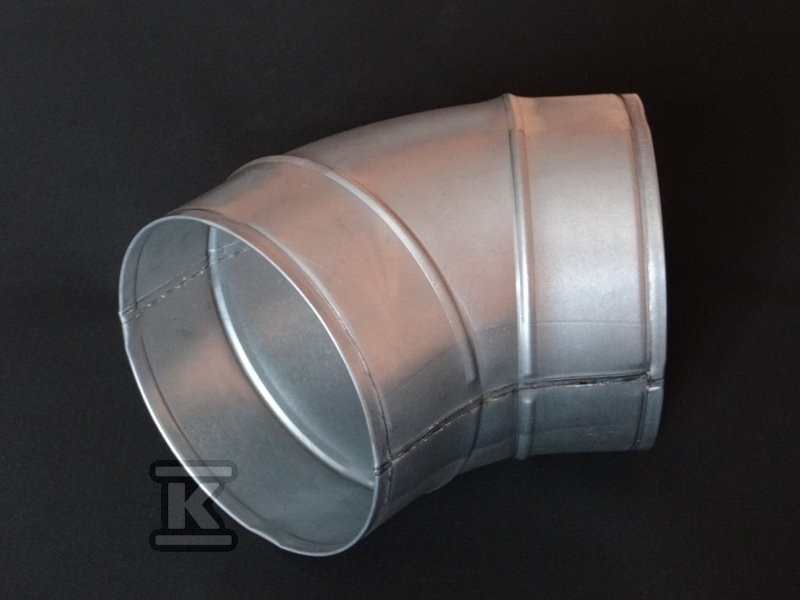 . Our systems allow for safe recovery and purification of refrigerants from existing installations, which reduces their negative impact on the environment and enables reuse in new projects.
Intelligent energy management systems in HVAC
The future of the HVAC industry lies in "smart & green" systems that combine automation with ecology. In Onninen's assortment, you will find programmable controllers and weather controllers that automatically adjust the operation of installations to current atmospheric conditions and user needs.
Benefits of intelligent HVAC systems
- Energy savings – up to 40% reduction in consumption
- Remote monitoring – control via mobile applications
- Predictive maintenance – preventing failures
- Integration with renewable energy sources – optimal use of solar energy
Our solutions include BMS (Building Management Systems) that integrate HVAC with other building installations. This makes it possible to create energy-efficient ecosystems that minimize environmental impact while ensuring maximum user comfort.
HEPA filters and air purification in the context of ecology
Indoor air quality is not only a matter of comfort but also of health and ecology. In Onninen's offering, you will find advanced air filtration systems that utilize materials from recycling and have a long service life.
HEPA filter disposal process
Used filters pose a significant ecological problem, which is why we have developed a comprehensive system for their management. Cardboard filters made of fiberglass and synthetic materials are sorted and sent to specialized facilities, where they undergo incineration at temperatures above 850°C. Steel frames are mechanically separated and directed to recycling, allowing for the recovery of valuable raw materials.
HEPA filters used in hospitals and laboratories are particularly problematic, as their precise construction requires specialized disposal. Our waste management procedures for these materials comply with the strictest environmental standards and ensure ecological safety.
Frequently Asked Questions
1. What are the main ecological benefits of modern HVAC systems?
Modern HVAC systems offer a 40-68% reduction in CO2 emissions due to the use of low GWP refrigerants, heat recovery technologies, and intelligent energy management. Additionally, they enable material recycling and integration with renewable energy sources.
2. How does the recycling process for refrigerants work?
The recycling process for refrigerants includes safe recovery, purification, and regeneration. Refrigerants are secured in specialized bottles with pressures up to 48 BAR, then subjected to distillation and filtration processes. Recovered refrigerants can be reused in new installations.
3. Which recycled materials are most commonly used in HVAC installations?
The most commonly used materials are recycled steel and aluminum, as well as plastics. Secondary steel constitutes 90% of the material in filter frames, recycled aluminum is used in heat exchangers, and cellulose from waste paper serves as ecological thermal insulation. These materials maintain full functionality with a significantly lower carbon footprint.
4. What future technologies will dominate the HVAC industry?
Dominant technologies will include "smart & green" systems with IoT and AI integration. Key technologies include natural refrigerants (R290, CO2), heat pumps with seasonal storage, predictive maintenance systems, and integration with energy networks. Development will also encompass aerogels as super-insulations and photovoltaic panels integrated with HVAC systems.
5. How long do recycled materials last in HVAC installations?
Recycled materials have the same durability as primary raw materials. Recycled steel in filter frames lasts 15-20 years, aluminum in heat exchangers 20-25 years, and cellulose as thermal insulation retains its properties throughout the building's life. Proper classification and preparation of materials for reuse are crucial.
6. What are the costs of implementing ecological HVAC technologies?
Investment in ecological HVAC technologies pays off in 3-7 years due to energy savings and lower operating costs. Heat recovery systems generate 30-50% savings on bills, and recycled materials are often cheaper than primary raw materials. Additionally, there are grant programs available to support green investments.
Sustainable HVAC future in Onninen's practice
As a leading installation wholesaler in Poland, Onninen actively supports the transformation of the HVAC industry towards sustainability. Our team of experts will assist you in selecting ecological installation solutions that combine high efficiency with environmental responsibility. In our warehouses, thousands of products that meet the latest ecological and energy standards are available immediately.
The future of HVAC installations lies in intelligent systems based on renewable energy sources, recycled materials, and advanced recovery technologies. By investing in these solutions today, you are not only building efficient installations but also contributing to environmental protection for future generations. Our specialists from the branch network across Poland provide professional technical advice and support at every stage of project implementation – from concept to commissioning and service.