The choice of the appropriate joint for underground cables is a key element of any electrical installation conducted below the surface. At Onninen, as a leader in the installation market, we advise our clients daily on selecting optimal solutions for securing cable connections in underground conditions. From years of experience, we know that a properly selected cable joint guarantees safety, durability, and reliability of the entire installation.
Modern cable joints have evolved from simple tape connections to technologically advanced solutions that we offer in our assortment. Our specialists observe a growing demand for professional joint solutions, particularly in the context of the development of telecommunications and energy infrastructure. Thanks to extensive experience in handling various projects - from home installations to large industrial investments - we can provide comprehensive technical advice to every client.
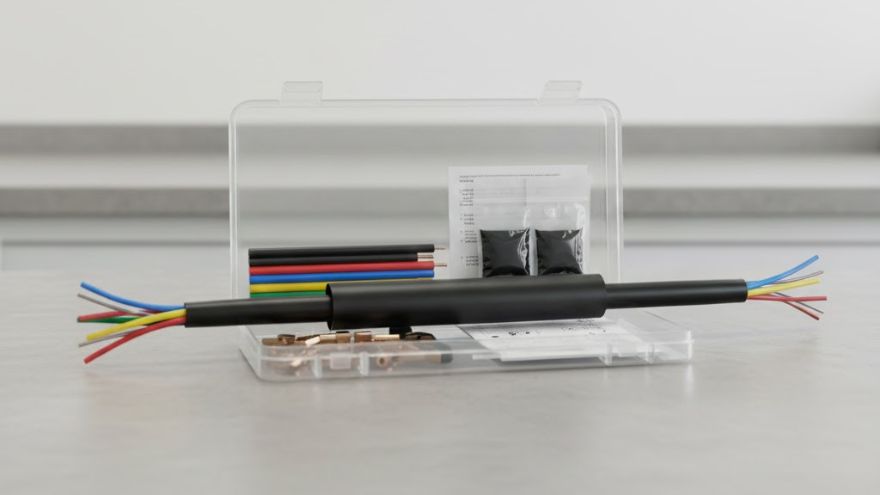
Check resin joints at Onninen warehouse
Types of joints for underground cables and their applications
In Onninen's assortment, you will find four basic types of cable joints dedicated to underground installations. Each type is characterized by a unique mounting technology and specific advantages, which our technical teams carefully assess for specific applications.
Heat-shrink joints - a universal installation solution
Heat-shrink joints are the most popular choice among installers served by our branches. Made of cross-linked polyolefins coated internally with thermoplastic adhesive, they provide excellent sealing when heated to a temperature of about 120°C.
- Quick installation without specialized tools other than a heat source
- Excellent resistance to moisture and atmospheric factors
- Available in various sizes for every cable cross-section
- Immediate backfilling possible after installation
Resin joints - maximum durability in harsh conditions
Onninen offers resin joints using a two-component polyurethane resin. Our experiences from projects in extreme climatic conditions confirm their exceptional resistance to temperatures from -40°C to +85°C.
| Type of resin | Curing time | Operating temperature |
|---|---|---|
| Standard PU | 2-4 hours | -30°C to +70°C |
| Reinforced PU | 4-6 hours | -40°C to +85°C |
| Fast-curing | 30-45 minutes | -20°C to +60°C |
Gel joints - flexibility and re-opening capability
Onninen specialists particularly recommend gel joints in installations requiring periodic inspections or modifications. Filled with silicone gel with an IP68 protection class, they ensure full tightness even when submerged to a depth of 10 meters.
Cold-shrink joints - installation without heat sources
Rubber cold-shrink joints from our offer are ideal in situations where the use of an open flame or high temperature is impossible. The support spiral allows for easy installation by stretching and then shrinking by removing the spiral.
Key criteria for selecting a joint for underground cables
From the experience of our technical specialists, it follows that the correct selection of a joint requires analyzing several key parameters. The Onninen team has developed a systematic approach to choosing the optimal solution for each type of installation.
Technical parameters of the cable
- Cross-section of conductors: from 1.5 mm² to 300 mm² in the standard offer
- Number of conductors: solutions from 1 to 5 conductors including the protective conductor
- Type of insulation: PVC, XLPE, oil-impregnated paper
- Rated voltage: from low voltage installations 0.6/1 kV to medium voltage
Environmental conditions of the installation
Our design teams always take into account the specifics of the joint's working environment. Onninen offers solutions tailored to every condition - from standard garden installations to industrial environments that are chemically aggressive.
Operational requirements and service availability
Experience in handling various projects shows us how important access to the connection will be in the future. Gel joints allow for non-invasive inspection and modification, while  resin solutions provide maximum durability with no possibility of re-opening.
Step-by-step installation instructions for cable joints
Onninen specialists have developed a universal methodology for installing cable joints, which we apply in training for installers. Proper installation is the basis for long-term, trouble-free operation of every cable connection.
Preparation of cables and tools
The first stage requires precise preparation of the cable ends. We use proven tools for removing insulation, ensuring clean and even surfaces for connections.
- Measuring and marking the cutting point of the cable
- Removing the outer sheath over a length specified by the joint manufacturer
- Cleaning the conductive conductors and removing any contaminants
- Preparing connectors suitable for the cross-section of the joined conductors
Process of connecting conductive conductors
In Onninen's assortment, we offer complete sets of connectors tailored to every type of joint. Our experience shows that the quality of connectors has a key impact on the durability of the entire connection.
Installation of the joint housing
The installation procedure varies depending on the type of joint:
- Heat-shrink joints: uniform heating from the inside out
- Resin joints: thorough mixing of components and filling the mold
- Gel joints: placing the connection in the gel and closing the housing
- Cold-shrink joints: removing the support spiral after placing it on the connection
Common mistakes in installing cable joints
From years of customer service practice in Onninen branches, it follows that most problems with cable joints arise from installation errors. Our team of experts has identified the most common causes of failures and ways to avoid them.
Improper preparation of the cable surface
Leaving grease, dust, or moisture on the cable surface significantly reduces the effectiveness of adhesion. We always recommend thoroughly cleaning and degreasing the surface before installing the joint.
Incorrect proportions of components in resin joints
Precise mixing of resin and hardener in the proportions specified by the manufacturer is essential. Onninen offers ready-made kits with measured components, eliminating the risk of incorrect proportions.
Frequently asked questions
Which joint should I choose for the YKY 3x2.5 mm² cable?
For the YKY 3x2.5 mm² cable, we recommend the SMH3 heat-shrink joint from our standard offer. It provides an optimal quality-to-price ratio for home installations and small commercial facilities.
- Easy installation without specialized tools
- Moisture resistance class IP67
- Available in every Onninen branch
How long does a resin joint take to fully cure?
Standard resin joints cure within 2-4 hours at room temperature. At lower temperatures, the process may take up to 8 hours, so we recommend heating the components before mixing in winter conditions.
Can a gel joint be opened and closed multiple times?
Yes, gel joints from our offer can be opened multiple times without losing tightness. The silicone gel retains flexibility and adheres again to the cable surface after closing the housing.
- Ideal for installations requiring inspections
- Ability to add conductors without replacing the joint
- Retention of IP68 class after re-closing
At what depth can a cable joint be buried?
We recommend a standard depth of laying joints at 80-120 cm according to installation regulations. For high-class joints from our offer, it is possible to lay them even at a depth of 3 meters, provided that appropriate mechanical protection is ensured.
What connectors should be used in joints for aluminum cables?
For aluminum cables, we use only aluminum or bimetallic AL-CU connectors available in our assortment. Copper connectors cause electrochemical corrosion and are completely inadvisable.
- Crimped aluminum connectors for cross-sections up to 240 mm²
- Bimetallic screw connectors for larger cross-sections
- Special contact pastes included
Can cable joints be used underwater?
IP68 class joints from our offer can be safely used underwater to the depth specified by the manufacturer - usually 5-10 meters. We particularly recommend gel joints for underwater applications due to their flexibility and pressure resistance.
How long can a resin joint be stored before use?
Resin joints from our offer have a shelf life of 2-3 years when stored at room temperature in original packaging. Resin components should be protected from moisture and extreme temperatures.
Professional joint solutions in Onninen's offer
As a leader in the installation market in Poland, we offer the widest selection of cable joints available in the industry. Our warehouses in 35 branches ensure immediate product availability, and our teams of specialists guarantee professional advice on every project.
Collaboration with renowned manufacturers such as Cellpack, Radpol, Raychem, and TE Connectivity allows us to offer solutions that meet the highest quality standards. In Onninen's assortment, you will find complete cable joints along with installation accessories, connectors, and specialized tools.
Our specialists regularly participate in technical training from manufacturers, allowing us to provide support at the highest level. From project design through the selection of optimal solutions to installation instructions - Onninen is a partner you can count on for every installation challenge. Contact your nearest branch or use our online store to learn about the full range of professional joint solutions.