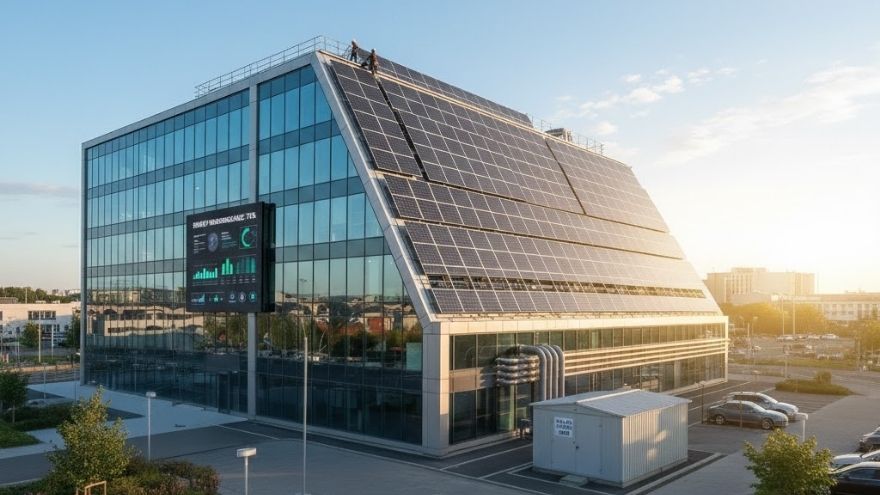
In the face of upcoming regulatory changes and rising energy costs, photovoltaic installations in office buildings are becoming not only an economic necessity but also a strategic business decision. As a market leader in installation, we at Onninen observe a dynamic increase in interest in photovoltaic solutions among commercial property owners.
From 2026, all new commercial buildings with an area exceeding 250 m² will be required to install photovoltaic systems. This means that investors must already today plan the integration of PV systems with the building's architecture. In our assortment, you will find comprehensive solutions that meet all upcoming legal requirements.
The specifics of office buildings require a special approach to the design and installation of photovoltaic systems. Our experts' many years of experience show that proper matching of the installation's power to the energy profile of the building and the use of advanced energy management systems are crucial.
Check photovoltaic panels at Onninen wholesale
Why office buildings require a different approach to photovoltaics
Commercial office buildings are characterized by a specific energy consumption profile that significantly differs from residential buildings. The highest energy demand occurs between 8 AM and 4 PM, which perfectly coincides with the period of highest solar energy production. Our experience shows that self-consumption in office buildings can reach as much as 70-80%.
Energy characteristics of office buildings
In office buildings, energy consumption is dominated by air conditioning systems, LED lighting, IT devices, and elevators. The average energy demand is 150-250 kWh/m² per year, with buildings equipped with advanced BMS systems achieving significantly better efficiency parameters.
| Type of office building | Energy consumption [kWh/m²/year] | Optimal PV power [kWp/m²] |
|---|---|---|
| Class A office building | 120-150 | 0.15-0.20 |
| Standard office building | 180-220 | 0.20-0.25 |
| Business center | 250-300 | 0.25-0.30 |
Utilization of roof space
Commercial buildings typically have extensive flat roofs, which provide an ideal surface for mounting photovoltaic panels. In Onninen's offer, you will find ballast mounting systems that do not require drilling into the roof structure while ensuring optimal panel tilt at an angle of 10-15 degrees.
Key technical challenges and their solutions
Structural analysis and roof loads
The first step in designing an installation is a detailed analysis of the structural strength. Photovoltaic panels along with the mounting system load the roof with a force of about 20-25 kg/m². Our design teams always conduct a structural assessment, taking into account additional loads from snow and wind.
In the case of older office buildings, it may be necessary to reinforce the roof structure. Our experience shows that the cost of such reinforcement typically constitutes 5-10% of the total value of the photovoltaic installation.
Integration with building systems
Modern office buildings are equipped with advanced BMS (Building Management System) that manage air conditioning, lighting, and security systems. The photovoltaic installation must be integrated with these systems through the use of smart inverters and EMS systems.
- Real-time monitoring of energy production and consumption
- Automatic load switching depending on the availability of PV energy
- Predictive optimization based on weather forecasts
- ESG reporting and reduction of carbon footprint
Managing energy surpluses
During weekends and holiday periods, office buildings exhibit significantly lower energy consumption. The resulting surpluses can be effectively utilized through the use of energy storage or domestic hot water heating systems. In Onninen's assortment, we offer complete energy storage systems tailored to the specifics of commercial properties.
Energy management systems (EMS) in office buildings
Advanced energy management systems (EMS) are a key element of effective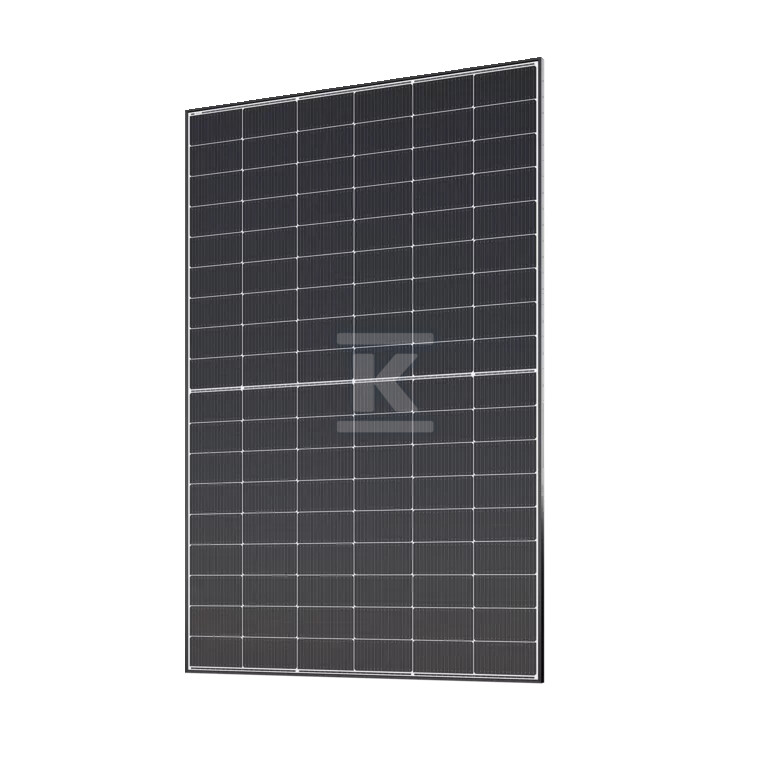 utilization of photovoltaic installations in office buildings. Our solutions enable the optimization of energy flow between the PV installation, energy storage, and the current energy demand of the building.
Functions of the EMS system in commercial applications
- Multi-location monitoring for managers with multiple properties
- Peak load management (peak shaving) to reduce power charges
- Integration with dynamic electricity pricing
- Automatic reporting for ESG purposes and building certification
The EMS system in an office building can reduce energy costs by an additional 15-20% through intelligent load management. For example, the system automatically reduces the power of air conditioning in unused rooms or optimizes the operation of elevators during periods of low demand.
Regulatory and formal aspects
New legal requirements from 2026
According to the EU directive, all new commercial buildings with an area exceeding 250 m² must be equipped with photovoltaic installations or other systems utilizing solar energy. This means that designers and investors must already consider the installation locations of panels and the necessary electrical infrastructure at the planning stage.
In Onninen's offer, you will find all the components necessary to meet the new legal requirements, from photovoltaic systems to advanced energy storage solutions.
Connection procedures
Commercial installations with a power exceeding 50 kW require special connection procedures. Our team of experienced designers will guide you through the entire process, from preparing technical documentation to obtaining connection conditions from the distribution network operator.
For installations with a power of 50-500 kW, registration in the URE register is required, while installations above 500 kW require a license for electricity generation. Our specialists provide comprehensive support in these procedures.
Economic and environmental benefits
Investing in photovoltaics for an office building brings tangible financial benefits from the very first year of operation. Our analyses show that a typical 100 kWp installation in an office building pays back within 5-7 years, generating clean savings for the next 18-20 years.
Reduction of operational costs
- Savings on energy bills: 30-70% depending on the consumption profile
- Predictability of energy costs for years due to stable PV production
- Reduction of power charges through the use of EMS systems
- Tax reliefs and the possibility of accelerated depreciation
ESG value and building certification
The photovoltaic installation significantly improves the sustainability parameters of the office building. The reduction of CO₂ emissions by 50-80 tons per year for a typical 100 kWp installation translates into higher attractiveness of the property for environmentally conscious tenants.
Buildings with their own renewable energy sources achieve higher ratings in certification systems such as BREEAM or LEED, increasing their market value by 5-15%.
Frequently asked questions
1. What is the optimal power of a photovoltaic installation for an office building?
The power of the installation should be 0.15-0.25 kWp per m² of usable area. In practice, this means 75-125 kWp for a building with an area of 500 m². The exact power depends on the energy profile of the property, available roof space, and tenant development plans.
2. Does the photovoltaic installation require reinforcement of the roof structure?
In most cases, modern office buildings do not require reinforcement. The load is only 20-25 kg/m², which is significantly less than the snow load. Older properties may require a structural assessment and possible reinforcement.
3. How long does it take to install a photovoltaic installation on an office building?
Installing 100 kWp on an office building usually takes 3-5 working days. The time may extend in the case of a complicated roof structure or the need for integration with advanced BMS systems. We carry out the work without disrupting the office's operations.
4. What are the connection requirements for commercial installations?
Installations above 50 kW require submitting an application for connection conditions to the DSO. The processing time is 30-65 working days depending on the power. Installations of 50-500 kW require registration in the URE register, and those above 500 kW require a license for electricity generation.
5. Is it worth investing in energy storage for an office building?
Energy storage is particularly beneficial in properties with low consumption on weekends. It allows for the use of energy surpluses from Fridays for Monday needs and provides backup during network failures. The typical return on investment is 8-12 years at current technology prices.
6. What are the maintenance costs of a photovoltaic installation in an office building?
Annual maintenance costs amount to 1-2% of the installation's value. They include service inspections, monitoring, cleaning of panels, and possible repairs. Professional monitoring systems allow for quick diagnostics of problems and minimize downtime.
7. How does the photovoltaic installation affect the building's certification?
Photovoltaics significantly raise the score in BREEAM, LEED, and DGNB systems. The reduction of CO₂ emissions and the use of RES are key points in the Energy and Pollution categories. You can gain an additional 10-20 points, which often determines a higher level of certification.
Investing in the future of building energy
A photovoltaic installation in an office building is much more than just reducing energy costs. It is a strategic investment in energy independence, compliance with upcoming legal regulations, and building a competitive advantage in the commercial real estate market.
As a leader in the field of photovoltaic solutions, we offer comprehensive support at every stage of the investment. From technical and economic analysis, through the supply of top-class photovoltaic panels and complete sets, to after-sales service and monitoring.
Our team of experts will help you design and implement a solution that optimally utilizes the energy potential of your building while meeting all legal and technical requirements. With a wide network of Onninen branches throughout Poland, we provide local support and service at the highest level.
The future of energy is intelligent buildings utilizing renewable energy sources. You can already be part of this transformation by investing in modern, efficient, and eco-friendly photovoltaic solutions available in Onninen's offer.