Thermostatic valves in central heating installations are a key element of modern heating systems, allowing precise temperature regulation in every room. At Onninen, we offer a wide selection of professional solutions that, when properly selected and installed, can reduce heating costs by up to 20%. Our team of experts assists installers in choosing the optimal radiator fittings tailored to the specifics of each installation.
Professional thermostatic valves not only allow for energy savings but primarily ensure thermal comfort for users by automatically adjusting the flow of the heating medium to the current needs of the room. From years of experience, we know that the key to the effective operation of the entire system is the proper selection of technical parameters and precise installation in accordance with the manufacturer's recommendations.
The Onninen range includes a full range of thermostatic valves from renowned manufacturers, available immediately from our warehouses across the country. We offer comprehensive technical support - from the design stage, through the selection of appropriate fittings, to advice on proper installation and commissioning of the system.
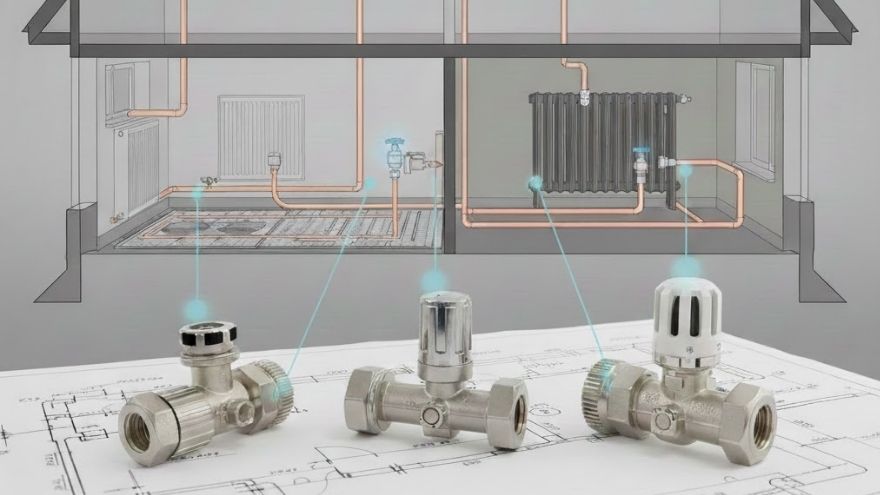
Check thermostatic valves at Onninen wholesale
Types of thermostatic valves and their applications
Valves with pre-setting versus single regulation valves
The Onninen offer includes double regulation valves equipped with pre-setting, which allow for precise adjustment of the maximum flow to the requirements of a specific radiator. This function enables the installer to hydraulically balance the entire installation by limiting the flow capacity of the valves at radiators located close to the heat source.
Valves without pre-setting, referred to as single regulation valves, are mainly used in gravity installations, where low hydraulic resistance is crucial. They feature lower flow resistance, making them an ideal solution for systems with natural circulation of the heating medium.
Valve shapes - selection according to radiator connection type
Our thermostatic valves are available in various shapes tailored to the way the radiator is connected:
- Straight valves - for radiators with vertical connections, where pipes run along the wall
- Angle valves - ideal for horizontal connections and radiators supplied from below
- Axial valves - for special mounting cases requiring minimal flow resistance
- Thermostatic inserts - factory-installed in panel radiators with bottom supply
| Valve type | Application | Advantages |
|---|---|---|
| Straight valve with pre-setting | Side-supplied radiators | Precise regulation, easy access |
| Angle valve with pre-setting | Horizontal connections | Space-saving, aesthetics |
| Thermostatic insert | Bottom-supplied radiators | Discreet installation, 2-in-1 function |
Key technical parameters when selecting a valve
Matching the Kv coefficient to the radiator power
The proper selection of a valve requires an analysis of the calculated flow resulting from the heating power of the radiator. In the Onninen range, you will find valves with varying operating ranges - from solutions with reduced flow for bathroom radiators (200-400W) to fittings handling large flows for radiators with a power above 2000W.
The ideal operating point of the valve is when the calculated flow is within the range of 30-70% of the entire adjustment range of the fittings. Too low settings (below 20% of the range) can lead to regulation problems and an increased risk of clogging in the valve.
Operational parameters
Thermostatic valves in the Onninen offer are characterized by the following technical parameters:
- Maximum operating pressure: 10 bar (1 MPa)
- Operating temperature range: 5-100°C
- Connection thread for the head: standard M30x1.5
- Body material: chrome-plated or nickel-plated brass
- Seals: O-Ring with double EPDM construction
Installation of thermostatic valves - practical tips
Preparation for installation
Before starting installation work, the water supply to the system must be cut off, and it must be ensured that the system is properly relieved. In the case of replacing just the thermostatic head, it is not necessary to drain the water from the system - it is enough to turn off the heating and wait for the radiators to cool down.
It is crucial to properly match the connection threads to the diameter of the pipes and the type of radiator. Our branches across Poland ensure the availability of complete installation kits containing the thermostatic valve, shut-off valve, and necessary seals.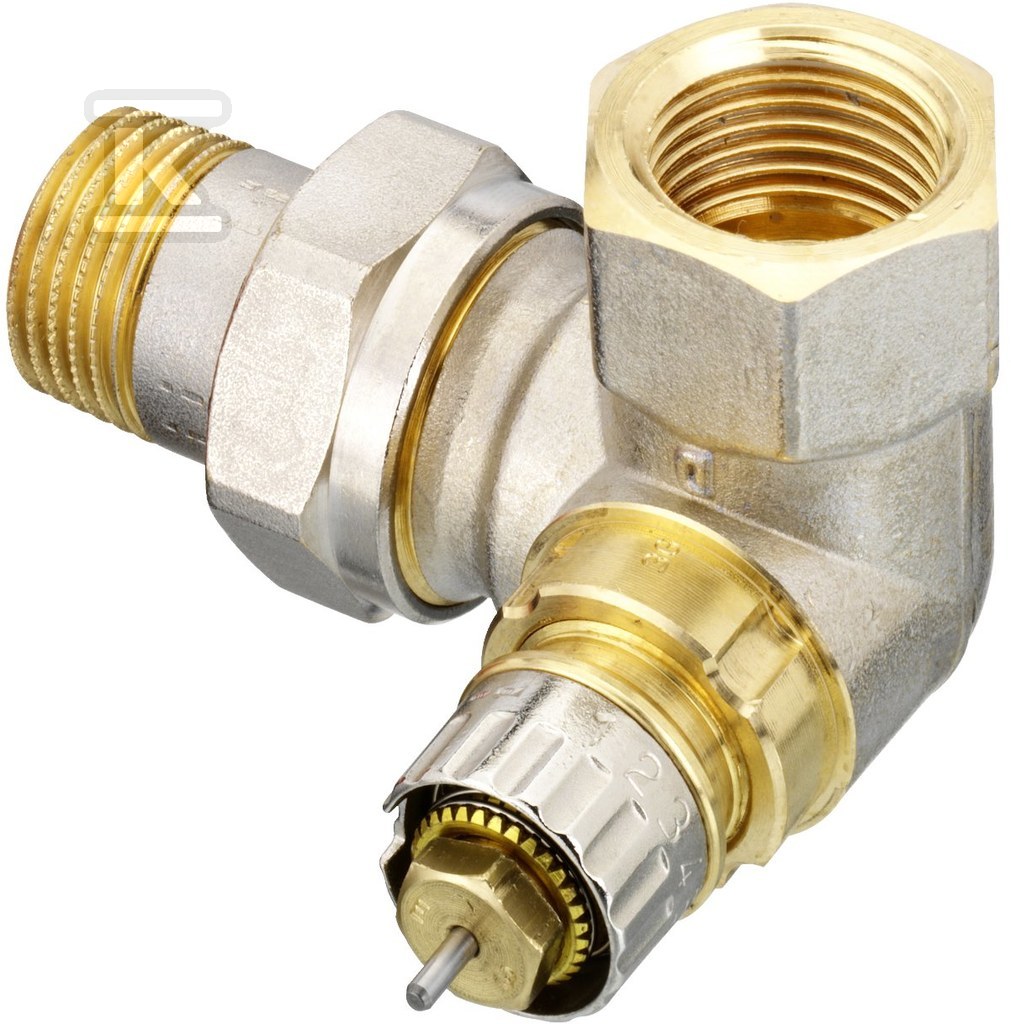
Common installation mistakes and how to avoid them
From our years of experience, the most common mistakes are:
- Installing the valve in the wrong direction - the valve must be installed according to the flow direction arrow marked on the body
- Improper sealing of connections - use only materials recommended by the manufacturer (hemp with paste for high-temperature applications, Teflon tape for low-temperature installations)
- Skipping the pre-setting - many installers leave the valves fully open, which prevents effective use of thermostatic heads
- Poor matching of the head to the valve - differences in threads can lead to leaks or regulation problems
Proper setting of pre-settings
Professional hydraulic balancing of the installation requires proper setting of pre-settings on the valves. Radiators located closest to the heat source should have more limited settings, while distant radiators can be set to maximum.
Adjustment is made by removing the head or protective cap and setting the adjustment ring to the appropriate numerical value. Modern valves offer from 5 to 8 positions for pre-setting, and precise models - even 70 intermediate settings.
Selection and installation of thermostatic heads
Compatibility of heads with valves
A key element is the proper matching of the head to the valve. The Onninen offer includes heads with various types of mounting:
- Thread M30x1.5 - standard for most manufacturers (Oventrop, Purmo, Stelrad)
- RTD mounting - for older type Danfoss valves
- RA-N 22.9mm mounting - for Danfoss valve inserts
- Thread M28x1.5 - for Herz valves
In case of differences in threads, we offer reducing adapters that allow connecting heads with valves from different manufacturers. Adapter rings ensure the tightness of the connection and proper regulatory function.
Types of heads available at Onninen
Our range includes a full range of thermostatic heads and valves:
- Liquid heads - with a sensor filled with liquid with high thermal expansion
- Gas heads - with a mixture of condensing gases, characterized by quick response
- Electronic heads - with a timer and additional functions (open window, offset)
- Remote sensor heads - for applications where the head is covered or the temperature of the radiator interferes with measurement
Special applications and dedicated solutions
Gravity installations
For installations with natural circulation, we recommend special valves with increased flow characterized by reduced hydraulic resistance. Typical thermostatic valves can excessively restrict flow in gravity systems, preventing proper operation of the installation.
Bathroom and decorative radiators
For ladder and decorative radiators, we offer aesthetic versions of heads and special mounting solutions such as duo-plex double connections or connection blocks. The head can be mounted on both the supply and return, depending on the configuration of the installation and the presence of underfloor heating.
Temperature limits in public utility buildings
According to technical requirements in multi-family buildings, it is often required to limit the temperature to 16°C. In the Onninen offer, heads with factory-installed setting locks and protections against disassembly by unauthorized persons are available.
Frequently asked questions
Can I install thermostatic valves in any heating system?
Yes, but they require proper selection for the type of installation. In installations with a circulation pump, we use standard valves with pre-setting, while gravity installations need valves with increased flow and reduced hydraulic resistance.
What savings can the installation of thermostatic valves bring?
Properly selected and installed thermostatic valves can reduce heating costs by 15-20%. Savings result from precise temperature regulation in individual rooms and the elimination of overheating. In installations with pre-setting, we observe even greater energy savings.
Does the thermostatic head fit every valve?
No, heads must be matched to the type of thread and dimensions of the valve. The standard thread used is M30x1.5, but there are also RTD mountings, RA-N 22.9mm, or M28x1.5. In case of differences, we offer reducing adapters that allow connecting elements from different manufacturers.
What is pre-setting and why is it important?
Pre-setting determines the maximum flow through the valve and is used for hydraulic balancing of the installation. It allows limiting the flow in radiators close to the heat source, ensuring even heating of all rooms. Without proper setting of the adjustments, thermostatic heads will not operate effectively.
When should thermostatic valves be replaced?
Thermostatic valves should be replaced every 10-15 years or when symptoms of improper operation occur. Signals for replacement include: lack of response to adjustment changes, leaks, noise during operation, or inability to achieve the proper temperature in the room. In the Onninen offer, valves with a 10-year warranty are available.
Can I replace the thermostatic head myself?
Yes, replacing the head does not require draining water from the installation. It is enough to turn off the heating, wait for the radiator to cool down, unscrew the old head, and install the new one. It is important to properly match the thread and set the head in accordance with the manufacturer's instructions.
How to set thermostatic heads in summer?
In summer, all heads should be set to the maximum value (position 5 or maximum temperature). This prevents the mechanism from seizing when the temperature in the room exceeds the setting. Setting to the frost protection position (*) may lead to damage to the head due to continuous pressing of the stem.
Professional installation - guarantee of efficiency
Proper selection and installation of thermostatic valves is the basis for an energy-efficient and comfortable central heating installation. At Onninen, we offer not only high-quality radiator fittings from trusted manufacturers but also comprehensive technical support at every stage of project implementation.
Our branches throughout Poland ensure the availability of complete installation kits containing all necessary elements - from valves and heads to seals and adapters. The Onninen team of specialists provides advice on selecting optimal solutions tailored to the specifics of a particular installation.
Remember that proper hydraulic balancing of the installation through the correct setting of pre-settings is a key element ensuring the effective operation of the entire heating system. Investing in professional heating solutions pays off through lower operating costs and increased user comfort for many years.