Professional ventilation installation is much more than just distributing ducts. At Onninen, as an experienced leader in the installation market, we see daily the consequences of mistakes made during the selection and insulation of ventilation ducts. These seemingly minor oversights can lead to serious failures, condensation, corrosion, and a drastic drop in the efficiency of the entire system.
Correct selection of duct diameters and proper sealing insulation are the foundations for the long-term operation of any ventilation installation. Errors in this area generate not only additional repair costs but often require a complete system overhaul. From our many years of experience, we know that most problems can be avoided by using proven solutions and high-quality materials.
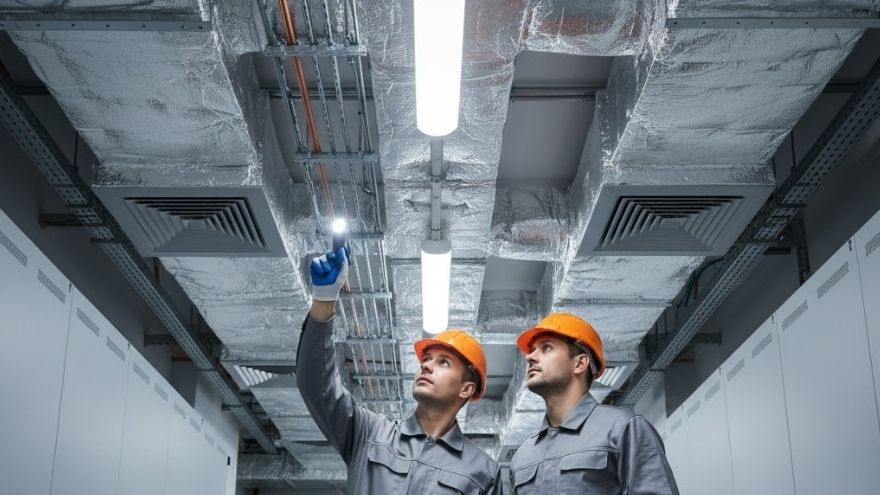
Check ventilation ducts and fittings at Onninen warehouse
Common mistakes in selecting ventilation ducts
Incorrect selection of duct diameters
One of the most serious mistakes is the improper selection of the diameter of ventilation ducts. Too narrow ducts increase the air flow velocity, which generates additional noise and increases flow resistance. In extreme cases, this can lead to the collapse of pre-insulated ducts under the influence of negative pressure.
From our installation practice, we know that the problem particularly concerns sections directly behind ventilation units, where pressures are highest. In Onninen's offer, you will find ventilation ducts of various diameters and types, tailored to the requirements of each installation.
Improper choice of duct material
Another common mistake is using flexible ducts over too long sections of the installation. Although they facilitate installation, they have increased flow resistance and are difficult to clean. Their internal structure promotes the accumulation of contaminants, which over time leads to a deterioration in air quality.
| Type of duct | Application | Advantages | Limitations |
|---|---|---|---|
| Galvanized steel | Main ducts | High durability, smooth surface | Heavier weight, requires insulation |
| Flexible ducts | Short approaches | Ease of installation, flexibility | Increased resistance, difficult cleaning |
| Pre-insulated ducts | Limited spaces | Built-in insulation, lightweight construction | Require precise installation |
Errors in duct routing
Designing duct routes without considering optimal length and number of bends significantly affects system performance. Each elbow or tee increases flow resistance. Sharp bends at a 90° angle are particularly problematic, as they can cause turbulence and additional noise.
We recommend using ventilation fittings with gentle bend radii, available in our offer. They allow for maintaining smooth air flow with minimal pressure losses.
Critical errors in duct insulation
Insufficient insulation thickness
Too thin an insulation layer is a source of problems with condensation of water vapor. According to current regulations, the minimum insulation thickness for ducts in unheated areas is 80 mm (at λ=0.035), while in the heated part of the building - 40 mm.
Condensation occurs when the surface temperature of the duct drops below the dew point of the air. For example, at a temperature of 22°C and humidity of 70%, the dew point is 16.3°C. Insufficient insulation leads to corrosion of steel ducts and the development of microorganisms.
Leaky insulation - the most common problem
The biggest mistake is making leaky insulation with gaps and thermal bridges. Water vapor penetrating through leaks condenses under the insulation, causing its degradation and complete loss of insulating properties.
- Improper joining of insulation mats without overlapping
- Lack of sealing with aluminum tapes
- Leaving uninsulated sections at transitions and connections
- Damage to insulation during the installation of other systems
- Using improper adhesives for securing insulation
Improper choice of insulation material
Each insulation material has its specific application. Mineral wool works excellently as thermal and acoustic insulation but requires protection against moisture. Polyethylene foam has high diffusion resistance but limited temperature resistance![Insulation wrap made of rock wool SteinWolle ALU with a thickness of 20mm [020x15 ] /1m/ MFSR-20X015](https://onninen.pl/lib/images/24007730.jpg) .
.
At Onninen, we offer a comprehensive range of insulations for ventilation ducts, including mineral wool mats with aluminum foil and wraps made from various materials, tailored to the specific requirements of each installation.
Consequences of installation errors
Problems with condensation and moisture
Improper insulation of ducts leads to surface condensation, which is particularly dangerous in the case of steel ducts. Water that condenses causes corrosion and, consequently, premature wear of the installation.
The problem worsens in winter when temperature differences are greatest. In exhaust ducts carrying warm and humid air from rooms, condensation can lead to freezing and blockage of flow.
Increased operating costs
Errors in selecting diameters and insulation of ducts significantly affect the operating costs of the system. Too small cross-sections force fans to operate at higher speeds, increasing energy consumption. Leaky insulation causes heat losses that the heating system must cover.
From our experience, a properly executed installation with high-quality ventilation ducts can reduce operating costs by up to 30% compared to systems made with errors.
Acoustic problems
Incorrectly selected duct diameters and insulation errors are the main causes of noise in ventilation installations. Too high air flow velocity in narrow ducts generates turbulence and noise. Lack of acoustic insulation allows sound to transfer between rooms.
How to avoid execution errors
Proper design and selection of components
The basis of any proper installation is a detailed execution design that takes into account all technical parameters of the building. The selection of duct diameters must be preceded by calculations of air flows for each room.
We recommend using systems from a single manufacturer, which guarantees full compatibility of all components. In our offer, you will find complete solutions from trusted brands, available in all Onninen branches.
Professional insulation step by step
Making tight insulation requires following a specific order of work and using appropriate materials. The surface of the ducts must be clean, dry, and degreased before applying insulation.
- Accurate measuring and cutting of insulation mats with an allowance
- Applying insulation with a minimum overlap of 50 mm
- Sealing all joints with aluminum tape
- Additional fastening with straps or welding nails
- Particular attention at transitions through partitions
Quality control of execution
After completing the installation, a detailed inspection of the entire installation is necessary. It is essential to check the tightness of all connections, the correctness of insulation fastening, and the absence of thermal bridges.
Before starting the system, we recommend conducting pressure tests that will reveal any leaks in the ducts or errors in their installation.
Frequently asked questions
1. What should be the minimum thickness of insulation for ventilation ducts?
The minimum insulation thickness is 80 mm for ducts in unheated areas and 40 mm in the heated part of the building (at a coefficient of λ=0.035). The thickness should be increased for ducts running through areas exposed to significant temperature fluctuations.
2. Why do pre-insulated ducts collapse during operation?
The collapse of pre-insulated ducts results from improper installation and lack of appropriate reinforcements. Too small diameters at high performance of units and lack of reinforcing profiles cause deformation under the influence of negative or positive pressure in the installation.
3. How to prevent condensation in ventilation ducts?
Condensation is prevented by tight insulation of appropriate thickness. It is crucial to maintain the surface temperature of the duct above the dew point of the air. All insulation joints must be sealed with aluminum tapes, and the insulation should be protected from mechanical damage.
4. Can flexible ducts be used over long sections?
Flexible ducts should not be used over sections longer than 2-3 meters. Their ribbed internal structure increases flow resistance and promotes the accumulation of contaminants. In main ducts, rigid ducts with a smooth internal surface should always be used.
5. What insulation materials are best for ventilation ducts?
The best are mineral wool mats with aluminum foil. They provide excellent thermal and acoustic insulation, are non-flammable, and resistant to high temperatures. For special applications, we recommend polyethylene foam wraps with high diffusion resistance.
6. How often should the condition of duct insulation be checked?
The condition of the insulation should be checked at least once a year. Particular attention should be paid to connection points, transitions through partitions, and fastening points. Any mechanical damage or signs of condensation require immediate repair.
Investing in quality - a guarantee of trouble-free operation
Proper execution of a ventilation installation is a long-term investment that brings benefits for many years of operation. At Onninen, we understand that every mistake in the selection or installation of ducts can cost significantly more than the initial savings on materials.
That is why we recommend a comprehensive approach to the design and execution of ventilation installations. Our team of experts provides professional technical advice at every stage of implementation. In our offer, you will find all the necessary components - from ventilation ducts to specialized insulations and installation accessories.
Remember that a properly executed installation is not only user comfort but also real savings in operating costs. We invite you to contact our specialists who will help you choose optimal solutions tailored to the specifics of your project.