A suspended ceiling in the bathroom is a solution that is gaining increasing popularity among homeowners and apartment dwellers planning renovations. As experts with many years of experience in the installation industry, we know that the decision to install such a structure in a room with increased humidity requires a thoughtful approach and knowledge of both the advantages and limitations of this solution.
At Onninen, we observe a growing interest in suspended ceilings in bathrooms among our clients - both professional installers and individual investors. From our experience, a well-designed and executed suspended ceiling can significantly enhance the functionality and aesthetics of a bathroom, but it also requires the use of appropriate materials and installation techniques.
Below, we present a comprehensive analysis of the advantages and disadvantages of suspended ceilings in bathrooms, based on our practice and the experiences of Onninen clients from all over Poland.
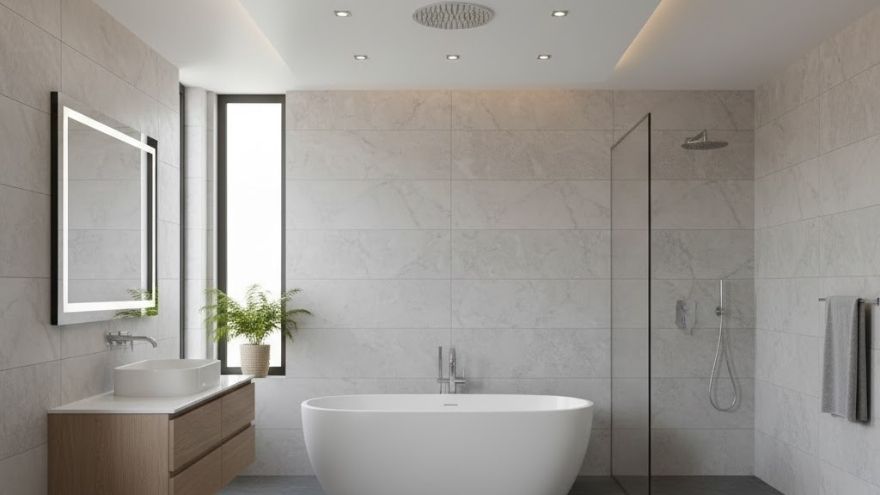
Check out bathroom equipment at Onninen wholesale
Advantages of a suspended ceiling in the bathroom
Hiding installations and imperfections
One of the biggest advantages of installing a suspended ceiling is the ability to hide all technical installations located under the ceiling. In bathrooms, electrical wires, ventilation ducts, heating pipes, and air conditioning elements often run, which significantly affect the aesthetics of the room.
From our experience, we know that a suspended structure effectively masks not only installations but also ceiling unevenness, cracks, or plaster losses. This allows us to avoid costly renovation work aimed at leveling the entire ceiling surface.
Design and lighting possibilities
A suspended ceiling opens up unlimited possibilities for designers to shape the space. At Onninen we offer complete LED lighting systems that perfectly complement suspended structures.
The possibilities of using spot or linear lighting allow for:
- Even illumination of the entire bathroom surface
- Separation of functional zones (wet and dry)
- Creating atmospheric relaxation lighting
- Highlighting the most important elements of the equipment
Optical modeling of space
Contrary to popular belief, a properly designed suspended ceiling does not have to visually reduce the bathroom. Our experience shows that using techniques such as a false gap or appropriate lighting placement can visually enlarge the room.
Solutions using indirect lighting are particularly effective, creating the illusion of a higher ceiling and giving the interior a sense of lightness.
Improvement of acoustics and thermal insulation
A suspended structure, especially one filled with insulating material, significantly improves the acoustic properties of the room. In older buildings, this can also contribute to reducing heat loss and real savings on heating.
Ease of access to installations
In the event of a failure or the need for maintenance of installations hidden behind the ceiling, a suspended structure provides much easier access than traditional solutions. It is enough to dismantle selected panels, which significantly speeds up and facilitates service work.
Disadvantages and limitations of suspended ceilings
Reduction of room height
The main disadvantage of a suspended ceiling is the reduction of the bathroom's volume. Depending on the structure used and the type of lighting, the drop can range from 8 to even 25 cm. In small bathrooms with low ceilings, this can result in a feeling of being overwhelmed.
From our practice, we conclude that the minimum drop of the ceiling should be around 10-12 cm when using flat LED fixtures. In the case of traditional halogens or spotlights, a drop of 15-20 cm may be necessary.
Material requirements
The specific conditions in the bathroom require the use of materials with increased moisture resistance. Standard GKB plasterboard will not work in this environment - it is necessary to use GKBI (impregnated) boards, marked with a characteristic green color.
In the offer of At Onninen you will find a complete range of materials intended for rooms with increased humidity, including waterproof boards and galvanized profiles.
Higher implementation costs
The installation of a suspended ceiling involves additional costs for materials and labor. In addition to the panels themselves, it is necessary to purchase:
- Steel UD and CD profiles
- Hangers and mounting elements
- Finishing materials
- Specialist filling compounds
- Lighting system
Risk of moisture problems
An improperly executed suspended ceiling can become a place for moisture accumulation, leading to the development of mold and fungi. Proper ventilation of the space above the ceiling and the use of appropriate materials are crucial.
Technical requirements for installation
The installation of a suspended ceiling in the bathroom requires greater precision than in dry rooms. Particular attention should be paid to:
- Proper attachment of the structure to the ceiling
- Use of appropriate spacing of profiles
- Hermetic execution of panel joints
- Proper preparation of openings for lighting
Materials and installation technologies
GKBI plasterboards
In bathrooms, it is essential to use GKBI (impregnated) boards (green) with reduced water absorption below 10%. The standard thickness of boards used for ceilings is 12.5 mm, which ensures the appropriate rigidity of the structure.
GKBI boards contain hydrophobic additives (wax or silicone) that protect the gypsum core from water absorption. This solution significantly extends the lifespan of the structure in conditions of increased humidity.
Profile and fastening systems
The load-bearing structure of the suspended ceiling consists of galvanized steel profiles:
- Wall profiles UD 28x27 mm
- Load-bearing profiles CD 60x27 mm
- Adjustable or direct hangers
- Connectors and system screws
Galvanization of the profiles is crucial for the durability of the structure - it protects the metal from corrosion in the humid environment of the bathroom.
Construction spacings
From our experience, we conclude that proper spacing of structural elements is the basis for a durable ceiling:
- CD profiles: maximum every 50 cm
- Hangers: maximum every 100 cm
- First profile: 10 cm from the wall
- First hanger: maximum 25 cm from the wall
| Element | Maximum spacing | Notes |
|---|---|---|
| CD profiles | 50 cm | For 12.5 mm boards |
| Hangers | 100 cm | In the axis of profiles |
| Mounting screws | 15-20 cm | On the perimeter of the board |
When is it worth deciding on a suspended ceiling
Based on our experience in projects carried out by Onninen clients, a suspended ceiling in the bathroom will be a good choice when:
- The height of the room exceeds 2.7 m - there is enough space left after lowering
- It is necessary to hide installations - wires, pipes, ventilation elements
- We plan modern lighting - LED, smart systems, zoned
- The ceiling requires significant leveling work - a suspended ceiling may be more economical
- We care about improving acoustics - especially in multi-family buildings
Situations where it is better to refrain
We advise against installing a suspended ceiling when:
- The height of the bathroom does not exceed 2.5 m
- The renovation budget is very limited
- There is no possibility of providing adequate ventilation
- Only cosmetic renovation is planned
Alternatives to a full suspended ceiling
Partially suspended ceiling
In small bathrooms, a solution involving partially lowering the ceiling only in selected zones works well. This allows for the installation of lighting and hiding installations while maintaining a sense of spaciousness.
Stretch ceilings
Stretch ceilings are an alternative that requires minimal lowering (3-5 cm). They are moisture-resistant and offer a wide range of finishing options, but do not allow for the installation of traditional recessed lighting.
Decorative strips and beams
For those who appreciate modern design, an interesting option may be decorative ceiling strips with LED lighting. Minimal lowering of the ceiling with maximum visual effect.
Frequently asked questions
How much does it cost to install a suspended ceiling in the bathroom?
The total cost ranges from 150 to 400 PLN/m² depending on the materials used and the scope of work. The price includes GKBI boards, steel profiles, fastening systems, labor, and finishing. Additional costs include LED lighting and any electrical work.
What plasterboards should be used in the bathroom?
GKBI (impregnated) boards with a thickness of 12.5 mm are mandatory. They are characterized by a green cardboard color and reduced absorption below 10%. Standard GKB boards will not work in the humid environment of the bathroom.
How much will the ceiling drop after installing the suspended structure?
The minimum drop is 10-12 cm with LED lighting. In the case of halogens or spotlights, a drop of 15-20 cm may be necessary. The exact value depends on the type of structure and planned lighting.
Is a suspended ceiling suitable for a small bathroom?
Yes, if the height of the room exceeds 2.7 m. In small bathrooms, it is worth considering a partially suspended ceiling or using optical techniques to enlarge the space, such as a false gap and indirect lighting.
What are the most common mistakes when installing a ceiling in the bathroom?
Using standard GKB boards instead of GKBI is the main mistake. Other issues include: too large spacing of profiles, lack of adequate ventilation, incorrect fastenings, and the use of non-galvanized steel elements.
Can I install a suspended ceiling myself?
Yes, with basic skills and the right tools. However, it requires precision, knowledge of technical parameters, and adherence to construction spacings. If you lack experience, we recommend consulting a professional.
How to prevent moisture problems in a suspended ceiling?
Proper ventilation and the use of appropriate materials are key. The space above the ceiling must be ventilated, and all structural elements should be moisture-resistant. We also recommend installing mechanical ventilation.
Professional solutions for demanding projects
As a leader in the Polish installation market, at Onninen we offer comprehensive solutions for suspended ceiling projects in bathrooms. Our experience with hundreds of completed projects allows us to offer not only high-quality materials but also professional technical advice.
In our assortment, you will find all the necessary components: from GKBI boards from renowned manufacturers, through steel profile systems, to modern LED lighting solutions. We cooperate with brands such as Knauf, Rigips, and Siniat, guaranteeing the highest quality of products.
Our specialists in Onninen branches across Poland are happy to advise on the selection of optimal solutions for specific projects. We also offer technical support at the design stage, helping to avoid typical installation mistakes and optimize implementation costs.
The decision to install a suspended ceiling in the bathroom should be preceded by a thorough analysis of local conditions and user needs. With the right approach and the use of appropriate materials, this solution can significantly enhance the comfort and aesthetics of the room, becoming an investment for years to come.