In water and heating installations, there are situations where automatic pressure control becomes crucial for the safety and efficiency of the system. A pressure switch - a device responsible for monitoring and regulating pressure - then becomes an indispensable element of the equipment. As a market leader in installation systems, we at Onninen understand perfectly when and why this device is necessary in professional installations.
The pressure switch, also known as a pressure cut-off switch, is a device equipped with a mechanical or electronic relay that responds to changes in pressure within the system. Its main function is to automatically turn devices on or off in response to reaching certain pressure values, ensuring the reliable operation of the entire system without the need for constant human supervision.
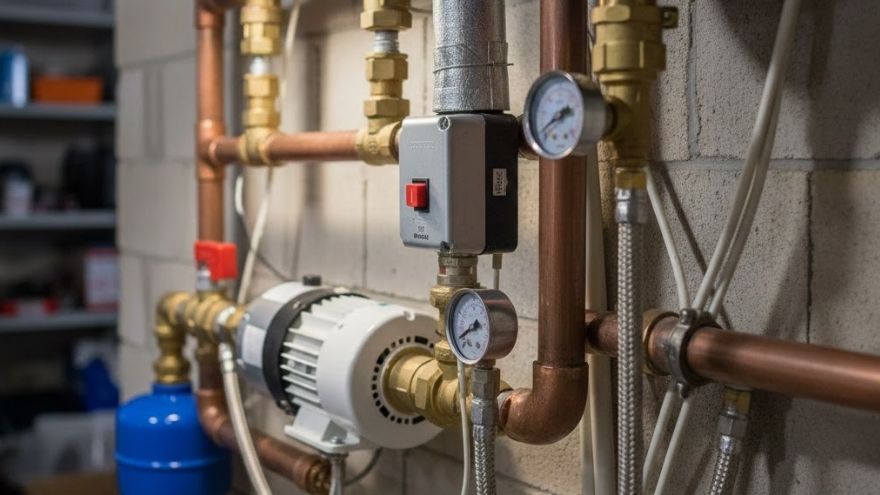
Check installation technology at Onninen warehouse
Hydrophore system - basic application of the pressure switch in water installations
The most common application of the pressure switch in water installations is in hydrophore systems, where this device plays a fundamental role in automating the operation of the pump. In Onninen's assortment, you will find complete hydrophore sets along with pressure switches tailored to various technical requirements.
The pressure switch in the hydrophore controls the operation of the pump based on the pressure in the tank. When the pressure drops below a set value (usually 2 bars), the pressure switch automatically turns on the pump. After reaching the upper pressure value (about 3.5-4 bars), the device turns off the pump. This automatic cycle ensures constant pressure in the system and protects the pump from excessive wear.
Key benefits of hydrophore automation
- Protection of the pump from frequent on/off cycling
- Maintaining constant pressure in the water installation
- Automatic operation without human supervision
- Increased lifespan of the entire system
- Energy savings through optimal pump operation
Heating installations - protection against pressure failures
In heating installations, the pressure switch primarily serves a protective function, safeguarding the system against dangerous pressure spikes or drops. We offer pressure switches from renowned manufacturers, including reliable models of Danfoss type KP36 with a range of 2-14 bar, ideal for central heating systems.
In gas boilers, the pressure switch monitors the water pressure in the system and automatically turns off the device when the pressure drops below 0.5 bar. This crucial safeguard protects against overheating of the heat exchanger and potential damage to the entire heating system.
Applications of pressure switches in heating installations
| Type of installation | Function of the pressure switch | Recommended range |
|---|---|---|
| Gas boiler | Protection against low pressure | 0.5-2.5 bar |
| Heat pump | Pressure control in the circuit | 2-6 bar |
| Ventilation unit | Monitoring of filters | 50-500 Pa |
| Solar system | Protection against overpressure | 3-8 bar |
Ventilation and air conditioning systems - air flow control
In ventilation systems, the pressure switch monitors the pressure difference before and after air filters or fans. When the pressure difference exceeds a set value, it indicates a clogged filter or a fan failure. The pressure switch will automatically trigger an alarm or shut down the system, preventing damage.
Our offer includes pressure switches adapted for use with various media - from air to refrigerants. Each device is precisely matched to the specifics of the given system, ensuring reliable operation for many years.
Heat pumps - advanced parameter control
Modern heat pumps require precise monitoring of pressure in the refrigerant circuit. The pressure switch in the heat pump serves a dual function - it protects against both too low and too high pressure, which can lead to compressor damage.
In Onninen's assortment of installation technology, you will find pressure switches specially adapted for cooperation with heat pumps, equipped with reset functions and advanced hysteresis adjustment options.
Types of pressure switches by mode of operation
- Automatic - switch contacts when the set value is reached
- With minimum reset - require manual activation after pressure drop
- With maximum reset - protect against overpressure
- Electronic - offer precise regulation and monitoring
Choosing a pressure switch - key technical parameters
Proper selection of a pressure switch requires consideration of several important parameters. First of all, it is necessary to determine the working pressure range, the type of medium (water, air, refrigerant), and 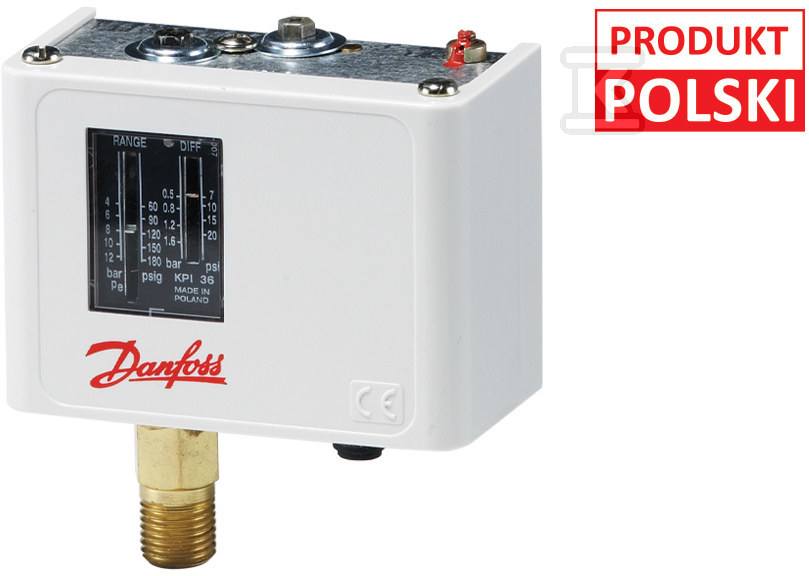 measurement accuracy requirements.
Our team of experts at Onninen will assist in selecting the appropriate pressure switch for a specific application. We offer both highly reliable mechanical pressure switches and electronic ones with advanced diagnostic functions and programmable operating parameters.
Parameters for selecting a pressure switch
- Working pressure range - tailored to the system
- Type of connection - 1/4", 1/2" thread or larger
- Type of contacts - normally open (NO) or normally closed (NC)
- Power supply voltage - 230V AC or 24V DC
- Protection class - minimum IP54 for outdoor applications
Frequently Asked Questions
When is a pressure switch absolutely necessary in a water installation?
A pressure switch is essential in any hydrophore system and installations with a water pump. Without this device, the pump would run continuously, leading to rapid wear. Additionally, systems with automatic control require a pressure switch for proper operation.
What pressure range should be chosen for a home installation?
For home installations, pressure switches with a range of 1-6 bar are recommended. Standard settings are to turn on at 2 bars and off at 4 bars. This range ensures comfortable water pressure at taps and protects the installation from overpressure.
Can a pressure switch work with different media?
Pressure switches are designed for specific media - water, air, or refrigerants. A pressure switch for water cannot be used in a pneumatic installation. Each type has appropriate seals and materials adapted to the given medium.
How often should the pressure switch settings be checked?
Mechanical pressure switches require inspection once a year, while electronic ones every 2-3 years. The accuracy of on/off switching and the condition of electrical contacts should be checked. In critical systems, more frequent checks are recommended.
Why is a pressure switch necessary in heat pumps?
Heat pumps require a pressure switch to protect the compressor from damage. Too low pressure can cause the compressor to overheat, while too high pressure can damage the system. The pressure switch automatically turns off the device in emergency situations.
What are the markings on Danfoss pressure switches?
Danfoss pressure switches are marked with symbols such as KP (pressure), RT (temperature), and range numbers. For example, KP36 is a pressure switch with a range of 2-14 bar. Each model has detailed parameters provided in the technical documentation.
Comprehensive solutions from an installation expert
At Onninen, we offer not only high-quality pressure switches from renowned manufacturers but also comprehensive technical support in selecting the right solution. Our many years of experience in the installation industry allows us to recommend optimal devices for every type of installation - from simple home systems to complex industrial installations.
Our offer includes mechanical and electronic pressure switches, single-circuit and multi-circuit, adapted to various media and pressure ranges. All products are available in our branches throughout Poland and online with the possibility of delivery within 24 hours. Thanks to cooperation with the best manufacturers, we guarantee the highest quality and reliability of the offered solutions.