The proper fastening of the wall plate is the foundation of a safe and durable roof structure. At Onninen, as a market leader in installation, we advise professionals daily on choosing the right solutions for anchoring truss elements. Our many years of experience show that the correct selection of threaded rods for the wall plate is a decision that affects the safety of the entire building for decades.
The wall plate, being a key element connecting the roof structure with the load-bearing walls, transfers significant loads from the weight of the roofing, snow, and wind forces. Therefore, in Onninen's assortment, we offer high-quality threaded rods that provide reliable fastening in all conditions.
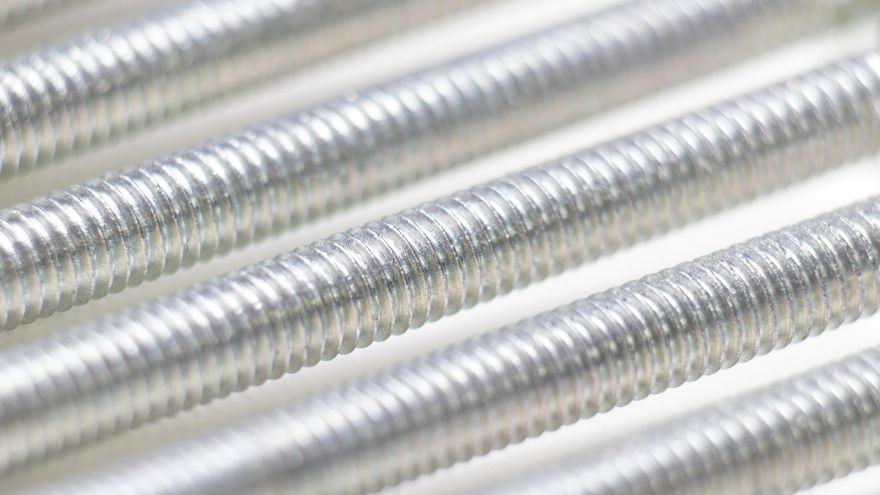
Check threaded rods at Onninen warehouse
Why the diameter of the rod is crucial for safety
The choice of the appropriate diameter of the threaded rod for the wall plate is not accidental - it determines the load-bearing capacity of the entire connection. In our practice, we most often recommend three basic diameters: M12, M16, and M20, each of which has its specific application.
Threaded rod M12 - for standard single-family homes
Threaded rods M12 from our offer work perfectly in typical single-family homes with wall plates of 14×14 cm cross-section. A diameter of 12 mm provides sufficient contact area for standard loads from light roofing materials, such as metal roofing or ceramic tiles without additional loads.
Threaded rod M16 - a universal solution
In Onninen's assortment, threaded rods M16 are the most popular choice among professionals. This diameter is optimal for most applications, especially when:
- Wall plates with larger cross-sections (16×16 cm and more)
- Heavy roofing materials - concrete tiles, metal roofing on battens
- Buildings in areas with increased wind load
- Structures with additional elements on the roof (chimneys, photovoltaic installations)
Threaded rod M20 - for industrial facilities
The largest diameter M20 is mainly recommended in industrial construction - production halls, warehouses with large spans, where the forces lifting the roof can be several times higher than in residential construction.
| Rod diameter | Type of building | Wall plate cross-section | Maximum spacing |
|---|---|---|---|
| M12 | Single-family house - light roofing | 14×14 cm | 1.5 m |
| M16 | Single-family house - heavy roofing | 16×16 cm and larger | 1.2-1.5 m |
| M20 | Industrial facilities | 20×20 cm and larger | 1.0-1.2 m |
Strength class - how to choose the right steel
Onninen offers threaded rods in various strength classes, with class 4.8 and 8.8 being the most commonly recommended. The choice of class should be tailored to the working conditions and project requirements.
Class 4.8 - an economical solution
Class 4.8 threaded rods offer a tensile strength of 400 N/mm² and a yield strength of 320 N/mm². This solution is suitable for standard applications where loads are predictable and not too high.
Class 8.8 - the choice of professionals
We definitely more often recommend class 8.8 threaded rods from our assortment, which have a tensile strength of 800 N/mm² and a yield strength of 640 N/mm². This class provides a significantly greater safety margin, especially important in the case of unforeseen dynamic loads.
Protective coatings - protection against corrosion
The location of the wall plate in a potential condensation zone requires special attention to anti-corrosion protection. In Onninen's offer, you will find threaded rods with various protective coatings:
Hot-dip galvanizing - the most popular choice
We primarily recommend threaded rods with hot-dip galvanizing, which creates a thick, durable layer that fuses with the steel. This coating provides excellent protection against corrosion for many decades, even in difficult humidity conditions.
Stainless steel - for demanding conditions
In particularly aggressive environments - facilities near water reservoirs, production halls with high humidity - we offer threaded rods made of stainless steel A2 or A4. Although more expensive, they provide virtually unlimited durability.
Proper spacing of threaded rods
The correct spacing of threaded rods is a key element affecting the even distribution of loads. From our experience, the optimal distance between rods is 1.0-1.5 meters, depending on the diameter and loads.
Rules for anchor placement
- Standard spacing: 1.2-1.5 m for M12 and M16 rods
- Densified spacing: 1.0-1.2 m in areas of increased loads
- Additional anchors: at the ends of the wall plate and at joints
- Avoiding collisions: anchors must not interfere with the support points of the rafters
Length of the threaded rod
The correct calculation of the rod length is the sum of several components:
- Length embedded in concrete (minimum 20-25 cm)
- Thickness of the wall plate
- Height of the washer and nut (3-4 cm)
- Technological reserve (2 cm)
Installation of threaded rods - key principles
Professional installation of threaded rods requires adherence to proven procedures. At Onninen, we offer not only high-quality products but also technical support for the projects being implemented.
Preparation of the beam
Threaded rods must be properly anchored in the beam by:
- Bending the end of the rod at an angle of 90° (type "L") or 180° (type "U")
- Connecting with the reinforcing rods of the beam
- Maintaining the appropriate anchoring depth
- Protecting the thread from concrete during pouring
Quality control of the installation
After installation, each threaded rod should be checked for:
- Verticality and position according to the project
- Condition of the thread - free from damage and contamination
- Proper length of the protruding part
- Compliance with technical documentation
Additional reinforcing solutions
In situations requiring reinforcement of existing connections, we recommend chemical anchors from our offer as a supplement to the wall plate anchoring system. Threaded rod systems from Onninen can also be used in conjunction with bonded anchors.
When to use chemical anchors
- Additions in existing beams
- Reinforcements when changing roof loads
- Repair of damaged anchors
- Installation in concrete with lower strength
Our technical team provides professional advice on selecting the optimal solution for each project, taking into account the specifics of the facility and safety requirements.
Frequently asked questions
Is the M12 rod sufficient for fastening the wall plate in a single-family house?
The M12 rod is sufficient in single-family homes with light roofing and a wall plate of 14×14 cm. However, for greater safety, especially with heavy roofing or in windy areas, we recommend switching to M16. In Onninen's offer, you will find both solutions with quality certificates.
What protective coating is best for wall plate rods?
Hot-dip galvanizing provides the best protection against corrosion in standard conditions. It creates a durable protective layer that protects the rod for decades. In particularly difficult conditions, we recommend stainless steel A2 or A4 from our assortment.
How far apart should threaded rods be placed under the wall plate?
The standard spacing of threaded rods is 1.2-1.5 meters. In areas of increased loads or with heavy roofing materials, we recommend densifying to 1.0-1.2 m. Additionally, anchors should always be placed at the ends of the wall plate and at joints.
What strength class is optimal for wall plate rods?
Class 8.8 provides the optimal strength-to-price ratio. It offers a strength of 800 N/mm² and a significant safety margin. Class 4.8 will only work in standard, non-loaded structures. Our class 8.8 rods are the choice of most professionals.
Can chemical anchors be used as a substitute for rods in the beam?
Chemical anchors can supplement the anchoring system but will not replace properly anchored rods in the beam. They are mainly used for additions, repairs, or reinforcements of existing connections. In Onninen's offer, you will find complete systems of chemical anchors for this purpose.
How to calculate the length of the threaded rod for the wall plate?
Length of the rod = depth in concrete (25 cm) + thickness of the wall plate + nut with washer (4 cm) + reserve (2 cm). For a standard wall plate of 16 cm, this will be about 47 cm. Remember that the anchoring depth cannot be less than 20 cm in concrete of class C20/25.
Professional solutions within reach
The choice of the right threaded rod for the wall plate is a decision that impacts the safety of the structure for decades. At Onninen, we offer a complete range of solutions - from standard M12 rods to specialized anchoring systems for the most demanding projects.
Our high-quality threaded rods are available at all branches in Poland, and our team of experts provides professional technical advice. With a wide availability of products and support from experienced specialists, every project implemented with Onninen solutions gains reliability and durability.
Remember that proper fastening of the wall plate is an investment in safety - it is not worth saving on this. By choosing proven solutions from Onninen's assortment, you can be sure that your structure will meet all safety requirements and serve for years without problems.