The call system is an installation most often installed in disabled toilets. It serves people with problems with independent functioning and supports their safety. However, the call system is also used, for example, in the hotel or catering industry. How does the call for help system work?

What is a call system?
A call system is also known as a paging system or a call for help system . This term indicates a technologically advanced installation that improves communication. Although we most often associate it with a call for help system in a toilet for disabled people, this system has many more applications.
As a tool for efficient and effective communication, it allows communication often over long distances with the press of a single button. In practice, it is an autonomous and low-voltage system.
Who is the emergency call system for?
The emergency call system is most often used in public toilets, health centers and hospitals. However, it can also be found in restaurants or hotels. Emergency call systems are therefore used in the service sector, medical sector, industry and economy, among others. Due to its ease of use, it is a widely used solution. By pressing a button or pulling a string, an alarm is activated in the duty room/central office. It is often installed in toilets or in bedside panels in hospital rooms.
How does the emergency call system work?
The operation of the call system is based primarily on the use of advanced panels and radio sensors. They offer a set of different functions and messages, which allows the system to be tailored to the expectations of specific users. Each system consists of a call socket, e.g. in the form of a button or a string to pull, and a central unit to which the call is sent.
In addition, you can invest in a call system with a microphone and speaker, which allows you to remotely find out about the alarm situation and only then take appropriate steps. The control unit will show on the display the room from which the alarm is being transmitted, and if the system is additionally integrated with the electrical installation, you can emit not only sound at the time of the call, but also, for example, light effects in the form of flashing lamps or LEDs.
Where to install the call system?
The mounting location must be carefully considered. The call system consists of a central unit and a call socket. The socket may have different appearances and functions - most often simple devices have one button to activate the alarm in the central unit, but it can also be a socket with two buttons. It is also possible to emit an alarm signal reaching one central unit from several different places or from one place to different central units.
One of the most popular places where a call system is installed are hospitals, hospices, medical care centers, and rehabilitation centers. This allows for immediate notification of staff about problems or needs. Expanding the system with additional functions allows for controlling the TV, using the phone, and contacting loved ones.
In hotels, restaurants and bars, the call system improves communication between guests and staff. It can be used to provide information about receiving a ready order, as well as to call staff to settle a bill or clean the room or change the bed linen.
In companies, the paging system is mainly used to exchange information, pass on important announcements and call employees. This solution works especially well in medium and large companies.
Eaton Toilet Emergency Call System
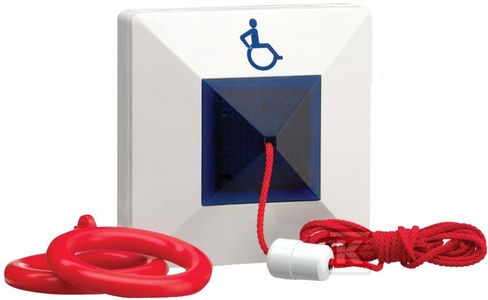
As we have already mentioned, the most common call system is in public toilets. This guarantees disabled people comfort of use and, above all, safety. Most often, the system requires a voltage of 12 V, and usually also has the option of integration with an emergency power supply.
Such systems are sold in sets that include:
- alarm cable
- charger
- indicator for mounting above the door
- reset button
- sticker.
Sometimes, a 4-line splitter with LED indicators can also be found in the set. What's more, the button in the system can be marked with Braille, which helps visually impaired people, for example, to cancel an accidentally started call.