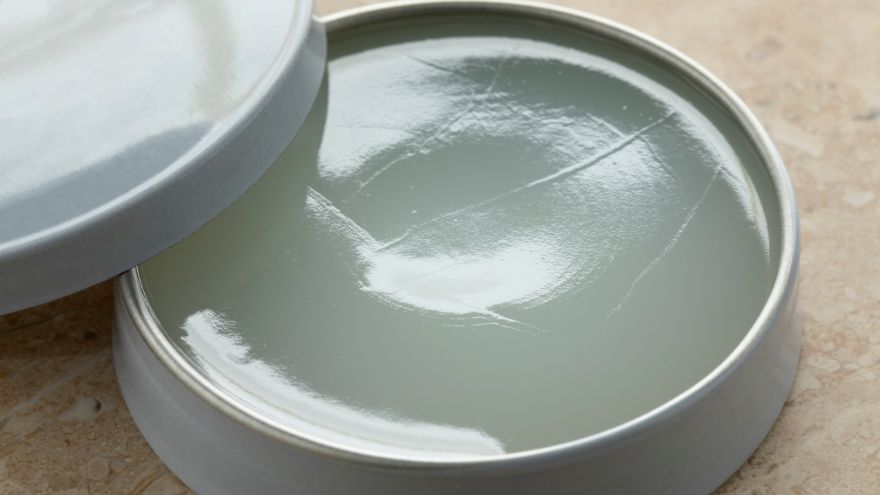
Vaseline is obtained from crude oil. It is an odorless substance with a characteristic, greasy, viscous consistency and yellowish color. Its composition is dominated by mineral oils and waxes. The unique properties of Vaseline were discovered by workers on drilling platforms, who used the waste product of crude oil to protect minor cuts. Vaseline has been used in industry for years - not only in cosmetics and pharmaceuticals, but also in technical sectors. There are various types of Vaseline available on the market, intended for different applications. The most popular are cosmetic Vaseline and technical Vaseline. The latter was examined by Onninen experts and created a practical guide. We invite you to read!
Check out the technical petroleum jelly at the Onninen wholesaler
What is technical petroleum jelly?
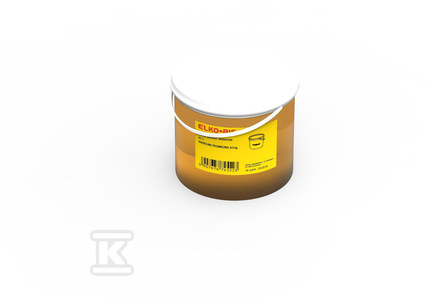
In addition to the well-known cosmetic petroleum jelly, which is a popular ingredient in cosmetics and pharmaceuticals, there is also a significantly different technical petroleum jelly . What are the characteristics of technical petroleum jelly? It is the most raw (unpurified) variety of petroleum jelly with a specific, brown color and gelatinous consistency. It does not conduct electricity. Technical petroleum jelly is produced on the basis of paraffin hydrocarbons in the process of refining crude oil.
What types of work will technical petroleum jelly be useful for?
Technical Vaseline is mainly used by professionals, such as workshops and production plants. It is also commonly used at home. It is a versatile support for many tasks. A small package of technical Vaseline simply cannot be missing in the garage of an amateur DIY enthusiast or in the glove compartment of a car enthusiast. Vaseline has excellent lubricating properties, so it plays the role of a technical grease. It also has a protective function. A layer of Vaseline effectively protects metal parts of machines, tools or devices from corrosion and drying out. It can also be used to protect plastic surfaces from the negative effects of weather conditions.
It is worth knowing that there are different types of technical petroleum jelly. Individual types are characterized by different acidity and melting point, and these parameters affect the intended use of the product. When it comes to acidity, petroleum jelly with a high acid content is often a low-quality product, but cheap. To protect electrical contacts, it is best to use acid-free technical petroleum jelly from a proven manufacturer.
Technical Vaseline - Application
What technical petroleum jelly is used for, we have already mentioned in the previous paragraph. Below we indicate most of the applications.
- Technical Vaseline primarily has a protective function, protecting metal parts of devices, tools, construction machines, etc. against corrosion.
- Technical Vaseline is also suitable for protecting contacts in electronic, electrical and technical systems, extending the life of devices and machines. This substance is used by manufacturers and servicers of electric cars, among others.
- Technical Vaseline acts as a lubricant, preventing abrasion of moving parts of machines and devices and eliminating squeaking. It is effective at low loads.
- Provides basic protection – in many cases it cannot replace professional lubricant.
-
 Technical petroleum jelly can be used to preserve the elasticity of leather goods, which allows them to be used for a very long time. Hence the common use of the substance in leatherwork and shoemaking.
 - Petroleum jelly available in stores is often purchased by individual customers for home use. Petroleum jelly can be applied to hinges, padlocks, sports equipment, gardening machines or grills to protect against rust, as well as to products made of natural leather. It is great for the care and impregnation of e.g. leather shoes and handbags.
- Technical Vaseline increases the efficiency of blades, e.g. in axes or scythes.
A rather unusual application of technical petroleum jelly is its use as a stain remover. This substance often allows for the quickest removal of stubborn pen stains and many other dirt. - Thanks to its lubricating properties, technical petroleum jelly is used to protect various elements made of artificial rubber. Applying the substance to rubber seals in car doors provides protection against freezing in the winter season and against cracking and crumbling on hot, dry days. The disadvantage of such protection is the high risk of staining clothes and upholstery when getting in and out of the vehicle.
- Technical petroleum jelly plays an important role in securing lightning protection installations. You can read more about this application later in the article.
Check out the technical petroleum jelly at the Onninen wholesaler
Types of technical petroleum jelly
There are 4 main types of technical petroleum jelly:
- high-melting petroleum jelly – used to protect metal elements (e.g. tools and screw connections) in difficult working environments with temperatures not exceeding 55°C;
- low-melting petroleum jelly – with very good lubricating properties, used to lubricate low-loaded elements (e.g. bearings), but only on condition that the temperature does not exceed 30°C;
- acidic petroleum jelly – cheap, but usually of low quality, with a high acid content, has a destructive effect when used on rubber and metal elements, is not suitable for protecting electronic connections;
- acid-free petroleum jelly – a versatile product, suitable for lubricating rubber, leather and plastic elements and for protecting contacts in electronic systems.
How to use petroleum jelly properly?
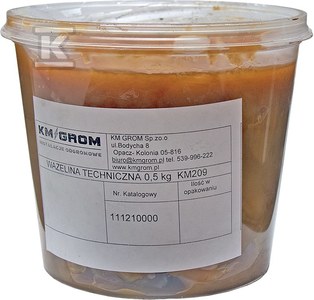
Technical petroleum jelly available on the market differs in the type of packaging, and consequently - in the method of application. The same technical petroleum jelly can therefore be applied in various ways. Most often, technical petroleum jelly is sold in a screw-on jar or in a plastic container with a lid. You apply such a product manually using a spatula or your hands, of course protected by protective gloves. In turn, when buying technical petroleum jelly in a tube, you apply it conveniently and hygienically by squeezing the substance onto a surface or tool, similarly to squeezing toothpaste onto a toothbrush. If you want to ensure a minimum risk of skin contact for yourself or your employees, choose technical petroleum jelly in a spray. Do you need to protect very small elements? Look for a product with a precise dispenser (syringe) in the set.
 Remember that petroleum jelly is irritating to the respiratory tract and skin. Be especially careful when using the product, use personal protective equipment to avoid skin damage, and strictly follow the manufacturer's instructions for the product you are purchasing. Petroleum jelly is a flammable substance! Do not use it near a fire. The combustion of petroleum jelly produces poisonous carbon monoxide. Uncontrolled leakage of the substance has a harmful effect on the natural environment, so if such a situation occurs, it is necessary to report this fact to the appropriate services.
If you use high-quality technical Vaseline and in a safe manner, in accordance with applicable standards and the manufacturer's guidelines and recommendations, you have nothing to worry about.
The importance of technical petroleum jelly in lightning protection installations
In lightning protection systems, technical petroleum jelly helps protect screw connections from the destructive effects of external factors: moisture, water or frost. After all, lightning protection masts are located on the roofs of buildings, so they are constantly exposed to rain or snow. Technical petroleum jelly is typically used to protect connections on vertical earthing rods against corrosion. Applied to metal elements, it has a positive effect not only on the service life but also on the effectiveness of the lightning protection system. It is worth bearing in mind that technical petroleum jelly is one of the cheapest methods of anti-corrosion protection available on the market. You will pay around PLN 40-50 for a half-kilogram package.
What can't be lubricated with technical Vaseline?
It is obvious that technical petroleum jelly should not be used on human skin. For care and treatment purposes, various types of cosmetic petroleum jelly are used, i.e. white, suitably purified and enriched with necessary dyes and fragrances.
It is also forbidden to lubricate dog paws with petroleum jelly! To protect dog pads in the winter season, double-purified white petroleum jelly, possibly yellow, without fragrances or dyes that could cause allergies in your pet, is used. Petroleum jelly is destructive to natural rubber. Like other petroleum-based substances and mineral oils, it leads to the decomposition of rubber. We know what you are thinking - we wrote earlier that petroleum jelly can be used to protect rubber seals in cars. This is absolutely allowed and even recommended by specialists, because seals in modern vehicles are made of synthetic rubber, not natural rubber. Finding a replacement for petroleum jelly is necessary for elements and mechanisms that are:
- sensitive to oils and petroleum products,
- exposed to abrasion due to work under significant load.
Fortunately, the market offers quite a few alternatives to technical petroleum jelly - with protective and friction-reducing properties. These include: silicone grease, dry grease in aerosol, dielectric grease (high melting point insulator) and dedicated preparations for the maintenance of seals and electrical contacts.
Technical Vaseline at the Onninen wholesaler
In the Onninen installation wholesaler you will find technical petroleum jelly in various packages, coming only from proven and trusted suppliers. In our warehouse we have products dedicated to lightning protection installations, available immediately.
Don't know which technical petroleum jelly to choose or how to use it on a given surface? Contact us. We will be happy to advise.
Check out the technical petroleum jelly at the Onninen wholesaler