Percolation drainage is one of the cheapest methods of preventing excessive water saturation of the area, as well as getting rid of purified liquid without causing damage to the environment. Due to its high effectiveness in the case of uneven sewage inflow and low operating costs, percolation drainage is also the most commonly used technological solution for discharging purified water from domestic sewage treatment plants.
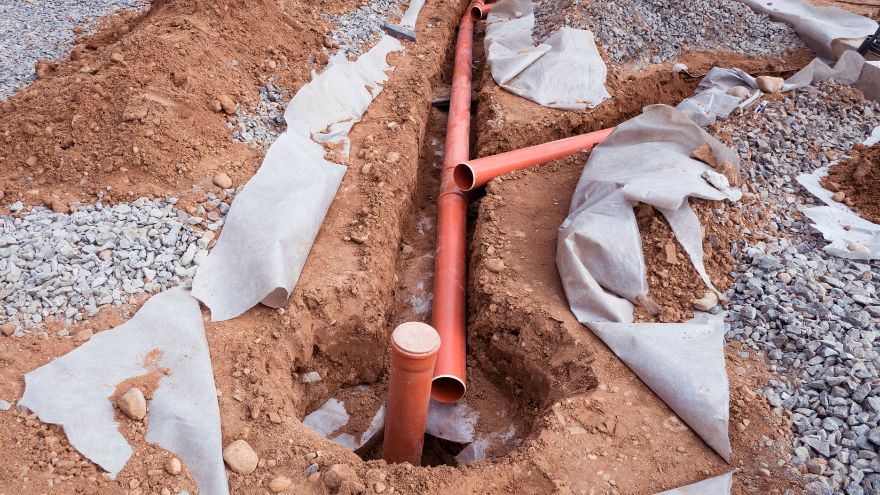
Check drainage pipes at the Onninen wholesaler
What is seepage drainage?
Percolation drainage is a structure that prevents excessive saturation of a given area with water. It is usually one of the elements of a domestic sewage treatment plant, made of drainage pipes placed in the ground characterized by a good permeability coefficient. Percolation drainage is recommended in areas without access to the sewage system, where domestic treatment plants are an alternative to cesspools that require regular emptying.
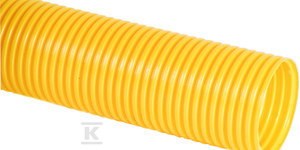 The seepage drainage is a system of pipes located behind the septic tank and the distribution manhole. After initial treatment of sewage in the settling tank, it reaches the manhole, where the liquid is distributed to individual pipe branches. The drainage pipe, through its perforated structure, allows the treated sewage to drain into the ground. Sand is another barrier for bacteria, and the sewage itself is transformed into mineral-organic compounds.
Among the numerous benefits of using seepage drainage, special attention should be paid to: low purchase price, undemanding construction, simple maintenance, and limited operating costs. For this reason, seepage drainage is a virtually maintenance-free and failure-free construction.
What conditions must be met to perform seepage drainage on a plot?
A certain inconvenience when planning works related to the construction of a drainage system are legal conditions and the relatively large area on which the seepage drainage should function.
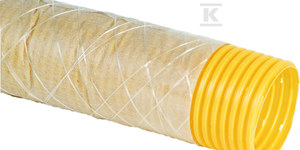 Drainage pipes, once installed, occupy an area of 60 to 90 m² on average. This means that the construction of the system requires a suitably large plot, taking into account the area occupied by buildings. Drainage pipes should be installed at a distance of 70 m from the well, 3 m from the building and 2 m from the plot boundary. In many cases, the consent of the neighbours is also required.
The type of soil is equally important. Percolation drainage is most effective in areas with permeable soil with a predominance of sand. Soil with poor permeability or a high level of groundwater (the distance between drainage pipes and the aquifer cannot be less than 1.5 meters) significantly complicates the installation and subsequent operation of drainage.
It should be remembered that the above restrictions are intended to ensure safe operation of seepage drainage, with a view to the health and even life of the inhabitants of a given area.
At what depth should drainage pipes be laid?
Drainage pipes should be laid at a depth of 0.6 to 0.8 m below the ground surface, with gradients of 0.5 to 1.5%. The bottom of the trench should be lined with a layer of aggregate, which promotes rapid absorption of liquids. Drainage pipes (perforated) are connected with special connectors, the number of which can be reduced by using drainage pipes with a length of 20 to 50 m.
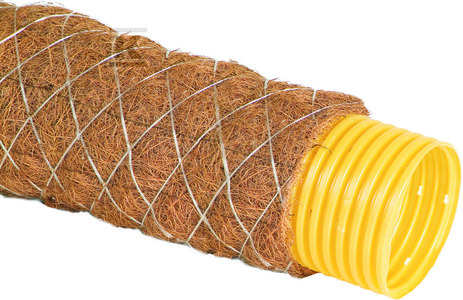 The diameter of perforated plastic pipes is 110 mm, while the length and number of drainage lines should depend on the amount of incoming sewage (the number of permanent users of the treatment plant).
As a rule, there is 12 m of drainage pipe per resident of a given facility. Drainage lines are laid, adapting their course to the shape of the plot. Usually, it is a parallel arrangement. Drainage threads should be separated by a distance of 1.5 m.
The durability and reliability of drainage largely depend on the quality of the pipes used. For this reason, it is worth purchasing individual elements of equipment from a reputable wholesaler, offering products only from world-renowned manufacturers.