You probably don't even realize how many batteries and accumulators you use every day. They are essential in every electrical device without a permanent mains power supply, a watch, a camera, a night light, a child's toy or a bathroom water heater. In some cases, choosing the right battery can be more difficult than usual. How to find the right model, read the markings and when is it worth choosing rechargeable batteries instead of alkaline batteries?
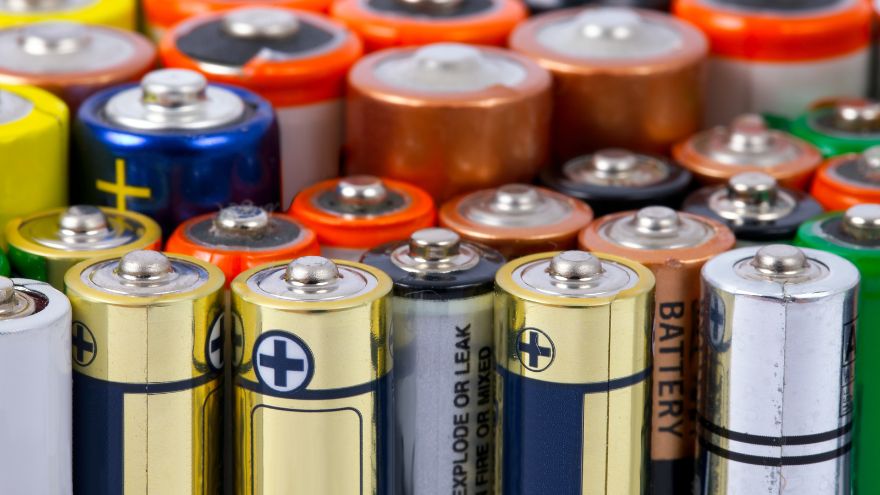
Check out alkaline batteries at the Onninen installation wholesaler
What markings do batteries have?
 Battery markings help you find the right model, if you can read them. They consist of three parts – two capital letters and a numerical designation.
The first letter in the designation refers to the technology of the battery and its chemical system. It is worth knowing that not every battery has this designation. If it is made in the most basic technology and has a zinc-carbon cell, only one letter will appear in the designation before the numbers. If the designation has two letters, the first one indicates the type of cell the battery is made of.
The most common alkaline battery markings are:
- A – zinc-air cell;
- C – lithium-manganese cell;
- L – alkaline cell,
- P – zinc-air cell;
- S – silver link;
The second letter of the battery designation (the first in the case of a zinc-carbon cell with a shorter designation) refers to the shape of the battery. Here, only three letters are used:
- R for cylindrical batteries – this group includes the popular AA batteries and AAA batteries ;
- F for flat plate batteries;
- S for rectangular and cuboid batteries.
The last part of the battery designation is the digits, which are the catalog number of the given model . Interestingly, in many cases these are not randomly selected numbers. In some models they refer to the dimensions of the given battery, although not in every case equally precisely. For example, popular AA batteries called fingers are designated as R14505, and their dimensions are exactly 14.5 mm in diameter and 50.5 mm in height.
What capacity should a good battery have?
 Battery capacity is often not provided by manufacturers. It is difficult to measure it precisely, and the result always depends on the measurement conditions. On the other hand, battery power consumption is also not constant and depends primarily on the device. For these reasons, battery capacity given in mAh is more of an approximate range than an exact value.
So how do you find good, high-capacity batteries? Pay attention to their chemical system, because that's what determines capacity the most.
- Lithium batteries, considered to be the most capacious, hold approximately 3000 mAh .
- Alkaline batteries , some of the most popular, have a capacity between 2000 and 2500 mAh .
- By comparison, basic zinc carbon batteries range between 400 and 1000 mAh .
If you’re looking for high-capacity batteries for high-drain devices, consider rechargeable batteries. AAA and AA batteries can have a higher capacity than a similar alkaline battery model by over 1000 mAh! What’s more, their capacity is measured much more precisely than in non-rechargeable disposable batteries.
When is it best to choose rechargeable batteries?
Rechargeable batteries are no different from traditional alkaline batteries in use. The only difference is that they can be used multiple times. A battery charger replenishes the energy supply in rechargeable batteries, so they are ready for further use after a few hours. Rechargeable batteries are slightly more expensive than alkaline batteries, but they have a much longer life and can quickly pay off the investment made in them.
 Remember that rechargeable batteries are not the best choice for every device. They are recommended primarily for frequently used devices with high power consumption . Using rechargeable batteries in equipment such as a wall clock, which uses very little energy, will not bring visible savings. It is therefore recommended to reach for rechargeable batteries when the alkaline batteries in a given device require changing after about 2 months.
Rechargeable batteries also have a limited lifespan, and occasional use won't extend it at all. They usually last well for 5 to 10 years from the date of manufacture. Make full use of them in devices that require frequent battery changes.
Batteries and accumulators in the Onninen wholesaler
In the Onninen electrical wholesaler you will find all popular types of batteries and accumulators along with the necessary accessories. The products come from renowned and proven brands such as Kodak. Available at attractive prices, they encourage you to make the necessary supplies that are useful in every home or office.
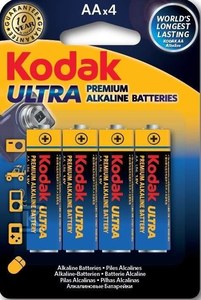
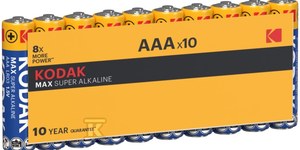
 The most popular batteries are the so-called fingers - alkaline AA batteries such as the KODAK Ultra Premium AA-4 LR6 4 pcs. alkaline battery . They are used in many devices, such as cameras, children's toys, clocks or various types of remote controls for RTV equipment. Some devices use the so-called small fingers, AAA batteries, which are slightly narrower. The ideal choice of AAA batteries will be the Kodak MAX AAA 10 pcs. alkaline batteries.
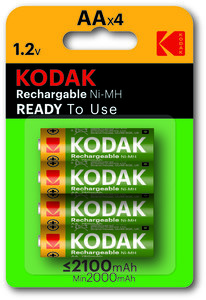
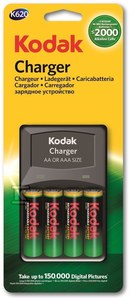
If you want to replace alkaline batteries with rechargeable batteries, you will find them in the Onninen wholesaler. Kodak AA KAAHRP-4 2100 mAh rechargeable batteries cost a little more than alkaline batteries, but due to the possibility of charging it will not need replacing soon. In Onninen you will also find accessories such as a charger for rechargeable batteries, such as a solution from Kodak - a charger for rechargeable batteries Kodak K-620E + 4AA , and it is suitable for both AA and AAA models!
Check out alkaline batteries at the Onninen installation wholesaler