An electrical bridge is a component in an electrical system that acts as a connection or separation between different circuits or branches of a circuit. It is a key component in electrical installations that allows you to control the flow of current and manage various aspects of an electrical system. How to accurately calculate resistance using an electrical bridge? What are the differences between the different types of these elements? We discuss these and other issues related to electrical bridges in a new article.
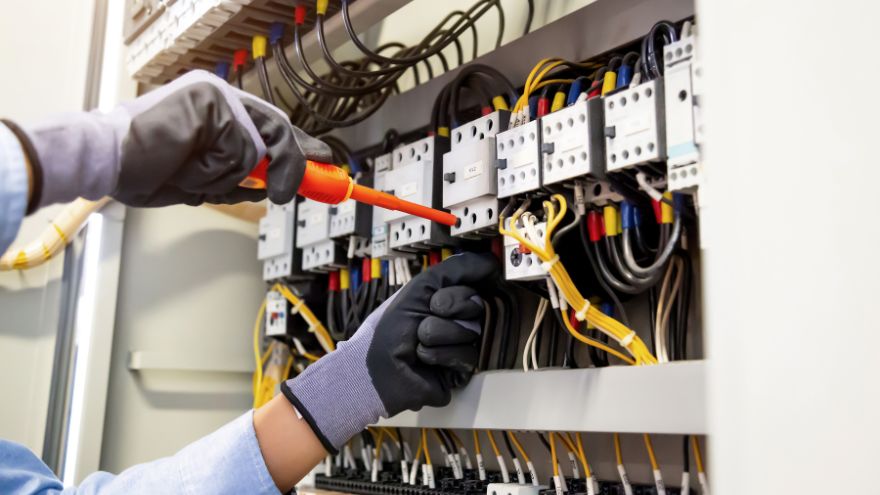
Check out the electrical bridges at the Onninen wholesaler
How does an electric bridge work?
Electric bridges are elements often used in electronics and electricity. Their basic application is to measure resistance, inductance and capacitance of linear elements. Their operation is based on the phenomenon of balancing the resistance of the bridge branch at a specific supply voltage frequency.
There are various types of electrical bridges available on the market. The most important of them are the Wien bridge, Schering bridge, Maxwell bridge, Kelvin bridge, Graetz bridge and Boucherot bridge. The individual types differ in their construction and application. Each of them is designed to meet specific requirements - depending on the type and specificity of the elements that are to be tested with it.
Types of electric bridges
As we have already mentioned, there are many types of electrical bridges , each of which has its own application in different types of measurements. One of the most commonly used types of bridges is the bridge rectifier, used to measure resistance. It consists of four resistors that allow you to calculate the resistance values in the bridge branch. The bridge rectifier is used primarily in the measurement of linear elements.
 Another type of bridge is the three-phase bridge. It is made of three Wagner branches and is mainly used to measure resistance at high AC voltages. Due to its construction, the three-phase bridge allows for accurate determination of the resistance of elements with significant changes in frequency.
Kelvin bridge is a measuring system used especially for precise measurement of resistance at low values. Its operation is based on the use of a four-terminal network. This element allows to minimize the influence of connection resistance on measurement results.
The Schering bridge is a device used to measure the capacitance of capacitors. It works by comparing the capacitance of a capacitor with a reference capacitor. This allows for the precise determination of the capacitance value.
The Wien bridge is a tool used to measure the resistance, inductance, and capacitance of electrical components. It is a type of balanced bridge that allows for accurate measurements at different frequencies of alternating voltage.
How to calculate resistance using an electrical bridge?
 The process of calculating resistance using an electrical bridge involves finding the equilibrium point at which the sum of the voltages and currents in the bridge branches is zero. Using a system of equations that describes the equilibrium state, one can calculate the resistance of the elements that are in the bridge branch.
The specific method varies depending on the type of bridge. For example, in the case of a Kelvin Bridge, the resistance of an unknown resistor can be determined using a balanced circuit by measuring the voltages and currents in the various branches of the bridge. For a Schering Bridge, this process involves measuring the capacitance of a capacitor.
Electric bridges at the Onninen wholesaler
The quality of electrical bridges has a huge impact on the precision of measurements and therefore the performance of designed or serviced systems. Being aware of their importance, at the Onninen electrical wholesaler we offer only well-tested components from renowned brands.
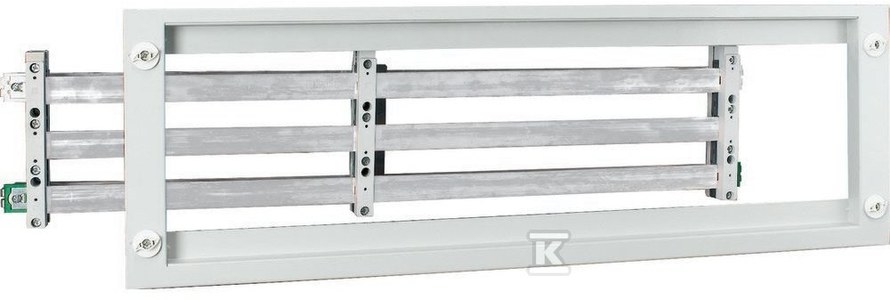
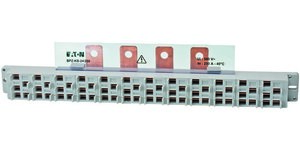
Our offer includes, among others, the EATON BPZ-BR/SASY/MSW/H-2/1200 electric busbar bridge . This two-speed design offers a maximum rated current of 400 A. The EATON BPZ-KB-24/250 electric bridge supports 4 phases and a maximum rated current of 250 A.
Due to the availability of different types and their ability to accurately measure resistance, inductance, and capacitance, bridges are widely used in electrical and electronics. Understanding the operating principle of each type of bridge will allow you to accurately calculate the resistance of the bridge branches and effectively use this knowledge in practice.